Banner
Pilot Study: Fibromyalgia Fatigue Improved By TENS Therapy

Fibromyalgia is the term for a poorly-understood condition where people experience pain and fatigue...

High Meat Consumption Linked To Lower Dementia Risk

Older people who eat large amounts of meat have a lower risk of dementia and cognitive decline...

Long Before The Inca Colonized Peru, Natives Had A Thriving Trade Network

A new DNA analysis reveals that long before the Incan Empire took over Peru, animals were...

Mesolithic People Had Meals With More Tradition Than You Thought

The common imagery of prehistoric people is either rooting through dirt for grubs and picking berries...

User picture.
News StaffRSS Feed of this column.

News Releases From All Over The World, Right To You... Read More »

Blogroll
Rutgers AIDS researchers Gail Ferstandig Arnold and Eddy Arnold and colleagues say they may have turned a corner in their search for a HIV vaccine.

The researchers say they have been able to take a piece of HIV that is involved with helping the virus enter cells, put it on the surface of a common cold virus, and then immunize animals with it. They found that the animals made antibodies that can stop an unusually diverse set of HIV isolates or varieties. 
The NASA/ESA Hubble Space Telescope says a look into the heart of the Perseus galaxy has provided evidence that galaxies are embedded in halos of dark matter.   Small galaxies have remained intact while larger galaxies around them are being ripped apart by the gravitational tug of other galaxies.

The explanation?   The undisturbed galaxies are enshrouded by a "cushion" of dark matter that protects them.

Dark matter is a theoretical invisible form of matter that accounts for most of the Universe's mass. Astronomers have deduced the existence of dark matter by gravitational influences on normal matter, such as stars, gas and dust.
Are Americans bad at science?  If so, are they worse than anywhere else?   We know the answer to one of those questions.  A new national survey commissioned by the California Academy of Sciences and conducted by Harris Interactive  says that the U.S. public is unable to pass even a basic scientific literacy test. 

The good news; U.S. adults do believe that scientific research and education are important. About 4 in 5 adults think science education is "absolutely essential" or "very important" to the U.S. healthcare system (86%), the U.S. global reputation (79%), and the U.S. economy (77%). 
When a single female antbird is nearby, those with male partners will sing over the songs of their betrothed in an apparent attempt to keep their messages from getting through, according to a new report in Current Biology.

Males, of course, then change their tune.

This may be the first evidence that such "signal jamming" and "jamming avoidance" (literal cock-blocking) occurs between mates, according to the researchers. 
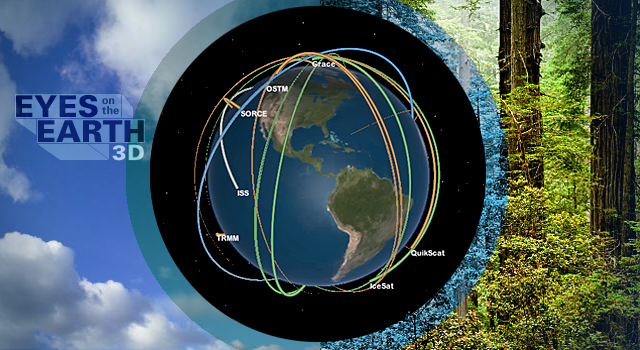
New interactive features on NASA's Global Climate Change Web site give the public the opportunity to "fly along" with NASA's fleet of Earth science missions and observe Earth from a global perspective in an immersive, 3-D environment. 

Developed using a state-of-the-art, browser-based visualization technology, "Eyes on the Earth 3-D" displays the location of all of NASA's 15 currently operating Earth-observing missions in real time. These missions constantly monitor our planet's vital signs, such as sea level height, concentration of carbon dioxide in our atmosphere, global temperatures and extent of sea ice in the Arctic, to name a few.
A new study challenges the prevailing assumption that you must pay attention to something in order to learn it. Research in the journal Neuron says that stimulus-reward pairing can elicit visual learning in adults ... even without awareness of the stimulus presentation or reward contingencies.