Banner
Pilot Study: Fibromyalgia Fatigue Improved By TENS Therapy

Fibromyalgia is the term for a poorly-understood condition where people experience pain and fatigue...

High Meat Consumption Linked To Lower Dementia Risk

Older people who eat large amounts of meat have a lower risk of dementia and cognitive decline...

Long Before The Inca Colonized Peru, Natives Had A Thriving Trade Network

A new DNA analysis reveals that long before the Incan Empire took over Peru, animals were...

Mesolithic People Had Meals With More Tradition Than You Thought

The common imagery of prehistoric people is either rooting through dirt for grubs and picking berries...

User picture.
News StaffRSS Feed of this column.

News Releases From All Over The World, Right To You... Read More »

Blogroll
Gamers caught an early glimpse of the future of serious games aimed at the health sector during the PlayMancer project’s demos at the latest Vienna Science Fair.   The European PlayMancer project is working hard to improve the technology for serious game engines and tools for 3-D networked gaming.

The platform is being tested and validated  physical rehabilitation and behavioral and addictive disorders with the inclusion of innovative multimodal I/O devices.

“We want to build actual games, serious games, around serious health-related problems like bulimia and chronic pain,” PlayMancer’s project manager Elias Kalapanidas tells ICT Results. “Using gaming in this way is really breaking new ground.”
Revered in India as "holy powder", the marigold-colored spice known as turmeric has been used for centuries to treat wounds, infections and other health problems. In recent years, research into the healing powers of turmeric's main ingredient, curcumin, has increased as scientists have examined claims of antioxidant, anti-cancer, antibiotic, antiviral and other properties, though little has been learned about exactly how curcumin works inside the body.

University of Michigan researchers led by Ayyalusamy Ramamoorthy now say that curcumin acts as a disciplinarian, inserting itself into cell membranes and making them more orderly, a move that improves cells' resistance to infection and malignancy. 

During the television program Ulysses which aired in Italy on Saturday the 28th of February, the well-known scientific divulgator Piero Angela stated that a secret drawing, a youthful self-portrait of Leonardo da Vinci, had just been discovered. Actually, the Leonardo3 ( http://www.leonardo3.net) research center in Milan, Italy, had published its own edition of the Codex of Flight (book interactive software) in the October of 2007: this work included the digital restoration of page 10, revealing the underlying portrait. The same center had also created a 3D reconstruction of the image.

At the beginning of 2007, within the Leonardo3 research center, Massimiliano Lisa (the center's President) had noted the resemblance between the Self-Portrait and the sanguine at page 10.

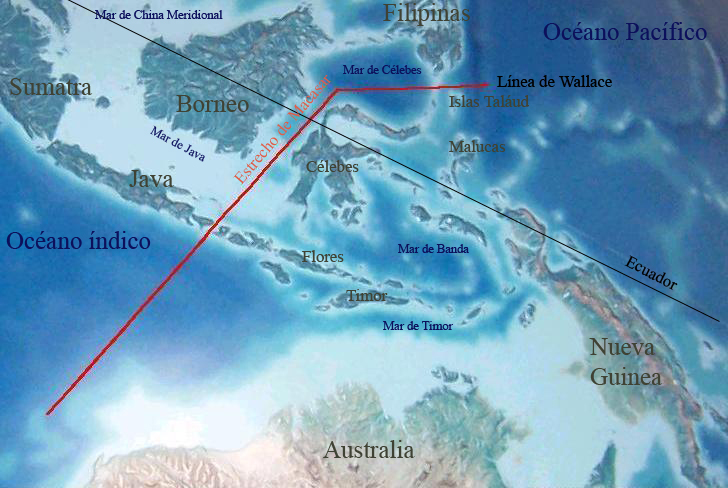
The Wallace Line is called such because when Alfred Russel Wallace made his way to the East Indies to tackle the secrets of biology, he found there was a 'line' in the Malay Archipelago that divides Indonesia into two parts and west of it the species were Asian while to the east they were more Australian.

Since the distance is short in places, Bali and Lombok are only about 35 km apart, it was a prime example of species distinction and biogeography and he wrote on it in The Malay Archipelago.

The abrupt switch in the kinds of mammals found along the Malay Peninsula, from mainland species to island species, in the absence of any daunting geographical barrier has fascinated scientists since then.
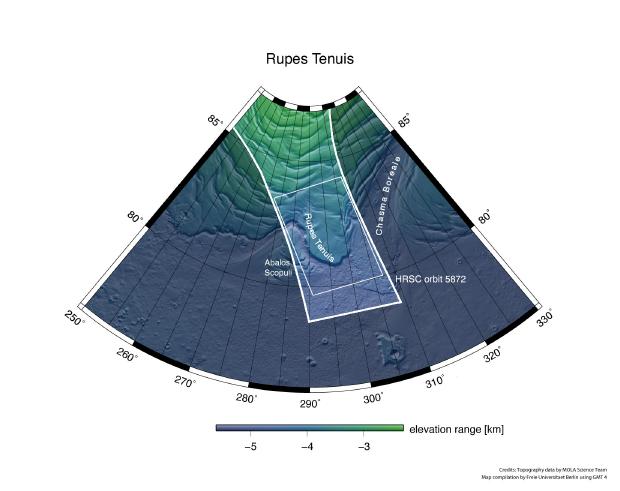
The snow-laden region of Rupes Tenuis on the martian north pole got some images courtesy of ESA’s Mars Express orbiter. The images are centred around 81° north and 297° east and have a ground resolution of 41 m/pixel. They cover an area of about 44 000 km2, almost as large as the Netherlands.

Rupes Tenuis is located at the southern edge of the martian north polar cap, approximately 5500 km northeast of the Tharsis volcanic region.

At present, polar caps contain the largest water reservoir on the Red Planet. Recent data from the Mars Advanced Radar for Subsurface and Ionosphere Sounding (MARSIS) on board Mars Express has revealed that both polar ice caps are 3.5 km thick.
Artemisinin is the most powerful anti-malaria drug in use today and it commonly obtained by extracting the drug from Artemsisia annua, the sweet wormwood tree.