Banner
Pilot Study: Fibromyalgia Fatigue Improved By TENS Therapy

Fibromyalgia is the term for a poorly-understood condition where people experience pain and fatigue...

High Meat Consumption Linked To Lower Dementia Risk

Older people who eat large amounts of meat have a lower risk of dementia and cognitive decline...

Long Before The Inca Colonized Peru, Natives Had A Thriving Trade Network

A new DNA analysis reveals that long before the Incan Empire took over Peru, animals were...

Mesolithic People Had Meals With More Tradition Than You Thought

The common imagery of prehistoric people is either rooting through dirt for grubs and picking berries...

User picture.
News StaffRSS Feed of this column.

News Releases From All Over The World, Right To You... Read More »

Blogroll
Peter Doran, Associate Professor of Earth and Environmental Sciences at the University of Illinois at Chicago, wasn't all that happy that his Nature paper(1) was widely used  by detractors of early 2000s global warming theory so he set out recently to find out just how many other earth scientists believe in human-induced climate change.

His research then found that some parts of Antarctica had cooled between 1986 and 2000 so he was lumped in with those disputing global warming, something he did not say.   Doran found out, just as Bill Gray later would when he disputed Al Gore's contention that global warming caused Hurricane Katrina, when you go up against crazy people with an agenda life can get ugly.
NGC 253 is one of the brightest and dustiest spiral galaxies in the sky but we are always learning new things about it.   Astronomers using the Very Large Telescope's (VLT) near-infrared eye called NACO, an adaptive optics instrument, are now saying that the  center of NGC 253 hosts a scaled-up version of Sagittarius A*, the bright radio source that lies at the core of the Milky Way, and which we know harbors a massive black hole.

"We have thus discovered what could be a twin of our Galaxy's Centre," says co-author Almudena Prieto, part of the group of astronomers from the Instituto de Astrofísica de Canarias (Spain) and lead author of a new paper on the topic, which also disclosed a  group of new young, massive and dusty stellar nurseries there.
A review article published in the European journal Psychotherapy and Psychosomatics says there is a relationship between depression and bone metabolism.

The study says that the association between psychiatric illness, in particular depression, and osteoporosis has been the subject of a growing body of research yielding various findings, although most identify some effect on bone. In addition to medication-related processes and/or modifiable lifestyle factors associated with mood disturbances, endocrine and immune alteration secondary to depression may play a pathogenetic role in bone metabolism.
Scientists who study how human chemistry can permanently turn off genes have typically focused on small islands of DNA believed to contain most of the chemical alterations involved in those switches. But after an epic tour of so-called DNA methylation sites across the human genome in normal and cancer cells, Johns Hopkins scientists have found that the vast majority of the sites aren’t grouped in those islands at all, but on nearby regions that they’ve named “shores.” 
Even 150 years after Charles Darwin’s epochal On the Origin of Species many questions about the molecular basis of evolution are still waiting for answers.

How are signaling pathways changed by genes and by the environment enabling the development of new species?

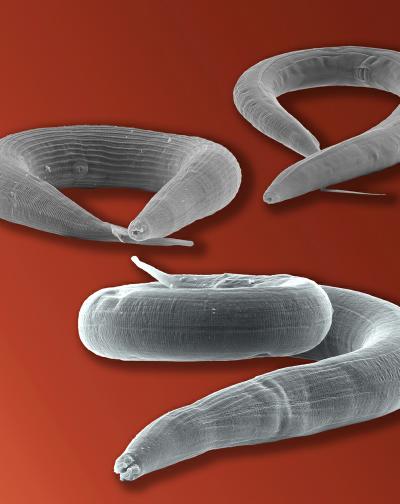
A group of scientists at the Max Planck Institute for Developmental Biology in Tübingen, Germany, are striving to decode the molecular basis of parasitism and their objects of research are nematode worms. Do the dauer stages which occur in certain nematodes and the infective larvae of their parasitic cousins share a common evolutionary basis?

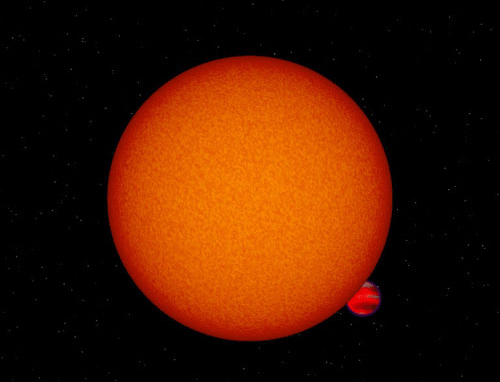
Transiting exoplanets are routinely detected when they pass in front of their parent star as viewed from the Earth, which only happens by chance. The transit event causes a small drop in the observed starlight, which can then be detected.