The heat created by human activities does not even amount to 1/10,000th of the heat that the Earth receives from the sun, say a group of researchers, and it may not be possible to get people to agree to burn fewer fossil fuels but covering parts of the Earth would offset that.
This radical plan to curb global warming and so reverse the climate change caused by burning of fossil fuels since the industrial revolution would involve covering parts of the world's deserts with reflective sheeting and they write about it in the January issue of the International Journal of Global Environmental Issues.
A groundbreaking study of popularity by a Michigan State University scientist has found that genes elicit not only specific behaviors but also the social consequences of those behaviors. According to the investigation by behavioral geneticist S. Alexandra Burt, male college students who had a gene associated with rule-breaking behavior were rated most popular by a group of previously unacquainted peers.
It's not unusual for adolescent rule-breakers to be well-liked – previous research has made that link – but Burt is the first to provide meaningful evidence for the role of a specific gene in this process. The study appears in the latest issue of the Journal of Personality and Social Psychology.
Scientists report that human gene mutations expressed in yeast cells can predict the severity of Batten Disease, a fatal nervous system disorder that begins during childhood. The new study published in Disease Models&Mechanisms (DMM) describes how the extent of changes in mutated cells paralleled the severity of symptoms seen in humans.
Researchers in Nevada are reporting that waste coffee grounds can provide a cheap, abundant, and environmentally friendly source of biodiesel fuel for powering cars and trucks. Their study appears in the current online issue of ACS' Journal of Agricultural and Food Chemistry, a bi-weekly publication.
In the new study, Mano Misra, Susanta Mohapatra, and Narasimharao Kondamudi note that the major barrier to wider use of biodiesel fuel is lack of a low-cost, high quality source, or feedstock, for producing that new energy source. Spent coffee grounds contain between 11 and 20 percent oil by weight. That's about as much as traditional biodiesel feedstocks such as rapeseed, palm, and soybean oil.
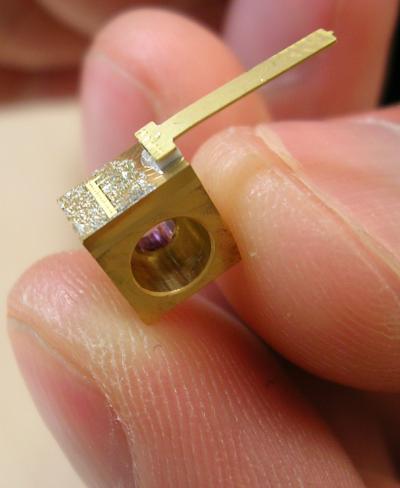
Researchers say they have discovered an entirely new mechanism for making common electronic materials emit laser beams. The finding could lead to lasers that operate more efficiently and at higher temperatures than existing devices, and find applications in environmental monitoring and medical diagnostics.
Premature infants who need intensive care or surgery are less sensitive to thermal (hot and cold) sensations later in life, according to research conducted at UCL (University College London). The study, published in the journal Pain, suggests that pain and injury related to major medical interventions in early development may alter how children respond to painful stimuli much later in life.


 Pilot Study: Fibromyalgia Fatigue Improved By TENS Therapy
 High Meat Consumption Linked To Lower Dementia Risk
 Long Before The Inca Colonized Peru, Natives Had A Thriving Trade Network
 Mesolithic People Had Meals With More Tradition Than You Thought