As ice melts away from Antarctica, parts of the continental bedrock are rising in response -- and other parts are sinking, scientists have discovered, and the finding will give much needed perspective to satellite instruments that measure ice loss on the continent, and help improve estimates of future sea level rise.
"Our preliminary results show that we can dramatically improve our estimates of whether Antarctica is gaining or losing ice," said Terry Wilson, associate professor of earth sciences at Ohio State University. Wilson reported the research in a press conference Monday, December 15, 2008 at the American Geophysical Union meeting in San Francisco. These results come from a trio of global positioning system (GPS) sensor networks on the continent.
A carbon nanotube-coated "smart yarn" that conducts electricity could be woven into soft fabrics that detect blood and monitor health, engineers at the University of Michigan have demonstrated.
"Currently, smart textiles are made primarily of metallic or optical fibers. They're fragile. They're not comfortable. Metal fibers also corrode. There are problems with washing such electronic textiles. We have found a much simpler way---an elegant way---by combining two fibers, one natural and one created by nanotechnology," said Nicholas Kotov, a professor in the departments of Chemical Engineering, Materials Science and Engineering and Biomedical Engineering.
You can't stop cancer. The nature of mutations is that they aren't predictable so they can't be vaccinated against or prevented in any way we understand those terms today. Stopping cancer from killing people is another matter. Metastasis is the ability of cancer cells to move from a primary site to form more tumors at distant sites and it's how cancer spreads and eventually kills. It is a complex process in which cell motility and invasion play a fundamental role.
Essential to our understanding of how metastasis develops is identification of the molecules, and characterisation of the mechanisms that regulate cell motility. These mechanisms have been poorly understood.
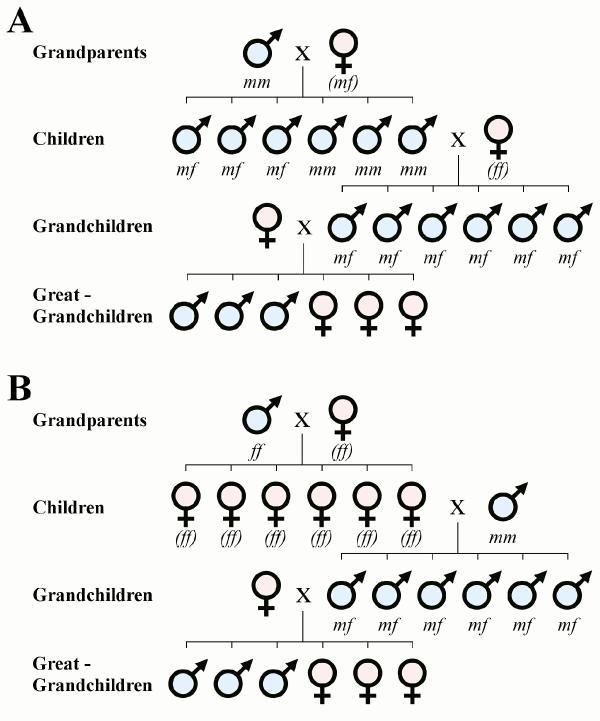
Men determine the sex of a baby depending on whether their sperm is carrying an X or Y chromosome. An X chromosome combines with the mother's X chromosome to make a baby girl (XX) and a Y chromosome will combine with the mother's to make a boy (XY).
A Newcastle University study suggests that an as-yet undiscovered gene controls whether a man's sperm contains more X or more Y chromosomes, which affects the sex of his children. On a larger scale, the number of men with more X sperm compared to the number of men with more Y sperm affects the sex ratio of children born each year.
The immune system's battle against invading bacteria reaches its peak activity at night and is lowest during the day, according to Stanford researchers who based it on experiments with Drosophila melanogaster and reveal that the specific immune response known as phagocytosis oscillates with the body's circadian rhythm. They presented their findings at the American Society for Cell Biology (ASCB) 48th Annual Meeting, Dec. 13-17, 2008 in San Francisco.
"These results suggest that immunity is stronger at night, consistent with the hypothesis that circadian proteins upregulate restorative functions such as specific immune responses during sleep, when animals are not engaged in metabolically costly activities," explains Mimi Shirasu-Hiza of Stanford University.
Is obesity all in your head? A new study says that genes that predispose people to obesity act in the brain and that perhaps some people are simply hardwired to overeat.
An international research team found six new genes that help explain body mass index and obesity, and all but one of the genes are tied to the brain rather than to metabolic functions, such as fat storage and sugar metabolism.
In addition to the six new genes, the study also confirmed the role of two other genes previously associated with obesity, said co-principal investigator Goncalo Abecasis, an associate professor at the University of Michigan School of Public Health. The study is in the journal Nature Genetics.


 Pilot Study: Fibromyalgia Fatigue Improved By TENS Therapy
 High Meat Consumption Linked To Lower Dementia Risk
 Long Before The Inca Colonized Peru, Natives Had A Thriving Trade Network
 Mesolithic People Had Meals With More Tradition Than You Thought