Banner
Pilot Study: Fibromyalgia Fatigue Improved By TENS Therapy

Fibromyalgia is the term for a poorly-understood condition where people experience pain and fatigue...

High Meat Consumption Linked To Lower Dementia Risk

Older people who eat large amounts of meat have a lower risk of dementia and cognitive decline...

Long Before The Inca Colonized Peru, Natives Had A Thriving Trade Network

A new DNA analysis reveals that long before the Incan Empire took over Peru, animals were...

Mesolithic People Had Meals With More Tradition Than You Thought

The common imagery of prehistoric people is either rooting through dirt for grubs and picking berries...

User picture.
News StaffRSS Feed of this column.

News Releases From All Over The World, Right To You... Read More »

Blogroll
The first demonstration that a single adult stem cell can self-renew in a mammal was reported at the American Society for Cell Biology (ASCB) 48th Annual Meeting, Dec. 13-17, 2008 in San Francisco.   The transplanted adult stem cell and its differentiated descendants restored lost function to mice with hind limb muscle tissue damage.
Meiosis, the process of halving a germ cell’s chromosomes in preparation for egg or sperm production, has been one of the most studied areas of cell biology. But in mammals, the field has been divided over the question of whether meiosis is triggered by a signal within a cell or by a signal coming from the cell’s environment. Now new research from the lab of Whitehead Director David Page reveals that both sets of signals are needed to initiate meiosis.
Determining the mechanisms that shape biological membranes has long been a tricky business. Like a factory assembly line, eukaryotic cells are organized into membrane-bound, functional compartments called organelles. For instance, the nucleus is the repository of genetic information and houses the machinery that creates the messenger RNA transcripts, which direct the synthesis of new protein. Secreted proteins are synthesized in a second organelle, the endoplasmic reticulum (ER), which are exported to the cell surface by a third organelle, the Golgi complex. All membrane bound organelles are characterized by dynamic changes in membrane structure that are closely coupled to the function of these compartments.

You're in the store and you have a choice between buying Gears Of War 2, with its innovative third-person tactical action gameplay and jaw-dropping graphics with effects like ambient occlusion, dynamic shadows and advanced destructible environments, or, oh yeah, some jewelry thing your wife mumbled something about wanting for Christmas.

What goes through your mind as you consider these tough choices?  And, of more importance to retailers, how can they manipulate this process for their benefit?  

A possible new therapeutic target for pancreatic cancer, the most lethal form of human cancer, has been identified in the proteins whose DNA recipe comes from the gene named "Seven-In-Absentia," according to researchers at the American Society for Cell Biology (ASCB) 48th Annual Meeting, Dec. 13-17, 2008 in San Francisco. In their studies with Drosophila melanogaster at the Mayo Clinic College of Medicine in Minnesota, scientists found a link between the "Seven-In-Absentia" or SINA gene and the aggressive cellular transformation, oncogenesis and metastasis that characterize pancreatic cancer. Scientists already knew that a mutation in the K-RAS gene underlies the abnormal, excessive cell growth of pancreatic cancer.
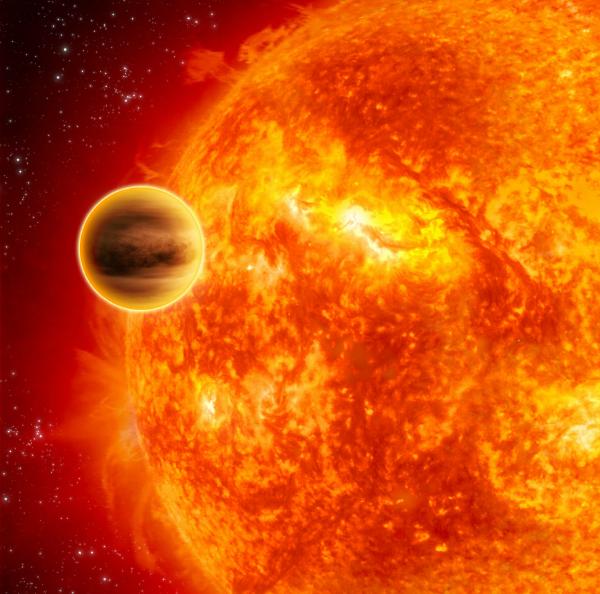
NASA's Hubble Space Telescope has discovered carbon dioxide in the atmosphere of a planet orbiting another star.    The Jupiter-sized planet, called HD 189733b, is too hot for life, but the Hubble observations are a proof-of-concept demonstration that the basic chemistry for life can be measured on planets orbiting other stars. Organic compounds also can be a by-product of life processes and their detection on an Earthlike planet someday may provide the first evidence of life beyond our planet. 

Previous observations of HD 189733b by Hubble and the Spitzer Space Telescope found water vapor. Earlier this year, Hubble found methane in the planet's atmosphere.