Banner
Pilot Study: Fibromyalgia Fatigue Improved By TENS Therapy

Fibromyalgia is the term for a poorly-understood condition where people experience pain and fatigue...

High Meat Consumption Linked To Lower Dementia Risk

Older people who eat large amounts of meat have a lower risk of dementia and cognitive decline...

Long Before The Inca Colonized Peru, Natives Had A Thriving Trade Network

A new DNA analysis reveals that long before the Incan Empire took over Peru, animals were...

Mesolithic People Had Meals With More Tradition Than You Thought

The common imagery of prehistoric people is either rooting through dirt for grubs and picking berries...

User picture.
News StaffRSS Feed of this column.

News Releases From All Over The World, Right To You... Read More »

Blogroll
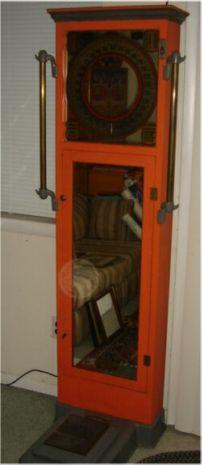
Stepping onto a scale after a calorie-filled holiday season isn't an activity many 21st-century Americans relish.

But in the late 19th century, scales were all the rage at festive gatherings — the 1800s' answer to Guitar Hero.

"A family would think it fun to weigh themselves before and after a big holiday dinner to see how much they had gained," said Deborah I. Levine, Ph.D., an Andrew W. Mellon Postdoctoral Fellow in the Modeling Interdisciplinary Inquiry Fellowship Program in the Humanities and Social Sciences in Arts&Sciences at Washington University in St. Louis.

"Knowing your weight was a novelty, a kind of parlor trick, before scales became widely available through mass production," said Levine.
When faced with a difficult decision, we try to come up with the best choice by carefully considering all of the options, maybe even resorting to lists and lots of sleepless nights. So it may be surprising that recent studies have suggested that the best way to deal with complex decisions is to not think about them at all—that unconscious thought will help us make the best choices. Although this may seem like an appealing strategy, new research in Psychological Science cautions that there are limitations in the efficacy of unconscious thought making the best decisions.
Researchers at New York University's Center for Neural Science and the Baylor College of Medicine have identified a protein that when removed from mice results in behaviors that are akin to those with autism and obsessive-compulsive disorders. Their findings, which appear in the latest issue of the journal Neuron, may enhance our understanding of these and other neurological disorders.
A detailed analysis of the measurements of five different satellites has revealed the existence of the warm plasma cloak, a new region of the magnetosphere, which is the invisible shield of magnetic fields and electrically charged particles that surround and protect Earth from the onslaught of the solar wind. 

The study was conducted by a team of scientists headed by Charles "Rick" Chappell, research professor of physics and director of the Dyer Observatory at Vanderbilt University and published this fall in the space physics section of the Journal of Geophysical Research. The northern and southern polar lights – aurora borealis and aurora australis – are the only parts of the magnetosphere that are visible, but it is a critical part of Earth's space environment. 
It's the age-old conundrum for potential Prius owners - emit CO2 and cause global warming using combustion engines or pollute the ground and water with acid rain due to batteries.   Climate scientists at Cardiff have found a way to stop having the environmental money maker for the 2000s fighting against the environmental moneymaker of the 1980s - climate change is hampering acid rain recovery, they say.

Yes, wet weather in Wales is keeping rivers from getting better.

The research by Professor Steve Ormerod and Dr Isabelle Durance of the School of Biosciences is based on observations over a 25 year period around Llyn Brianne in mid-Wales. Their findings are published online today in the British Ecological Society's Journal of Applied Ecology.
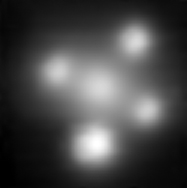
A team of astronomers from Europe and the US studied the "Einstein Cross", a famous cosmic mirage. This cross-shaped configuration consists of four images of a single very distant source. The multiple images are a result of gravitational lensing by a foreground galaxy, an effect that was predicted by Albert Einstein as a consequence of his theory of general relativity. The light source in the Einstein Cross is a quasar approximately ten billion light-years away, whereas the foreground lensing galaxy is ten times closer. The light from the quasar is bent in its path and magnified by the gravitational field of the lensing galaxy.