People said it couldn't be done, but researchers from the University of Pittsburgh and the U.S. Department of Energy National Energy Technology Laboratory (NETL) in Pittsburgh demonstrated a molecular chain reaction on a metal surface - a single electron caused a self-perpetuating chain reaction that rearranged the bonds in 10 consecutive molecules positioned on a gold surface. As each molecule's original bond was broken by the reaction, the molecule rearranged itself to form a new molecule.
Less experienced prostitutes are more likely to have sexually transmitted infections (STIs). A study of more than a thousand female sex workers in Cambodia, reported in the open access journal BMC Infectious Diseases, has shown that girls who were new to the sex industry were twice as likely to have gonorrhoea or chlamydia.
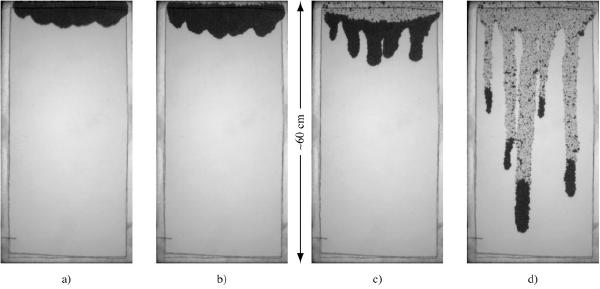
Researchers at MIT recently found an elegant solution to a sticky scientific problem in basic fluid mechanics: why water doesn't soak into soil at an even rate, but instead forms what look like fingers of fluid flowing downward.
Scientists call these rivulets "gravity fingers," and the explanation for their formation has to do with the surface tension where the water—or any liquid—meets the soil (or other medium). Knowing how to account for this phenomenon mathematically will have wide-ranging impact on science problems and engineering applications, including the recovery of oil from reservoirs and the sequestration of carbon underground.
Throughout history, human beings have used the whistle for everything from hailing a cab to carrying a tune. Now, an orangutan's spontaneous whistling is providing scientists at Great Ape Trust of Iowa new insights into the evolution of speech and learning.
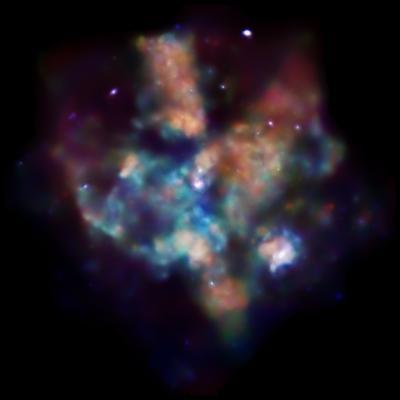
Found in the nearby Large Magellanic Cloud, 30 Doradus is one of the largest massive star forming regions close to the Milky Way. Enormous stars in 30 Doradus, also known as the Tarantula Nebula, are producing intense radiation and searing winds of multimillion-degree gas that carve out gigantic bubbles in the surrounding cooler gas and dust. Other massive stars have raced through their evolution and exploded catastrophically as supernovae, expanding these bubbles into X-ray-brightened superbubbles. They leave behind pulsars as beacons of their former lives and expanding supernova remnants that trigger the collapse of giant clouds of dust and gas to form new generations of stars.
Insufficient vitamin D can stunt growth and foster weight gain during puberty, according to a new study published in the Journal of Clinical Endocrinology&Metabolism. Even in sun-drenched California, where scientists from the McGill University Health Centre (MUHC) and the University of Southern California conducted their study, vitamin D deficiency was found to cause higher body mass and shorter stature in girls at the peak of their growing spurt.


 Pilot Study: Fibromyalgia Fatigue Improved By TENS Therapy
 High Meat Consumption Linked To Lower Dementia Risk
 Long Before The Inca Colonized Peru, Natives Had A Thriving Trade Network
 Mesolithic People Had Meals With More Tradition Than You Thought