Banner
Pilot Study: Fibromyalgia Fatigue Improved By TENS Therapy

Fibromyalgia is the term for a poorly-understood condition where people experience pain and fatigue...

High Meat Consumption Linked To Lower Dementia Risk

Older people who eat large amounts of meat have a lower risk of dementia and cognitive decline...

Long Before The Inca Colonized Peru, Natives Had A Thriving Trade Network

A new DNA analysis reveals that long before the Incan Empire took over Peru, animals were...

Mesolithic People Had Meals With More Tradition Than You Thought

The common imagery of prehistoric people is either rooting through dirt for grubs and picking berries...

User picture.
News StaffRSS Feed of this column.

News Releases From All Over The World, Right To You... Read More »

Blogroll
Hospital-borne infections are a serious risk of a long-term hospital stay, and ventilator-associated pneumonia (VAP), a lung infection that develops in about 15% of all people who are ventilated, is among the most dangerous. With weakened immune systems and a higher resistance to antibiotics, patients who rely on a mechanical ventilator can easily develop serious infections — as 26,000 Americans do every year.

Thanks to a proven new clinical approach developed by Tel Aviv University nurses, though, there is a new tool for stopping the onset of VAP in hospitals.

This new high-tech tool? An ordinary toothbrush.

Three Times a Day Keeps Pneumonia Away

RISI today through its Wood Biomass Market Report, indicated that woodfiber will play a major role in any new green energy spending plans in the U.S. The Report stated that as of Dec. 12, estimates from the ever-expanding federal stimulus package suggest the green component (wood, wind, solar, etc.) will be a whopping US$50 billion over two years. If 20% falls to wood energy, that near term spending of US$10 billion would spur formidable growth, providing tens of thousands of new jobs -- and wood demand of perhaps 120 million green tons, long-term.

A portable test being developed by biodetection expert Stratophase could soon enable farmers and vets to accurately detect highly contagious diseases such as bovine TB and foot and mouth in the field, reducing false alarms and containment time and enabling remedial action to be taken more quickly.

A total of 2,030 cases of Foot and Mouth Disease (FMD) were confirmed in Great Britain between February and September 2001.* Millions of cows were slaughtered during the eradication programme and large swathes of the British countryside fenced off and declared out of bounds to the public for fear of further spread of the infection.

Stratophase is working with other British experts to develop a new detector system using immunoassay diagnosis - a biochemical test that detects

Would you insist someone change if they are left-handed?   90% of the world is right-handed.  Short?  That's relative but the average height for an American man is under 5'10".    Genes do a lot of things, and a new study from the Abramson Cancer Center and Department of Psychiatry in the University of Pennsylvania School of Medicine says that smokers who carry a particular version of a gene for an enzyme that regulates dopamine in the brain may suffer from concentration problems and other cognitive deficits when abstaining from nicotine – a problem that puts them at risk for relapse during attempts to quit smoking.
Public confidence in the honesty of scientists is being harmed by a small minority of researchers who behave badly, heard attendees of a meeting in Madrid on 17-18 November that was organized by the newly formed Research Integrity Forum of the European Science Foundation (ESF) in collaboration with the Spanish National Research Council (CSIC).   The European research organizations agreed to work more closely to tackle the problem of fraud and other misconduct in science.

Fraud in science includes inventing data (fabrication), manipulating data to produce an unjustified result (falsification) or presenting the work of other researchers as one's own (plagiarism).
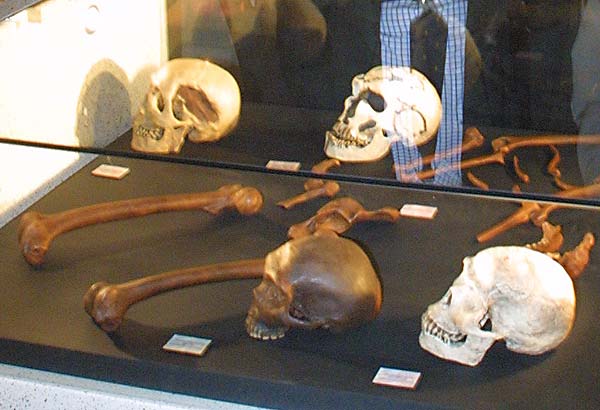
It is widely accepted that Upper Paleolithic early modern humans spread westward across Europe about 42,000 years ago, variably displacing and absorbing Neandertal (alt. spelling Neanderthal) populations in the process. However, Middle Paleolithic assemblages persisted for another 8,000 years in Iberia, presumably made by Neandertals. It has been unclear whether these late Middle Paleolithic Iberian assemblages were made by Neandertals, and what the nature of those humans might have been. 

New research, published Dec. 8 in the Proceedings of the National Academy of Sciences, is now shedding some light on what were probably the last Neandertals.