Banner
Pilot Study: Fibromyalgia Fatigue Improved By TENS Therapy

Fibromyalgia is the term for a poorly-understood condition where people experience pain and fatigue...

High Meat Consumption Linked To Lower Dementia Risk

Older people who eat large amounts of meat have a lower risk of dementia and cognitive decline...

Long Before The Inca Colonized Peru, Natives Had A Thriving Trade Network

A new DNA analysis reveals that long before the Incan Empire took over Peru, animals were...

Mesolithic People Had Meals With More Tradition Than You Thought

The common imagery of prehistoric people is either rooting through dirt for grubs and picking berries...

User picture.
News StaffRSS Feed of this column.

News Releases From All Over The World, Right To You... Read More »

Blogroll

Take out carbon credit politics and misplaced technical concerns, says the World Agroforestry Center , and existing technology that could effectively monitor carbon storage in developing country landscapes could save more carbon than closing 1,400 coal-burning power plants.

When broadcaster and health campaigner Anne Diamond reviewed some videogames earlier this year, her damnation was so scathing that it overshadowed The Byron Review, a major government-commissioned report on the subject. Fast forward eight months and the leading health campaigner is now working with researchers to test a theory that certain casual games may actually help weight loss and she's recruiting volunteers for a clinical trial to put the theory to the test.

This study was prompted by work already undertaken in the U.S.

No one needs to tell Disney, who brought the likes of Herbie the Love Bug and Lightning McQueen to the big screen, that cars have personalities.   A study co-authored by a Florida State University researcher says it has confirmed through a complex statistical analysis that many people see human facial features in the front end of automobiles and ascribe various personality traits to cars -- a modern experience driven by our prehistoric psyches.

Researchers, product designers and, of course, filmmakers have long toyed with the idea that cars have faces, but this study is the first to investigate the phenomenon systematically. The study will be published in the December issue of the journal Human Nature.
Media coverage of clinical trials does not contain the elements readers require to make informed decisions. A comparison of the coverage received by pharmaceutical and herbal remedy trials, reported in BMC Medicine, has revealed that it is rarely possible for the lay public to assess the credibility of the described research.
Bone growth is controlled in the gut through serotonin, the same naturally present chemical used by the brain to influence mood, appetite and sleep, according to a new discovery from researchers at Columbia University Medical Center. Until now, the skeleton was thought to control bone growth, and serotonin was primarily known as a neurotransmitter acting in the brain. This new insight could transform how osteoporosis is treated in the future by giving doctors a way to increase bone mass, not just slow its loss. Findings are reported in the Nov. 26, 2008 issue of Cell.
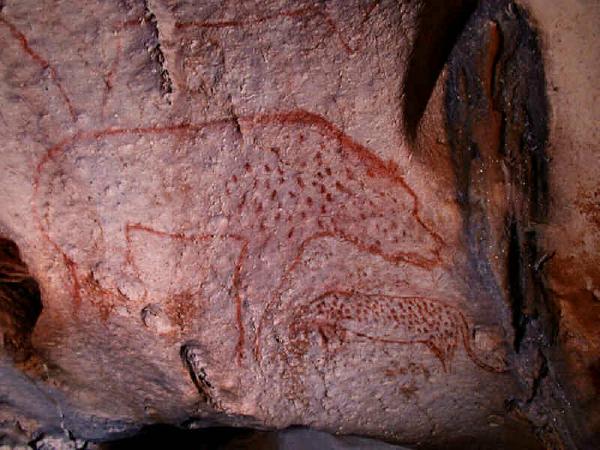
Enormous cave bears, Ursus spelaeus, that once inhabited a large swathe of Europe, from Spain to the Urals, died out 27,800 years ago, around 13 millennia earlier than was previously believed, scientists have reported.  

Despite over 200 years of scientific study – beginning in 1794 when a young anatomist, J. Rosenmüller, first described bones from the Zoolithenhöhle in Bavaria as belonging to a new extinct species, which he called cave bear – the timing and cause of its extinction remain controversial.