Scientists have detected an organic sugar molecule that is directly linked to the origin of life, in a region of our galaxy where habitable planets could exist. The international team of researchers, including a researcher at University College London (UCL), used the IRAM radio telescope in France to detect the molecule in a massive star forming region of space, some 26000 light years from Earth.
The Secretariat of the Joint United Nations Programme on HIV/AIDS (UNAIDS) has lost valuable ground by ignoring for years the contribution of long-term concurrent relationships to Africa's AIDS epidemic, claims says Helen Epstein, an independent consultant on public health in developing countries, ahead of World AIDS Day on British Medical Journal (
www.bmj.com) today.
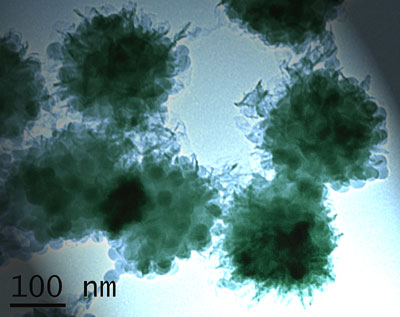
Research chemists at the University of Warwick have devised a process which covers small particles of polymer with a layer of silica-based nanoparticles and provides a versatile material that can be used to create a range of high performance materials - like self healing paints or even packaging that can be tailored to let precise levels of water, air or both pass in a particular direction.
Sandcastle worms live in intertidal surf, building sturdy tube-shaped homes from bits of sand and shell and their own natural glue. University of Utah bioengineers have made a synthetic version of this seaworthy superglue, and hope it will be used within several years to repair shattered bones in knees, other joints and the face.
"You would glue some of the small pieces together," says Russell Stewart, associate professor of bioengineering and senior author of the study to be published online within a week in the journal Macromolecular Biosciences.
The next time you have to make a difficult moral decision, you might think twice about mulling it over in the bath or shower. New research in Psychological Science has found that the physical notion of cleanliness significantly reduces the severity of moral judgments showing that intuition, rather than deliberate reasoning, can influence our perception of what is right and wrong.
Lead researcher, Simone Schnall, University of Plymouth, explains the relevance of the findings to everyday life; “When we exercise moral judgment, we believe we are making a conscious, rational decision, but this research shows that we are subconsciously influenced by how clean or ‘pure’ we feel.
A new small satellite about the size of a loaf of bread and called Firefly is designed to help solve the mystery of the most powerful natural particle accelerator in Earth's atmosphere -
TGFs, or terrestrial gamma-ray flashes - which likely result from thunderstorms.
The mission is the second project under the NSF
CubeSat program. A CubeSat satellite consists of three cubes attached end to end in a rectangular shape.


 Pilot Study: Fibromyalgia Fatigue Improved By TENS Therapy
 High Meat Consumption Linked To Lower Dementia Risk
 Long Before The Inca Colonized Peru, Natives Had A Thriving Trade Network
 Mesolithic People Had Meals With More Tradition Than You Thought