Banner
Pilot Study: Fibromyalgia Fatigue Improved By TENS Therapy

Fibromyalgia is the term for a poorly-understood condition where people experience pain and fatigue...

High Meat Consumption Linked To Lower Dementia Risk

Older people who eat large amounts of meat have a lower risk of dementia and cognitive decline...

Long Before The Inca Colonized Peru, Natives Had A Thriving Trade Network

A new DNA analysis reveals that long before the Incan Empire took over Peru, animals were...

Mesolithic People Had Meals With More Tradition Than You Thought

The common imagery of prehistoric people is either rooting through dirt for grubs and picking berries...

User picture.
News StaffRSS Feed of this column.

News Releases From All Over The World, Right To You... Read More »

Blogroll
A new species of bacterium that causes leprosy has been identified through intensive genetic analysis of a pair of lethal infections, a research team reports in the December issue of the American Journal of Clinical Pathology.

All cases of leprosy, an ancient disease that still maims and kills in the developing world, previously had been thought to be caused by a single species of bacterium, said lead author Xiang-Yang Han, M.D., Ph.D., associate professor in Laboratory Medicine at The University of Texas M. D. Anderson Cancer Center. 
New ways of squeezing out greater efficiency from solar photovoltaic cells are emerging from computer simulations and lab tests conducted by a team of physicists and engineers at MIT.

This project, along with other research work going on now in solar cells, has the potential to get costs down "so that it becomes competitive with grid electricity," said Peter Bermel, a postdoctoral researcher in MIT's physics department who has been working on the project. While no single project is likely to achieve that goal, he said, this work is "the kind of science that needs to be explored in order to achieve that."
A study published in Journal of the American Water Resources Association states that the "Green Great Wall," a forest shelterbelt project in northern China running nearly parallel to the Great Wall, is likely to improve climatic and hydrological conditions in the area when completed. The project, which relies on afforestation (a process that changes land without dense tree cover into forest), could lead to an increase in precipitation by up to 20 percent and decrease the temperature in the area.
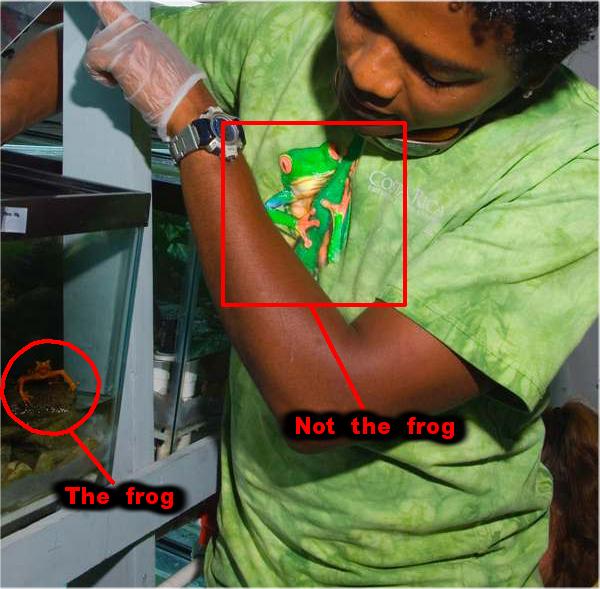
A new frog species has been discovered in Panama and will be announced in the December issue of Journal of Herpetology by a research team led by STRI former visiting scientist Joseph Mendelson, from Zoo Atlanta.

The amphibian, a type of tree frog with bright reddish- and green-colored skin that grows to a length of 122 mm was discovered by Edgardo Griffith while working with Mendelson in El Valle. Mendelson was head of the Amphibian Recovery Project in 2005 under the STRI umbrella. Today, Griffith is the director of the El Níspero zoo's Amphibian Conservation Center in the Valle de Anton, working with the Houston Zoo.
Bacteria that can cause serious heart disease in humans are being spread by rat fleas, sparking concern that the infections could become a bigger problem in humans. Research published in the December issue of the Journal of Medical Microbiology suggests that brown rats, the biggest and most common rats in Europe, may now be carrying the bacteria.

Since the early 1990s, more than 20 species of Bartonella bacteria have been discovered. They are considered to be emerging zoonotic pathogens, because they can cause serious illness in humans worldwide from heart disease to infection of the spleen and nervous system.

Bacteria that cause stomach ulcers and cancer could also be giving us bad breath, according to research published in the December issue of the Journal of Medical Microbiology. For the first time, scientists have found Helicobacter pylori living in the mouths of people who are not showing signs of stomach disease.

The mouth is home to over 600 different species of bacteria, some of which can cause disease. Helicobacter pylori has recently been shown to cause stomach ulcers and is also responsible for a large proportion of gastric cancers. Scientists estimate that between 20 and 80 % of people in the developed world and over 90 % of people in the developing world carry the bacterium.