Banner
Pilot Study: Fibromyalgia Fatigue Improved By TENS Therapy

Fibromyalgia is the term for a poorly-understood condition where people experience pain and fatigue...

High Meat Consumption Linked To Lower Dementia Risk

Older people who eat large amounts of meat have a lower risk of dementia and cognitive decline...

Long Before The Inca Colonized Peru, Natives Had A Thriving Trade Network

A new DNA analysis reveals that long before the Incan Empire took over Peru, animals were...

Mesolithic People Had Meals With More Tradition Than You Thought

The common imagery of prehistoric people is either rooting through dirt for grubs and picking berries...

User picture.
News StaffRSS Feed of this column.

News Releases From All Over The World, Right To You... Read More »

Blogroll
Multiple high-definition videos and other data-rich services may soon stream through homes, offices, ships and planes via new hybrid optical/ultra-wideband-radio systems developed by European researchers.

Moshe Ran, Coordinator of the EU-funded project, UROOF (Photonic components for Ultra-wideband Radio Over Optical Fiber), has a vision. He wants to see streams of high-definition video and other high-bandwidth services flowing through homes, office buildings, and even ships and planes, through a happy marriage of optical and ultra-wideband radio technologies.

“It’s a natural combination that can bring a lot of advantages to the world,” says Ran.
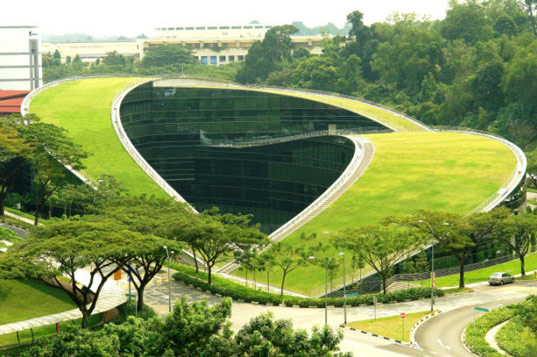
A Spanish research study has tested different combinations of supports and indigenous plants to determine which are the best for reducing energy consumption inside buildings. This type of roof is a “rurban”, sustainable architectural solution that will lead to a reduction in environmental and acoustic contamination levels in cities, and be visually pleasing.

Researchers from the Polytechnic University of Madrid (UPM) have built a roof covered with plants and a watering system that will optimise the consumption of a building’s heating and cooling systems thanks to its insulation. It is a third-generation ecological roof, characterized by its sustainability and the use of indigenous plant species.
A team of investigators from Valencia has developed a machine that separates automatically the seeds from the rind and pith of the pomegranate. The mechanism uses a computer vision system to distinguish and sort the different parts of this fruit, according to a study published on-line by the Journal of Food Engineering.

The difficulty in peeling pomegranates and separating out the seeds disheartens many consumers when they eat the fruit of the pomegranate (Punica granatum). Now this Spanish invention enables the food to be de-seeded automatically.
Breast cancer, the leading cause of death among women in France, is the most commonly occurring cancer in women. Sporadic breast cancer, which is non-hereditary, turns out to be the most widespread, representing 85 to 90% of all cases, but remains the least well-known. Researchers at CNRS and CEA (1), working with a team from Hôpital Saint-Louis (2), have just discovered the cause of 50% of sporadic breast cancers. The results should also explain epidemiological studies which suggest that hormone treatment predisposes patients to breast cancer. The work is published in Cancer Research.
Women who are exposed to hairspray in the workplace during pregnancy have more than double the risk of having a son with the genital birth defect hypospadias, according to a new study published today in the journal Environmental Health Perspectives

The study is the first to show a significant link between hairspray and hypospadias, one of the most common birth defects of the male genitalia, where the urinary opening is displaced to the underside of the penis. The causes of the condition are poorly understood.
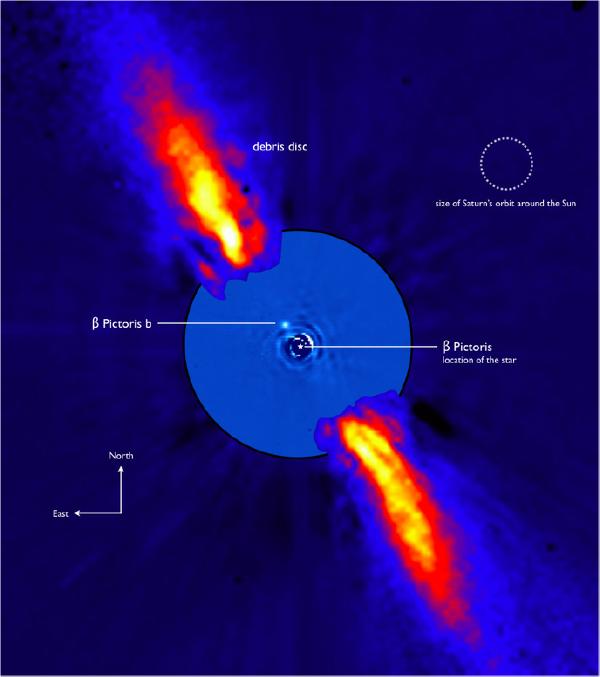
Beta Pictoris is one of the best-known examples of stars surrounded by a dusty 'debris' disc.  Only 12 million years old, the 'baby star' Beta Pictoris is located about 70 light-years away towards the constellation Pictor (the Painter).

Debris discs are composed of dust resulting from collisions among larger bodies like planetary embryos or asteroids. They are a bigger version of the zodiacal dust in our Solar System.