Banner
Pilot Study: Fibromyalgia Fatigue Improved By TENS Therapy

Fibromyalgia is the term for a poorly-understood condition where people experience pain and fatigue...

High Meat Consumption Linked To Lower Dementia Risk

Older people who eat large amounts of meat have a lower risk of dementia and cognitive decline...

Long Before The Inca Colonized Peru, Natives Had A Thriving Trade Network

A new DNA analysis reveals that long before the Incan Empire took over Peru, animals were...

Mesolithic People Had Meals With More Tradition Than You Thought

The common imagery of prehistoric people is either rooting through dirt for grubs and picking berries...

User picture.
News StaffRSS Feed of this column.

News Releases From All Over The World, Right To You... Read More »

Blogroll
One of the biggest threats to today's farmlands is the loss of soil organic carbon (SOC) and soil organic matter (SOM) from poor land-management practices. The presence of these materials is essential as they do everything from providing plants with proper nutrients to filtering harmful chemical compounds to the prevention of soil erosion. Sustainable management practices for crop residues are critical for maintaining soil productivity, but being able to measure a loss in the quality of soil can be difficult.
In contrast to recent findings, two of the most common medications used to treat attention deficit hyperactivity disorder (ADHD) do not appear to cause genetic damage in children who take them as prescribed, according to a new study by researchers at the National Institutes of Health (NIH) and Duke University Medical Center.

ADHD is a disorder characterized by attention problems, impulsivity, and hyperactivity. About 3 percent of children in the United States have been diagnosed with the disorder, although some studies suggest 7 to 12 percent of children may be affected.
We don't have ten years, as Al Gore predicted in 2006, dangerous levels of carbon dioxide are already here, say 10 scientists, and the level of globe-warming carbon dioxide in the air has probably already reached a point where world climate will change disastrously unless the level can be reduced in coming decades. 

Their new study is markedly different from consensus projections that carbon dioxide levels would become critical later this century.   They publish their new estimates in the current edition of the Open Atmospheric Science Journal.
A new study by researchers at the Bradley Hasbro Children's Research Center suggests that the incidence of heterosexual anal sex is increasing among teens and young adults – particularly those who have recently had unprotected vaginal sex. These findings mirror recent data that show anal sex rates among adults doubled between the years 1995 and 2004.

The study, published online by the American Journal of Public Health, is among the first to report on the little-known factors associated with heterosexual anal intercourse among adolescents and young adults.

by Diane Banegas, National Science Foundation

Researchers at the University of Minnesota-Twin Cities are studying a remarkable species of bacteria, Geobacter sulfurreducens, that produces electric current when attached to a graphite electrode or other conductive surface.

Geobacter's current capability already has been harnessed in so-called "microbial fuel cells" that use bacteria to convert wastewater organic compounds into electricity. Daniel Bond, a microbiologist at the University of Minnesota-Twin Cities, and his team have demonstrated the same phenomenon can be harnessed for use in batteries and biosensors. 
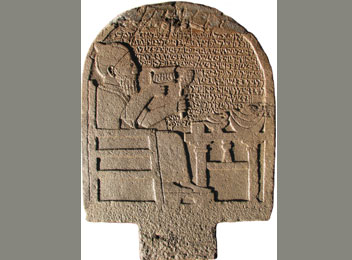
Archaeologists in southeastern Turkey have discovered an Iron Age chiseled stone slab that provides the first written evidence in the region that people believed the soul was separate from the body.  University of Chicago researchers will describe the discovery, a testimony created by an Iron Age official that includes an incised image of the man, on Nov. 22-23 at conferences of biblical and Middle Eastern archaeological scholars in Boston.

The Neubauer Expedition of the Oriental Institute at the University of Chicago found the 800-pound basalt stele, 3 feet tall and 2 feet wide, at Zincirli (pronounced "Zin-jeer-lee"), the site of the ancient city of Sam'al. Once the capital of a prosperous kingdom, it is now one of the most important Iron Age sites under excavation.