Banner
Pilot Study: Fibromyalgia Fatigue Improved By TENS Therapy

Fibromyalgia is the term for a poorly-understood condition where people experience pain and fatigue...

High Meat Consumption Linked To Lower Dementia Risk

Older people who eat large amounts of meat have a lower risk of dementia and cognitive decline...

Long Before The Inca Colonized Peru, Natives Had A Thriving Trade Network

A new DNA analysis reveals that long before the Incan Empire took over Peru, animals were...

Mesolithic People Had Meals With More Tradition Than You Thought

The common imagery of prehistoric people is either rooting through dirt for grubs and picking berries...

User picture.
News StaffRSS Feed of this column.

News Releases From All Over The World, Right To You... Read More »

Blogroll
An article published electronically in the scientific journal Acta Paediatrica describes how heart rate and sleep in boys are affected by violent video games. Researchers from Stockholm University, Uppsala University and Karolinska Institutet in Sweden have worked together with this study.
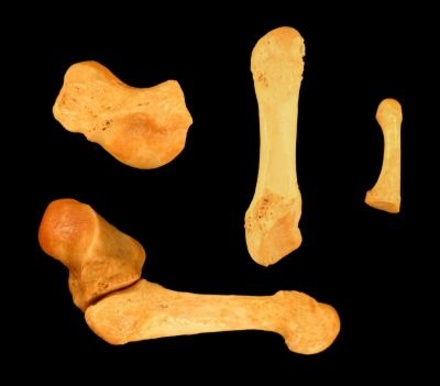
A recently discovered female pelvis is changing minds about the head size of an ancient human ancestor, Homo erectus, and consequently revising notions about how smart they may have been. The Pleistocene adult female Homo erectus pelvis was from the Busidima Formation of Gona, Afar, Ethiopia., not far from the site that yielded the 3.2 million year old remains of the famed Australopithecus afarensi "Lucy," and the pelvis indicates that Homo erectus, which lived in Africa roughly 2 million years ago, had a larger birth canal than originally suspected and could have given birth to babies with bigger brains.
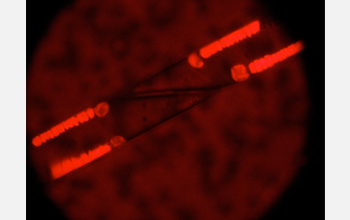
An unusual microorganism discovered in the open ocean may force scientists to rethink their understanding of how carbon and nitrogen cycle through ocean ecosystems.

A research team led by Jonathan Zehr, a marine scientist at the University of California, Santa Cruz, characterized the new microbe by analyzing its genetic material, even though researchers have not been able to grow it in the laboratory.  Zehr said the newly described organism seems to be an atypical member of the cyanobacteria, a group of photosynthetic bacteria formerly known as blue-green algae.
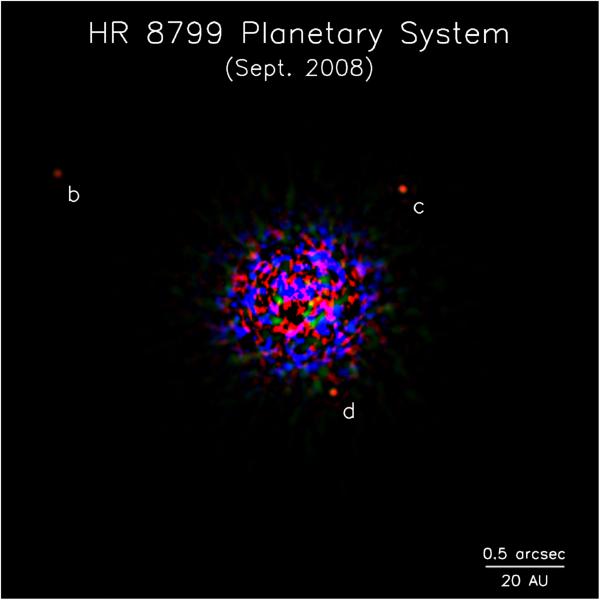
Astronomers have taken snapshots of a multi-planet solar system much like ours orbiting another star, for the first time.

The new solar system orbits a dusty young star named HR 8799, which is 140 light years away and about 1.5 times the size of our sun. Three planets, roughly 10, 10 and 7 times the mass of Jupiter, orbit the star. The size of the planets decreases with distance from the parent star, much like the giant planets do in our system.

And there may be more planets out there, but scientists say they just haven't seen them yet.

It has all the hallmarks of a Cretaceous melodrama. A dinosaur sits on her nest of a dozen eggs on a sandy river beach. Water levels rise, and the mother is faced with a dilemma: Stay or abandon her unhatched offspring to the flood and scramble to safety?

Seventy-seven million years later, scientific detective work conducted by University of Calgary and Royal Tyrrell Museum researchers used this unique fossil nest and eggs to learn more about how nest building, brooding and eggs evolved. But there is a big unresolved question: Who was the egg-layer?
Scientists may have overcome a major hurdle to calculating how much carbon dioxide (CO2) is absorbed and released by plants, vital information for understanding how the biosphere responds to stress and for determining the amount of carbon that can be safely emitted by human activities. The problem is that ecosystems simultaneously take up and release CO2. The key finding is that the compound carbonyl sulfide, which plants consume in tandem with CO2, can be used to quantify gas flow into the plants during photosynthesis. The research is published in the November 14, issue of Science.