A third-year undergraduate student, Hayley Frend, at The University of Nottingham has had her research into the sex life of the pond snail published in the peer-reviewed journal Royal Society Journal Biology Letters.
With a grant of £1,500 from the Nuffield Foundation, Frend, who is a student in the School of Biology, has shown that just like humans the pond snail is genetically programmed to use the left or right handed side of its brain to perform different tasks.
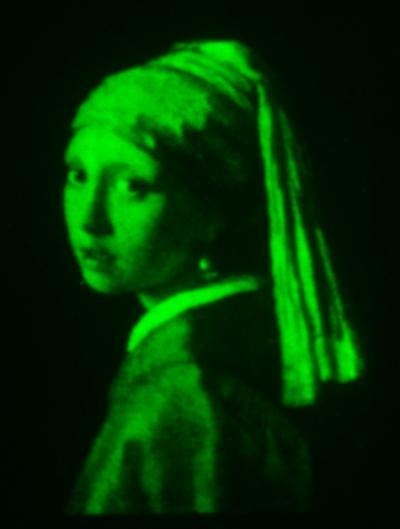
Canadian researchers have created a new protein patterning technique that's enabled them to reproduce complex cellular environments and a miniature version of a masterpiece painting. According to a new study published in the journal Lab on a Chip, scientists from Université de Montréal, the Maisonneuve-Rosemont Hospital Research Centre, McGill University and the Montreal Neurological Institute have developed a laser technology that can mimic the protein patterns that surround cells in vivo and that could lead to great advances in neuroscience.
Researchers at the Yerkes National Primate Research Center, Emory University, have discovered dental pulp stem cells can stimulate growth and generation of several types of neural cells. Findings from this study, available in the October issue of the journal Stem Cells, suggest dental pulp stem cells show promise for use in cell therapy and regenerative medicine, particularly therapies associated with the central nervous system.
Researchers at the UC Davis M.I.N.D. Institute have found that infants later diagnosed with autism exhibited unusual exploration of objects long before being diagnosed. Studying a group of children at high risk for developing autism, the researchers found that those eventually diagnosed with the disorder were more likely to spin, repetitively rotate, stare at and look out of the corners of their eyes at simple objects, including a baby bottle and a rattle, as early as 12 months of age.
These findings could help pediatricians diagnose and treat autism earlier, reducing some of the social and educational challenges associated with the disorder.
Computers are getting smaller and smaller and as hand-held devices like mobile phones and music players get more powerful the race is on to develop memory formats that can satisfy the ever-growing demand for information storage on those tiny formats.
Current memory technologies fall into three separate groups: dynamic random access memory (DRAM), which is the cheapest method; static random access memory (SRAM), which is the fastest memory — but both DRAM and SRAM require an external power supply to retain data; and flash memory, which is non-volatile — it does not need a power supply to retain data, but has slower read-write cycles than DRAM.
Listening to your favorite music may be good for your cardiovascular system. Researchers at the University of Maryland School of Medicine in Baltimore have shown for the first time that the emotions aroused by joyful music have a healthy effect on
blood vessel function.


 Pilot Study: Fibromyalgia Fatigue Improved By TENS Therapy
 High Meat Consumption Linked To Lower Dementia Risk
 Long Before The Inca Colonized Peru, Natives Had A Thriving Trade Network
 Mesolithic People Had Meals With More Tradition Than You Thought