Normal-weight women who carry out lots of vigorous exercise are approximately 30% less likely to develop breast cancer than those who don't exercise vigorously, according to a study of more than thirty thousand postmenopausal American women reported in Breast Cancer Research. So a sedentary lifestyle can be a risk factor for the disease – even in women who are not overweight.
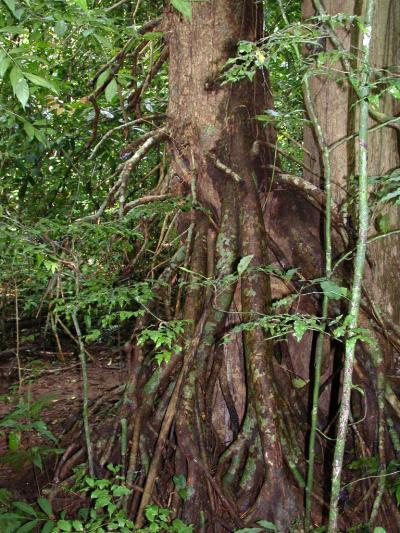
A "living fossil" tree species is helping a University of Michigan researcher understand how tropical forests responded to past climate change and how they may react to global warming in the future, according to research in the November issue of Evolution.
Symphonia globulifera is a widespread tropical tree with a history that goes back some 45 million years in Africa, said Christopher Dick, an assistant professor of ecology and evolutionary biology who is lead author on the paper. It is unusual among tropical trees in having a well-studied fossil record, partly because the oil industry uses its distinctive pollen fossils as a stratigraphic tool.
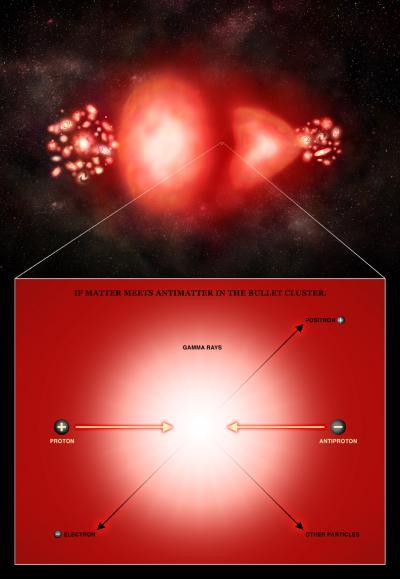
Scientists have long been on the hunt for evidence of antimatter, matter's arch nemesis and a staple of science fiction in the last century, that might be left over from the very early Universe. But the latest results using data from NASA's Chandra X-ray Observatory and Compton Gamma Ray Observatory suggest the search is not going to get any easier.
Antimatter would be made up of elementary particles, each of which has the same mass as their corresponding matter counterparts --protons, neutrons and electrons -- but the opposite charges and magnetic properties. When matter and antimatter particles collide, theory says they annihilate each other and produce energy according to Einstein's famous equation, E=mc2.
New research from the University of Bristol brings stem cell therapies for heart disease one step closer. The findings reveal that our bodies' ability to respond to an internal 'mayday' signal may hold the key to success for long-awaited regenerative medicine. Dr Nicolle Kränkel and colleagues at the Bristol Heart Institute have discovered how our bodies initiate DIY rescue and repair mechanisms when blood supply is inadequate, for example in diabetic limbs or in the heart muscle during heart attack. Their findings also provide a practical step to advance progress in stem cell therapies.
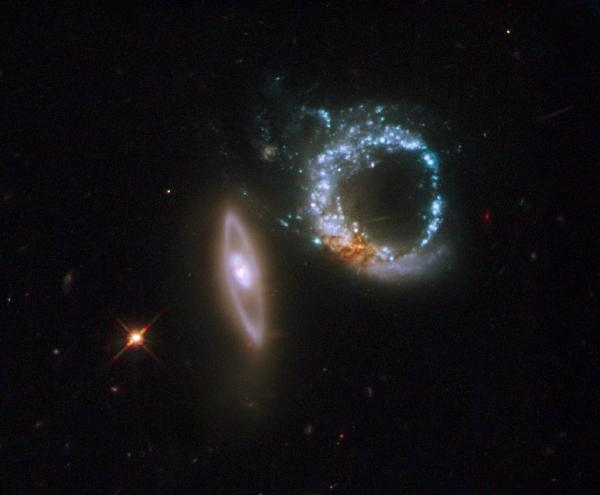
The NASA/ESA Hubble Space Telescope is back in business with a snapshot of the fascinating galaxy pair Arp 147. The science operations were resumed on 25 October 2008, four weeks after a problem with the science data formatter took the spacecraft into safe mode.
On Sunday 28 September 2008, the NASA/ESA Hubble Space Telescope automatically entered safe mode when errors were detected in the Control Unit/Science Data Formatter-Side A. This component is essential for the storage and transmission of data from the telescope's science instruments back to Earth. The component was reactivated on Thursday 23 October, and the Wide Field Planetary Camera-2 science observations resumed on Saturday 25 October.
A fungus called microsporidia that causes chronic diarrhea in AIDS patients, organ transplant recipients and travelers has been identified as a member of the family of fungi that have been discovered to reproduce sexually. A team at Duke University Medical Center has proven that microsporidia are true fungi and that this species most likely undergoes a form of sexual reproduction during infection of humans and other host animals.
The findings could help develop effective treatments against these common global pathogens and may help explain their most virulent attacks.


 Pilot Study: Fibromyalgia Fatigue Improved By TENS Therapy
 High Meat Consumption Linked To Lower Dementia Risk
 Long Before The Inca Colonized Peru, Natives Had A Thriving Trade Network
 Mesolithic People Had Meals With More Tradition Than You Thought