Banner
Pilot Study: Fibromyalgia Fatigue Improved By TENS Therapy

Fibromyalgia is the term for a poorly-understood condition where people experience pain and fatigue...

High Meat Consumption Linked To Lower Dementia Risk

Older people who eat large amounts of meat have a lower risk of dementia and cognitive decline...

Long Before The Inca Colonized Peru, Natives Had A Thriving Trade Network

A new DNA analysis reveals that long before the Incan Empire took over Peru, animals were...

Mesolithic People Had Meals With More Tradition Than You Thought

The common imagery of prehistoric people is either rooting through dirt for grubs and picking berries...

User picture.
News StaffRSS Feed of this column.

News Releases From All Over The World, Right To You... Read More »

Blogroll

Today, scientists from Procter&Gamble (P&G), the University of Calgary and the University of Virginia announced results from the first study to examine the entire human genome's response to the most common cold virus, human rhinovirus.

A wish could come true for paraplegics who play the piano and are paralyzed from the hips down: Heidelberg researcher Dr.-Ing. Rüdiger Rupp has developed a method with which a pianist can operate the right pedal of a concert grand wirelessly – a first in the world. A paraplegic pianist can thus overcome the handicap of being able to play the piano using only his arms and hands.

Dr. Rupp, director of the research department at the spinal cord injury unit of the Orthopedic Clinic of Heidelberg University Hospital (Director: Prof. Dr. Hans Jürgen Gerner), was honored for this invention with € 15,000 from the Innovation Award 2008 of the German Paraplegic Foundation (DSQ).

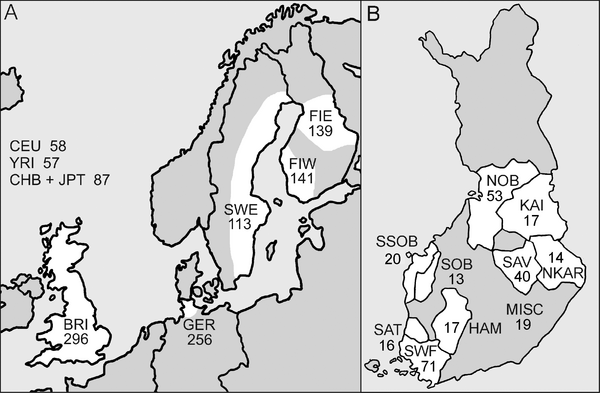
Genetically, the Germans and British are very close to each other but the genetic distances between the Swedes and Eastern and Western Finns are larger, and the diversity in these populations is lower.

A recent study shows that genetic differences in Central Europe appear smaller than between and even within North European populations.    The study, led by researcher Päivi Lahermo from Institute for Molecular Medicine Finland (FIMM) and University of Helsinki, Finland, and professor Juha Kere from Karolinska Institutet, Sweden.

The understanding of genetic variation in human populations is important not only for obtaining information on population history, but also for successful studies of genetic factors behind human diseases, says Juha Kere. 
If a doctor believes an antibiotic or sedative is not needed and instead provides a placebo to a patient, is the physician protecting public health or subjectively disregarding the ethics of full disclosure? You decide.

Many rheumatologists and general internal medicine physicians in the US say they regularly prescribe "placebo treatments" including active drugs such as sedatives and antibiotics, but rarely admit they are doing so to their patients, according to a study on BMJ.com today.

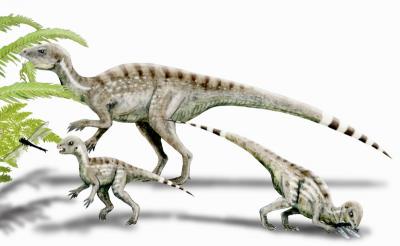
One of the smallest dinosaur skulls ever discovered has been identified and described by a team of scientists from London, Cambridge and Chicago. The skull would have been only 45 millimeters (less than two inches) in length. It belonged to a very young Heterodontosaurus, an early dinosaur. This juvenile weighed about 200 grams, less than two sticks of butter. 

In the Fall issue of the Journal of Vertebrate Paleontology, the researchers describe important findings from this skull that suggest how and when the ornithischians, the family of herbivorous dinosaurs that includes Heterodontosaurus, made the transition from eating meat to eating plants.
Warm hands, cold heart?   Not when it's our own hands that are warm.   Our judgment of a person's character can be influenced by something as simple as the warmth of the drink we're holding.   It makes sense; everyone is friendlier if they have a cup of coffee in their hand.