Banner
Pilot Study: Fibromyalgia Fatigue Improved By TENS Therapy

Fibromyalgia is the term for a poorly-understood condition where people experience pain and fatigue...

High Meat Consumption Linked To Lower Dementia Risk

Older people who eat large amounts of meat have a lower risk of dementia and cognitive decline...

Long Before The Inca Colonized Peru, Natives Had A Thriving Trade Network

A new DNA analysis reveals that long before the Incan Empire took over Peru, animals were...

Mesolithic People Had Meals With More Tradition Than You Thought

The common imagery of prehistoric people is either rooting through dirt for grubs and picking berries...

User picture.
News StaffRSS Feed of this column.

News Releases From All Over The World, Right To You... Read More »

Blogroll
Aesthetics or your personal preferences aside, who do you think is in better physical condition,  international ballet dancers or international swimmers?  

A study led by Professor Tim Watson and Dr Andrew Garrett of University of Hertfordshire involved comparing members of the Royal Ballet and English National Ballet School with a squad of British National and International Swimmers, including members of the Olympic squad.

The results will be announced at the University’s Health and Human Sciences Research Institute Showcase but we'll go ahead and tell you here:  ballet dancers.

ballet dancer
Sorry, swimmers.
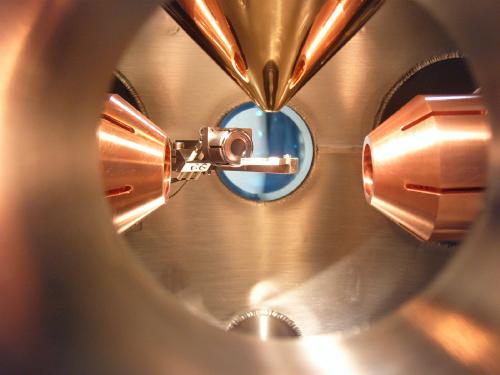
Scientists at the Johannes Gutenberg University Mainz have, for the first time, succeeded in rendering the spatial distribution of individual atoms in a Bose-Einstein condensate visible. Bose-Einstein condensates are small, ultracold gas clouds which, due to their low temperatures, can no longer be described in terms of traditional physics but must be described using the laws of quantum mechanics.
German President Horst Köhler will award the German Future Prize for 2008 on 3 December in Berlin. Professor Axel Haverich, a heart surgeon and Leibniz prizewinner from Deutsche Forschungsgemeinschaft (DFG, German Research Foundation) Hannover Medical School (MHH), and his two colleagues Dr. Serghei Cebotari and Dr. Michael Harder are one of four teams who have made the final round of the President's award for engineering and innovation, worth 250,000 euros.

This autumn's banking panic will take a severe toll on world growth especially in developed economies. GDP growth in the OECD group of mainly rich countries will slow to 0.4 per cent in 2009, the weakest since 1982. Among the G7, the American and British economies will contract next year and the best performer among the other five countries will be Canada, with GDP growth of just 0.5 per cent. The key downside risk is that the bailout packages may not succeed, in which case financial turmoil will persist and the recession will be deeper and more prolonged than we are forecasting.

A new image released by ESO shows the amazing intricacies of a vast stellar nursery, which goes by the name of Gum 29. In the center, a small cluster of stars — called Westerlund 2 — has been found to be the he home of one of the most massive double star systems known to astronomers.

Gum 29 is a huge region of hydrogen gas that has been stripped of its electrons (ionized) by the intense radiation of the hot young stars located at its centre. Astronomers call this an HII (pronounced "H-two") region, and this particularly stunning example stretches out across space for over 200 light-years. The name stems from the fact that it is the 29th entry in the catalogue published by Australian astronomer Colin Stanley Gum in 1955.
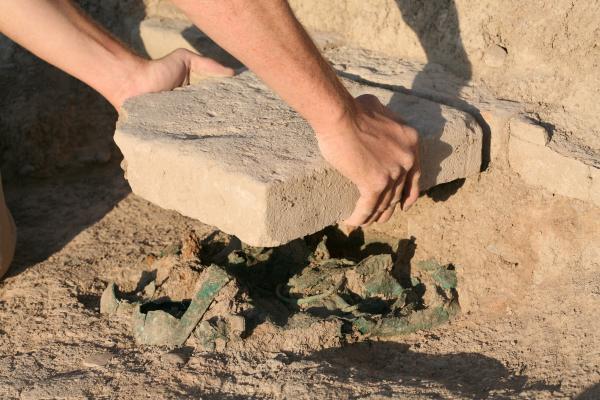
Within the scope of an international rescue excavation project, a team of four archaeologists specialized in Middle Eastern affairs headed by Dr. Dirk Wicke (Institute of Egyptology and Ancient Near Eastern Studies) have unearthed parts of a Neo-Assyrian governor's palace dating back to the 9th to 7th cent. B.C. in a two-month excavation program amongst the ruins on Ziyaret Tepe.