Banner
Pilot Study: Fibromyalgia Fatigue Improved By TENS Therapy

Fibromyalgia is the term for a poorly-understood condition where people experience pain and fatigue...

High Meat Consumption Linked To Lower Dementia Risk

Older people who eat large amounts of meat have a lower risk of dementia and cognitive decline...

Long Before The Inca Colonized Peru, Natives Had A Thriving Trade Network

A new DNA analysis reveals that long before the Incan Empire took over Peru, animals were...

Mesolithic People Had Meals With More Tradition Than You Thought

The common imagery of prehistoric people is either rooting through dirt for grubs and picking berries...

User picture.
News StaffRSS Feed of this column.

News Releases From All Over The World, Right To You... Read More »

Blogroll

Pregnancy and motherhood may make us all go a little gooey, but it's not turning mums' brains into mush, according to mental health researchers at The Australian National University.

The study – conducted by the Centre for Mental Health Research (CMHR) at ANU – suggests that despite fears mothers may have that pregnancy affects their cognitive functions, there is no evidence to suggest that is true. The findings have been released as part of Mental Health Week.

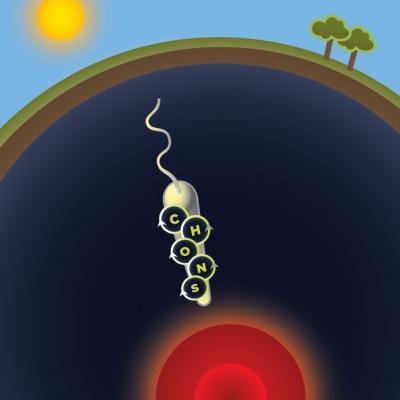
The first ecosystem ever found having only a single biological species has been discovered 2.8 kilometers (1.74 miles) beneath the surface of the earth in the Mponeng gold mine near Johannesburg, South Africa.

There the rod-shaped bacterium Desulforudis audaxviator exists in complete isolation, total darkness, a lack of oxygen, and 60-degree-Celsius heat (140 degrees Fahrenheit).

D. audaxviator survives in a habitat where it gets its energy not from the sun but from hydrogen and sulfate produced by the radioactive decay of uranium. Living alone, D. audaxviator must build its organic molecules by itself out of water, inorganic carbon, and nitrogen from ammonia in the surrounding rocks and fluid. During its long journey to the extreme depths, evolution has equipped the versatile spelunker with genes – many of them shared with archaea, members of a separate domain of life unrelated to bacteria – that allow it to cope with a range of different conditions, including the ability to fix nitrogen directly from elemental nitrogen in the environment.

Biomimetics is the application of biological methods and systems found in nature that could be used to design engineering systems and modern technology. Proponents of bionic technology believe that the transfer of technology between life forms and synthetic constructs is attractive because evolutionary pressure typically forces living organisms to become highly optimized and efficient. Therefore, they contend, designing engineering methods or tools that mimic such biological functions could be extremely efficient.

Examples of biomimetics in engineering include the hulls of boats imitating the thick skin of dolphins, as well as sonar, radar and medical imaging imitating the echolocation of bats. (Echolation involes emitting sound waves and listening to the echo in order to locate objects or to navigate).

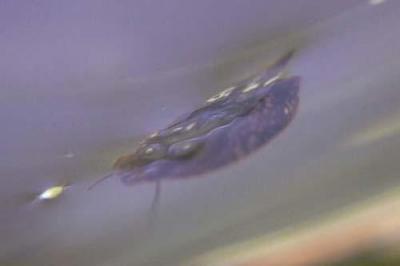
Eric Lauga, an assistant professor of mechanical and aerospace engineering at the Jacobs School of Engineering, recently published a paper in the journal Physics of Fluid called "Crawling Beneath the Free Surface: Water Snail Locomotion," that explains how and why water snails can drag themselves across a fluid surface that they can't even grip.

Scientists have used a technique originally developed for economic study, Granger causality, to become the first to overcome a significant challenge in brain research: determining the flow of information from one part of the brain to another.

For years, scientists have used scanners to identify the brain regions involved in particular mental tasks. But they cannot get that data fast enough to trace the flow of information from one area of the brain to another.

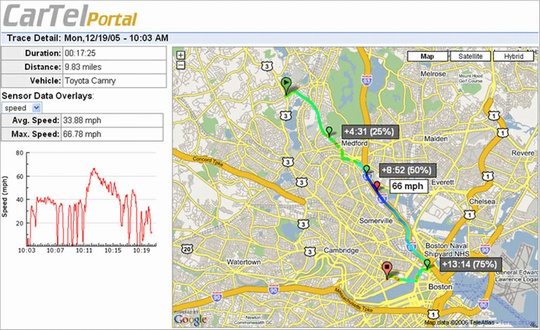
ozens of cars in the Boston area are testing the latest generation of an MIT mobile-sensor network for traffic analysis that could help drivers cut their commuting time, alert them to potential engine problems and more.

In the CarTel project, Professor Hari Balakrishnan and Associate Professor Samuel Madden of MIT's Department of Electrical Engineering and Computer Science use automobiles to monitor their environment by sending data from an onboard computer — which is about the size of a cell phone — to a web server where the data can be visualized and browsed. They do so via pre-existing WiFi networks passed during a trip.