Banner
Pilot Study: Fibromyalgia Fatigue Improved By TENS Therapy

Fibromyalgia is the term for a poorly-understood condition where people experience pain and fatigue...

High Meat Consumption Linked To Lower Dementia Risk

Older people who eat large amounts of meat have a lower risk of dementia and cognitive decline...

Long Before The Inca Colonized Peru, Natives Had A Thriving Trade Network

A new DNA analysis reveals that long before the Incan Empire took over Peru, animals were...

Mesolithic People Had Meals With More Tradition Than You Thought

The common imagery of prehistoric people is either rooting through dirt for grubs and picking berries...

User picture.
News StaffRSS Feed of this column.

News Releases From All Over The World, Right To You... Read More »

Blogroll

Scientists at Yale School of Medicine have found that two-year-olds with autism looked significantly more at the mouths of others, and less at their eyes, than typically developing toddlers. This abnormality predicts the level of disability, according to study results published in the Archives of General Psychiatry.

Lead author Warren Jones and colleagues Ami Klin and Fred Volkmar used eye-tracking technology to quantify the visual fixations of two-year-olds who watched caregivers approach them and engage in typical mother-child interactions, such as playing games like peek-a-boo.

Get ready for the world's first atomic microscope.

A team of physicists from the Autonomous University of Madrid (UAM) and the Madrid Institute of Advanced Studies in Nanoscience (IMDEA-Nanociencia) has created the “quantum stabilized atom mirror”, the smoothest surface ever, according to this week's edition of Advanced Materials magazine.

One of the study's authors, Rodolfo Miranda, professor of condensed matter physics at the UAM and director of the IMDEA-Nanociencia, explained to SINC that the innovation with this almost perfect mirror is the ability to reflect “extraordinarily well” most of the atoms that affect it, through the use of materials of nanometric thickness whose properties are dominated by quantum effects.

There's a sex bias in evolution, according to an article in PLoS Genetics, and it's demonstrated by the fact that women have been more successful on average in passing their genes on to the next generation. "This is because a few males have fathered children with multiple females, which occurs at the expense of other less successful males", says Dr. Michael Hammer, ARL Division of Biotechnology at the University of Arizona.

The group has found DNA evidence that polygyny, the practice among males of siring children with multiple female partners at the same time or successively, has led to an excess of genetic diversity on the X chromosome relative to the autosomes.

Plenty of sun and some ice for water sounds like a lovely place for a moon base, doesn't it?

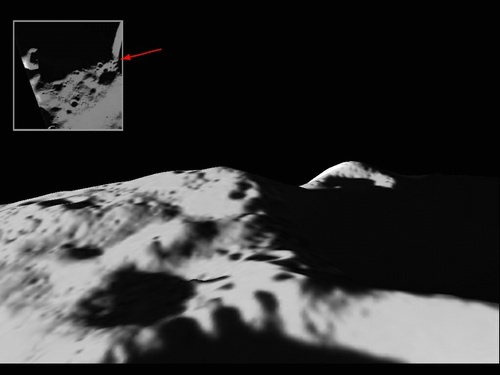
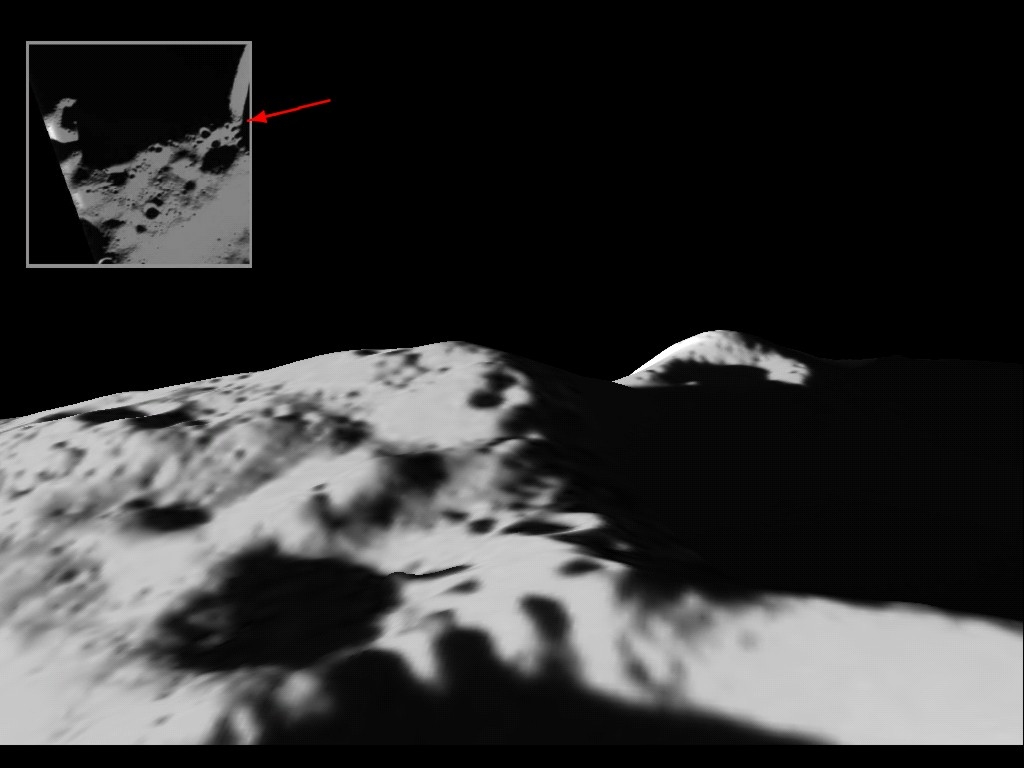
Three-dimensional views of the mountainous terrain surrounding a “peak of eternal light” near the Moon’s south pole have been released by the European Space Agency. Dr Detlef Koschny will present the images at the European Planetary Science Congress in Münster on Friday 26th September. Images taken by the AMIE camera carried by ESA’s SMART-1 mission have been used to create digital elevation model of the peak, which is almost continuously exposed to sunlight.

“AMIE is not a stereo camera, so producing a 3-D model of the surface has been a challenge,” said Dr Koschny. “We’ve used a technique where we use the brightness of reflected light to determine the slope and, by comparing several images, put together a model that produces a shadow pattern that matches those observed by SMART-1.”

World leaders gathered today at the 2008 Millennium Development Goals Malaria Summit to endorse an ambitious new Global Malaria Action Plan and commit US $3 billion toward reducing the number of malaria deaths to near zero by 2015.

Canadian bedrock more than four billion years old may be the oldest known section of the Earth's early crust, say scientists at the Carnegie Institution. They used geochemical methods to obtain an age of 4.28 billion years for samples of the rock, making it 250 million years more ancient than any previously discovered rocks. The findings offer scientists clues to the earliest stages of our planet's evolution, they say.

"There have been older dates from Western Australia for isolated resistant mineral grains called zircons," says Richard Carlson of the Carnegie Institution's Department of Terrestrial Magnetism, "but these are the oldest whole rocks found so far."