Banner
Pilot Study: Fibromyalgia Fatigue Improved By TENS Therapy

Fibromyalgia is the term for a poorly-understood condition where people experience pain and fatigue...

High Meat Consumption Linked To Lower Dementia Risk

Older people who eat large amounts of meat have a lower risk of dementia and cognitive decline...

Long Before The Inca Colonized Peru, Natives Had A Thriving Trade Network

A new DNA analysis reveals that long before the Incan Empire took over Peru, animals were...

Mesolithic People Had Meals With More Tradition Than You Thought

The common imagery of prehistoric people is either rooting through dirt for grubs and picking berries...

User picture.
News StaffRSS Feed of this column.

News Releases From All Over The World, Right To You... Read More »

Blogroll

The National Academy of Sciences has created a policy report outlining some of our national challenges, including economic ones, and sent it to both John McCain and Barack Obama with guidance for whomever is elected president in November. The report provides suggestions on filling key science appointments after the election.

The report lists approximately 80 high-level science and technology appointees who will be crucial in advising the new president on issues that range from energy to health care to economic growth. It also urges members of the scientific community to serve in these positions, and suggests ways to make it more attractive for well-qualified people to do so.

Researchers at the University of North Carolina at Chapel Hill School of Medicine have transformed cells from human skin into cells that produce insulin, the hormone used to treat diabetes.

The breakthrough may one day lead to new treatments or even a cure for the millions of people affected by the disease, researchers say.

The approach involves reprogramming skin cells into pluripotent stem cells, or cells that can give rise to any other fetal or adult cell type, and then inducing them to differentiate, or transform, into cells that perform a particular function – in this case, secreting insulin.

The skeleton of a man discovered by archaeologists in a shallow grave on a construction site at the University of York could be one of one of Britain’s earliest victims of tuberculosis. He was interred in a shallow scoop in a flexed position, on his right side. Radiocarbon dating suggests that he died in the fourth century.

He was aged 26-35 years, suffered from iron deficiency anemia during childhood and was shorter than the average Roman male at 5 feet 4 inches.

Detailed analysis of the skeleton by Malin Holst, of York Osteoarchaeology Ltd, revealed that a likely cause of death was tuberculosis which affected the man’s spine and pelvis. She says that it is possible that he contracted the disease in childhood from infected meat or milk or the infection could have been inhaled into the lungs. The disease then lay dormant until adulthood when the secondary phase took its toll.

Fannie Mae and Freddie Mac, Bear Stearns, Lehman Brothers: As the dominoes of the financial sector continue to fall at an alarming rate and the Federal Reserve attempts to forestall a systemic meltdown of the domestic financial network, University of Arkansas economists find that a network approach to the study of financial “contagion” – the transmission and impact of financial crises – may be applied to understand the current turmoil in the U.S. banking sector and the need for a systemwide response by the Fed.

A new study by Raja Kali and Javier Reyes, economics professors in the Sam M. Walton College of Business at the University of Arkansas, reveals that integration in the global financial network is a double-edged sword. On one hand, being well connected to the network can make a country more vulnerable to systemic shocks. However, this same connectedness also is associated with an increased ability to dissipate economic shocks to the system. Kali and Reyes reached these conclusions by studying how international financial crises travel though the network of global trading relationships.

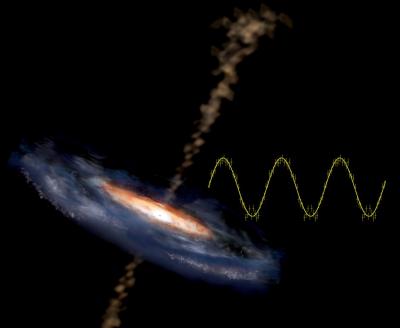
A group of scientists from Durham University say they have found the "missing link" between small and super-massive black holes. The researchers have discovered that a strong X-ray pulse is emitting from a giant black hole in a galaxy 500 million light years from Earth.

The pulse has been created by gas being sucked by gravity on to the black hole at the centre of the REJ1034+396 galaxy.

X-ray pulses are common among smaller black holes, but the Durham research is the first to identify this activity in a super-massive black hole. Most galaxies, including the Milky Way, are believed to contain super-massive black holes at their centers.

St. Jude Medical today announced the first patient implant of an Eon Mini, what they are billing as 'the world’s smallest, longest-lasting, rechargeable neurostimulator' to treat chronic pain of the trunk or limbs and pain from failed back surgery.

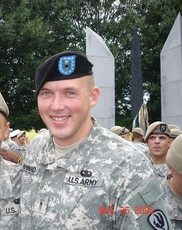
Adam Hammond, the 26-year-old patient, was implanted with the Eon Mini neurostimulator which is slightly larger than a U.S. silver dollar. Similar in function and appearance to a cardiac pacemaker, the neurostimulator delivers mild electrical pulses to the spinal cord, which interrupt or mask the pain signals’ transmission to the brain.

Hammond is a former member of the U.S. Army “Golden Knights” Parachute Team. Hammond was skydiving while on leave in 2006 when his parachute did not deploy correctly. He hit the ground in excess of 45 miles an hour.