Banner
Pilot Study: Fibromyalgia Fatigue Improved By TENS Therapy

Fibromyalgia is the term for a poorly-understood condition where people experience pain and fatigue...

High Meat Consumption Linked To Lower Dementia Risk

Older people who eat large amounts of meat have a lower risk of dementia and cognitive decline...

Long Before The Inca Colonized Peru, Natives Had A Thriving Trade Network

A new DNA analysis reveals that long before the Incan Empire took over Peru, animals were...

Mesolithic People Had Meals With More Tradition Than You Thought

The common imagery of prehistoric people is either rooting through dirt for grubs and picking berries...

User picture.
News StaffRSS Feed of this column.

News Releases From All Over The World, Right To You... Read More »

Blogroll

Astronomers have been able to study planet-forming discs around young Sun-like stars in unsurpassed detail, clearly revealing the motion and distribution of the gas in the inner parts of the disc. This result, which possibly implies the presence of giant planets, was made possible by the combination of a very clever method enabled by ESO's Very Large Telescope.

Planets could be home to other forms of life, so the study of exoplanets ranks very high in contemporary astronomy. More than 300 planets are already known to orbit stars other than the Sun, and these new worlds show an amazing diversity in their characteristics. But astronomers don't just look at systems where planets have already formed - they can also get great insights by studying the discs around young stars where planets may currently be forming. "This is like going 4.6 billion years back in time to watch how the planets of our own Solar System formed," says Klaus Pontoppidan from Caltech, who led the research.

Apparently, you can tell a lot about people from the way they move - gender, age, and even mood.

Researchers say they have found that observers perceive masculine motion as coming toward them, while a characteristically feminine walk looks like it's headed the other way.

Such studies are done by illuminating only the joints of model walkers and asking observers to identify various characteristics about the largely ambiguous figures.

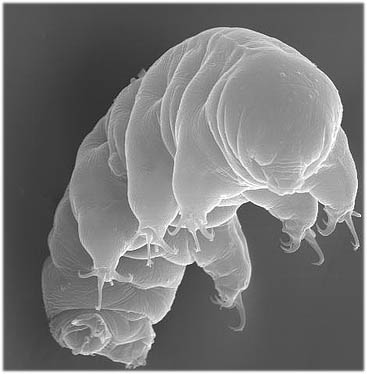
Space is extremely cold, near absolute zero, and it is a vacuum, so no oxygen, plus there is the threat of lethal radiation from stars. It is considered the most hostile of environments, where unprotected humans would last for a fraction of a second.

But research by Ingemar Jönsson and colleagues in Current Biology shows that some animals — the tardigrades, or 'water-bears' — can do away with space suits and can survive exposure to open-space vacuum, cold and radiation just fine.

The protein IKKalpha (IKKα) regulates the cell cycle of keratinocytes and plays a key role in keeping these specialized skin cells from becoming malignant, researchers at The University of Texas M. D. Anderson Cancer Center report in Cancer Cell.

Keratinocytes originate in the basal layer of the epidermis to replace skin cells at the surface that have been shed. As keratinocytes gradually move up through the skin layers, they differentiate and eventually form the top layer of the skin, which is composed of squamous cells. The cycle ends through terminal differentiation, in which cells lose their ability to reproduce by dividing in two. They eventually die.

An athlete's ability to sweat may do more than keep the body cool. It also may prevent the development of exercise-induced asthma (EIA), a common respiratory condition among trained athletes. New research appearing in the September issue of CHEST, the peer-reviewed journal of the American College of Chest Physicians (ACCP), shows that athletes with EIA produce less sweat, tears, and saliva than those who do not have breathing problems.

Warren Lockette, MD, lead study author and advisor to the University of Michigan's NCAA Division I women's swimming team, has worked with many Olympians and future professional athletes with EIA. "It is unclear why so many elite athletes have exercise-induced asthma," he said. "It is possible that they manifest symptoms of exercise-induced asthma simply because their levels of exertion and breathing rate are so high compared with the average, competitive sportsman."

Children born prematurely are four times more likely to have emotional problems or behavioral disorders, according to new research.

A team led by the University of Warwick's Department of Psychology and Warwick Medical School examined the behaviour of 200 six-year-old children who had been born below 26 weeks gestation, known as 'extremely pre-term'.

The researchers attempted to contact the family of every child born in the UK and Ireland at 25 weeks or earlier, between March and December 1995. From a possible 308 children who survived the first 6 years, the parents of 241 responded to the study.