Banner
Pilot Study: Fibromyalgia Fatigue Improved By TENS Therapy

Fibromyalgia is the term for a poorly-understood condition where people experience pain and fatigue...

High Meat Consumption Linked To Lower Dementia Risk

Older people who eat large amounts of meat have a lower risk of dementia and cognitive decline...

Long Before The Inca Colonized Peru, Natives Had A Thriving Trade Network

A new DNA analysis reveals that long before the Incan Empire took over Peru, animals were...

Mesolithic People Had Meals With More Tradition Than You Thought

The common imagery of prehistoric people is either rooting through dirt for grubs and picking berries...

User picture.
News StaffRSS Feed of this column.

News Releases From All Over The World, Right To You... Read More »

Blogroll

Troubled kids will always be a difficult area of social policy - in the 1980s the solution was thought to be introducing troubled kids to rural schools, but that tended to bring down the quality of the rural schools rather than raising troubled children up.

Yet it would be pessimistic and dooming some to permanent failure to make schools full of just troubled kids.

Still, the issue has not gone away. Troubled children hurt their classmates' math and reading scores and worsen their behavior, according to new research by economists at the University of California, Davis, and University of Pittsburgh.

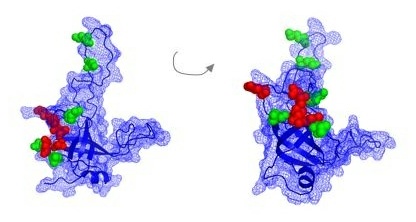
It may take just one or two proteins to polish off a simple cellular task, but life-or-death matters, such as caring for the ends of chromosomes known as telomeres, require interacting crews of proteins, all with a common goal but each with a specialized task.

Researchers at the Salk Institute for Biological Studies led by Vicki Lundblad, Ph.D., a Professor in the Molecular and Cell Biology Laboratory, have discovered that a protein that helps elongate chromosome ends—and hence saves cells from premature growth arrest—likely recognizes where to report to work through a common fold. Those findings are reported in the online edition of Nature Structure and Molecular Biology.

Soldiers in war live in danger danger – if their barracks is struck by a direct hit, it can be transformed into a clump of twisted metal in a matter of seconds. If they drive over a land mine, the vehicle can be blown sky high.

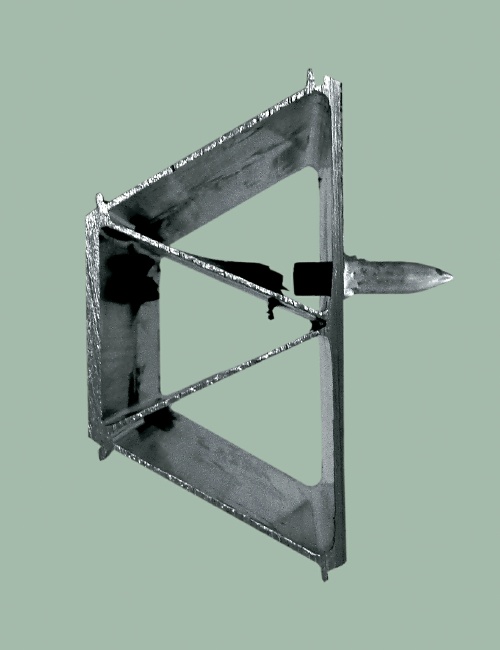
War is never safe but it’s possible to protect soldiers from at least some of the dangers. Tank steel and armored concrete provide good protection, but structures made from steel or concrete are quite heavy, and can be difficult to move. Aluminium, on the other hand, is a light product -- in a number of different ways.

One of the Norwegian University of Science and Technology’s three Centres for Research-based Innovation is called SIMLab (Structural Impact Laboratory).

Elderly patients who are prescribed a conventional, or first-generation, antipsychotic medication are at an increased risk of death from cardiovascular or respiratory diseases as compared to those who take an atypical, or second-generation, antipsychotic medication, according to a study funded by the Agency for Healthcare Research and Quality.

The new study, “Potential Causes of Higher Mortality in Elderly Users of Conventional and Atypical Antipsychotic Medications,” recently posted online in the Journal of the American Geriatrics Society, adds to growing evidence that conventional antipsychotics may not be safer than atypical anitpsychotics for the elderly. Researchers had previously identified that such second-generation medications may pose increased mortality; the new study compares specific causes of death among elderly patients newly started on conventional vs. atypical antipsychotics.

Religious groups can help deliver cost-effective social services, says Bob Wineburg, a social work professor at The University of North Carolina at Greensboro (UNCG), but Obama’s proposal, which would build on Bush’s Faith-Based Initiative, would create more problems than it solves.

Wineburg’s been doing research on partnerships between social service agencies and churches/synagogues for about 20 years and in the 1990s looked at partnerships in the Greensboro, N.C., area.

Now he's working with Ram Cnaan from the University of Pennsylvania, for the United Way of Delaware, and says their findings mirror what Wineburg found in Greensboro – that mainline service agencies overwhelmingly seek out churches and other faith organizations to help them deliver services. That's an efficient arrangement, Wineburg says, and one that deserves federal backing – but not when the money starts with those small congregations.

Codeine is commonly used for pain relief and is recommended by the American Academy of Pediatrics as being compatible with breastfeeding. Following numerous reports through the Motherisk counseling service and the tragic death of an infant who died from an overdose of morphine acquired from breast milk, Dr. Gideon Koren and his team, located at SickKids and The University of Western Ontario, investigated these negative reactions.

Codeine is a 'prodrug' which means that on its own it is relatively inactive. The pain relieving attributes are only activated when it is metabolized, or transformed by the body into a more active pain relieving compound, morphine. Some individuals have a genetic variance which causes them to metabolize codeine at a rapid rate, producing significantly more morphine in their system than most of the population. While this genetic predisposition is rare, women who possess it and who take codeine for pain while breastfeeding can end up exposing their babies to high levels of morphine through their breast milk. This can cause babies to experience central nervous system depression as a result.