Banner
Pilot Study: Fibromyalgia Fatigue Improved By TENS Therapy

Fibromyalgia is the term for a poorly-understood condition where people experience pain and fatigue...

High Meat Consumption Linked To Lower Dementia Risk

Older people who eat large amounts of meat have a lower risk of dementia and cognitive decline...

Long Before The Inca Colonized Peru, Natives Had A Thriving Trade Network

A new DNA analysis reveals that long before the Incan Empire took over Peru, animals were...

Mesolithic People Had Meals With More Tradition Than You Thought

The common imagery of prehistoric people is either rooting through dirt for grubs and picking berries...

User picture.
News StaffRSS Feed of this column.

News Releases From All Over The World, Right To You... Read More »

Blogroll

Rabies, an infection of the nervous system, transmitted by animal bites, causes over 50,000 deaths each year around the world.

A new Chinese study has reported a dramatic spike in rabies infections. The research in BMC Infectious Diseases shows that in some provinces of China the number of human rabies cases has jumped dramatically since the new millennium.

Jia-Hai Lu, from the School of Public Health at Sun Yat-Sen University, China, led a team of researchers who studied the rabies trend in China between 1990 and 2007. Lu describes how things have changed in the last eight years “In China, human rabies was largely under control during the years 1990-1996, via nation-wide rabies vaccination programs. Since the end of the century, however, cases of human rabies have jumped high enough to trigger a warning sign for control and prevention.”

A study by researchers at the Joslin Diabetes Center has shown that a protein known for its role in inducing bone growth can also help promote the development of brown fat, a "good" fat that helps in the expenditure of energy and plays a role in fighting obesity.

Obesity is a major risk factor for type 2 diabetes and is closely linked to the metabolic syndrome, a collection of medical problems associated with insulin resistance that can lead to an increased risk of atherosclerosis, the buildup of plaque in coronary arteries that leads to heart attack and stroke.

Life has had billions of years to evolve defences against free radicals, reactive oxygen compounds and other physical and chemical assaults that can damage cell components, including our genetic material, DNA. Those same, powerful defense mechanisms protect us from low levels of ionizing radiation - from the cosmic rays that strike the earth surface to the radioactive particles continually released from the earth's crust into the air around us.

Yet today the words 'radiation' and 'radioactivity' cause unwarranted fear, argues Zbigniew Jaworowski of the Central Laboratory for Radiological Protection in Warsaw, Poland.

Writing in the current issue of the International Journal of Low Radiation from Inderscience publishers, he suggests that because life evolved alongside ionizing radiation, we can cope far better with low doses of radioactivity than is often thought. He says that changing our perspective on radiation could reduce the costs to society of the precautionary principle adopted in the aftermath of the Chernobyl incident.

The field of particle physics is poised to enter unknown territory with the startup of a massive new accelerator--the Large Hadron Collider (LHC)--in Europe this summer. On September 10, LHC scientists will attempt to send the first beam of protons speeding around the accelerator.

The LHC will put hotly debated theories to the test as it generates new experimental data. Potential breakthroughs include an explanation of what gives mass to fundamental particles and identification of the mysterious dark matter that makes up most of the mass in the universe. More exotic possibilities include evidence for new forces of nature or hidden extra dimensions of space and time.

The scale of the LHC is gigantic in every respect--its physical size, the energies attained, the amount of data it will generate, and the size of the international collaboration involved in its planning, construction, and operation. In September, high-energy beams of protons will begin circulating around the LHC's 27-kilometer (16.8-mile) accelerator ring located 100 meters (328 feet) underground at CERN, the European particle physics lab based in Geneva, Switzerland. After a period of testing, the beams will cross paths inside the detectors and the first collisions will take place.

Use of embedded software in electronics devices is growing even faster than advances in electronics themselves. Yet human capabilities for producing software have not increased in Europe over the past decade.

“The amount of software is growing very rapidly and it is increasingly difficult to find the people and resources necessary to develop it all,” explains Dr Pekka Abrahamsson of project coordinator VTT Technical Research Centre in Finland. “As a result, Europe is seeing a lot of development work transferring to India and other countries. An additional problem lies in the speed of development as it is necessary to get solutions to market in optimum time and with sufficient reliability that it works properly.”

Results of the EUREKA ITEA software Cluster AGILE project make it possible for European manufacturers to develop high quality embedded software in markedly shorter times and at much lower costs than possible with traditional techniques. Applying the approach to 68 pilot case studies in industries from avionics and telecommunications to consumer electronics, the project demonstrated clearly that ‘agile’ methodology can lead to massive improvements in embedded software engineering. Suitable tooling was also demonstrated to simplify application of the agile approach. As a result, much more software development can be carried out cost effectively in Europe rather than being outsourced to Asia.

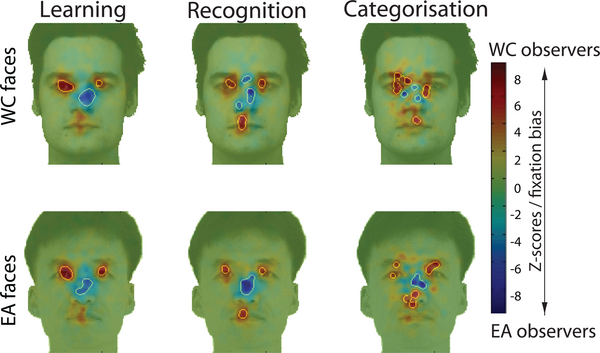
Because face recognition is effortlessly achieved by people from all different cultures it was considered to be a basic mechanism universal among humans. However, by using analyses inspired by novel brain imaging technology, researchers at the University of Glasgow have discovered that cultural differences cause us to look at faces differently.

Lead researcher Dr Roberto Caldara said: "In a series of eye-movement studies, we showed that social experience has an impact on how people look at faces. Specifically we noticed a striking difference in eye movements in Westerners and East Asian observers. We found that Westerners tend to look at specific features on an individual's face such as the eyes and mouth whereas East Asian observers tend to focus on the nose or the centre of the face which allows a more general view of all the features. One possible cause of this could be that direct or excessive eye contact may be considered rude in East Asian cultures."