Banner
Pilot Study: Fibromyalgia Fatigue Improved By TENS Therapy

Fibromyalgia is the term for a poorly-understood condition where people experience pain and fatigue...

High Meat Consumption Linked To Lower Dementia Risk

Older people who eat large amounts of meat have a lower risk of dementia and cognitive decline...

Long Before The Inca Colonized Peru, Natives Had A Thriving Trade Network

A new DNA analysis reveals that long before the Incan Empire took over Peru, animals were...

Mesolithic People Had Meals With More Tradition Than You Thought

The common imagery of prehistoric people is either rooting through dirt for grubs and picking berries...

User picture.
News StaffRSS Feed of this column.

News Releases From All Over The World, Right To You... Read More »

Blogroll

Biofuels are a bad word these days, due to the fact that everyone from Al Gore to George Bush thought ethanol was a good idea due to a lack of understanding actual science much less basic economics.

But before grain ethanol and biodiesel there was 'gasification' and it's getting a new look from researchers at the U.S. Department of Energy's Ames Laboratory and Iowa State University.

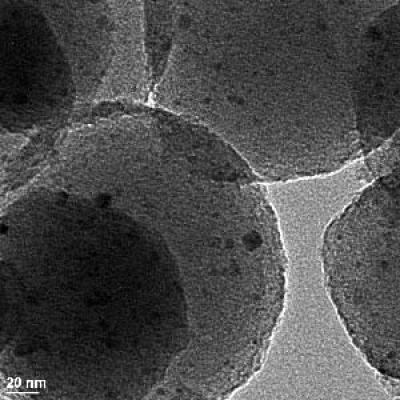
By combining gasification with high-tech nanoscale porous catalysts, they hope to create ethanol from a wide range of biomass, including distiller's grain left over from ethanol production, corn stover from the field, grass, wood pulp, animal waste, and garbage.

An academic from Swansea University’s History Department has received a research grant of £101,000 from the Wellcome Trust to investigate the history of medicine in Joseph Stalin’s concentration camps of the mid-twentieth century.

Dr Dan Healey’s project, entitled Medicine in the Gulag Archipelago, will be done in collaboration with Dr Kirill Rossianov of the Moscow Institute of the History of Natural Sciences and Technology of the Russian Academy of Sciences and focus on the history of medicine in the Soviet Union’s Gulag network of labor camps and will show how doctors and medicine were integral to these far-flung places of confinement during the 1930s to 1950s.

Researchers at Duke University Medical Center and at the National Institute of Environmental Health Sciences (NIEHS) say they have shown how broken sections of chromosomes can recombine to change genomes ... and spawn new species.

The scientists used X-rays to break yeast chromosomes, and then studied how the damage was repaired. Most of the chromosome aberrations they identified resulted from interactions between repeated DNA sequences located on different chromosomes rather than from a simple re-joining of the broken ends on the same chromosome.

Chromosome aberrations are a change in the normal chromosome complement because of deletion, duplication, or rearrangement of genetic material. On rare occasions, the development of one of these new chromosome structures is beneficial, but more often DNA changes can be detrimental, leading to problems like tumors.

Jeremy Jackson, a professor of oceanography at Scripps Institution of Oceanography at UC San Diego, is not an optimistic guy about the future. He says human activities are cumulatively driving the health of the world's oceans down a rapid spiral and the result will be mass extinctions in the oceans on par with vast ecological upheavals of the past.

He cites the synergistic effects of habitat destruction, overfishing, ocean warming, increased acidification and massive nutrient runoff as culprits in a grand transformation of once complex ocean ecosystems. Areas that had featured intricate marine food webs with large animals are being converted into simplistic ecosystems dominated by microbes, toxic algal blooms, jellyfish and disease.

Jackson, director of the Scripps Center for Marine Biodiversity and Conservation, has tagged the ongoing transformation as "the rise of slime."

All countries should take steps to govern organ donation and transplantation, thereby ensuring patient safety and prohibiting unethical practices, according to an article appearing in the September 2008 issue of the Clinical Journal of the American Society of Nephrology (CJASN).

The document is a consensus of more than 150 representatives of scientific and medical bodies from around the world, government officials, social scientists, and ethicists, who met in Istanbul, Turkey, this spring.

In prior articles, we found the scientific validation of Stephen Colbert's 'truthiness', and now it turns out that anecdotal evidence of a 'Colbert bump' following an appearance (anecdotal evidence provided, naturally, by Colbert himself) on the show has legs as well - but only if you're in one political party. Democratic politicians receive a 40% increase in contributions in the 30 days after appearing on "The Colbert Report" while Republicans essentially gained nothing.

Stephen Colbert is right - the "Colbert bump" boosts campaigns.

This analysis of one of America's most well-known pop icons of recent years is conducted by political scientist James H. Fowler (University of California, San Diego), who is also a self-identified fan of the show. The research appears in the July issue of PS: Political Science and Politics.