Banner
Pilot Study: Fibromyalgia Fatigue Improved By TENS Therapy

Fibromyalgia is the term for a poorly-understood condition where people experience pain and fatigue...

High Meat Consumption Linked To Lower Dementia Risk

Older people who eat large amounts of meat have a lower risk of dementia and cognitive decline...

Long Before The Inca Colonized Peru, Natives Had A Thriving Trade Network

A new DNA analysis reveals that long before the Incan Empire took over Peru, animals were...

Mesolithic People Had Meals With More Tradition Than You Thought

The common imagery of prehistoric people is either rooting through dirt for grubs and picking berries...

User picture.
News StaffRSS Feed of this column.

News Releases From All Over The World, Right To You... Read More »

Blogroll

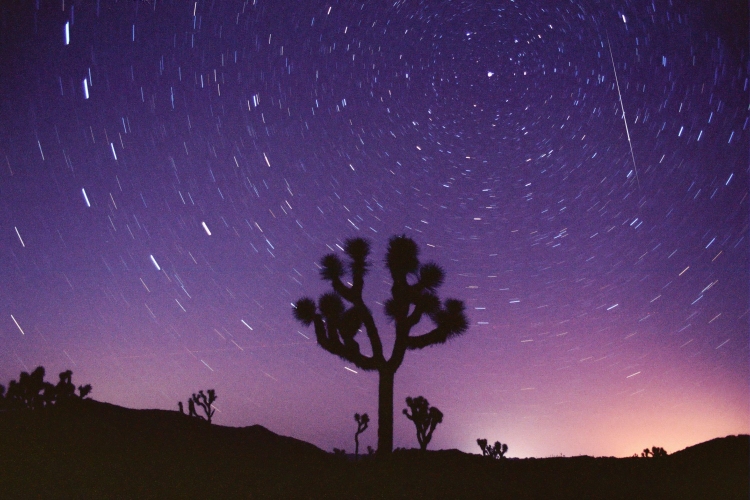
Unlike many astronomical phenomena, meteors are best seen with the unaided eye rather than through a telescope or binoculars and are perfectly safe to watch, so be prepared to sleep outside on August 12th, the annual maximum of the Perseid meteor shower.

In doing so, you will be joining your ancestors, who have viewed what are also called "The Tears of St. Lawrence"(1) for some 2,000 years.

Meteors are the result of small particles entering the Earth’s atmosphere at high speed and in the case of the Perseid shower these come from the tail of the Comet Swift-Tuttle, which was last in the vicinity of the Earth in 1992. To the eye, the meteors appear to originate from a ‘radiant’ in the constellation of Perseus, hence the name Perseid.

As people age, their cells become less efficient at getting rid of damaged protein, resulting in a buildup of toxic material that is especially pronounced in Alzheimer's, Parkinson's disease, and other neurodegenerative disorders.

Scientists at the Albert Einstein College of Medicine of Yeshiva University have prevented this age-related decline in an entire organ — the liver — and shown that, as a result, the livers of older animals functioned as well as they did when the animals were much younger.

These findings suggest that therapies for boosting protein clearance might help stave off some of the declines in function that accompany old age.

Did you find a new bacterium and want recognition for it? For it to be recognized its name must be recorded in IJSEM, which is the single official international forum for the publication of new bacterial species names. The journal publishes research papers describing and naming almost all newly discovered bacteria. The names of newly discovered bacteria published in other journals are not valid until they have been checked and published in IJSEM.

The journal has officially validated the names of 9,263 species and genera since 1980. The list includes some important and ground-breaking discoveries. Earlier this year, scientists announced that they had made the first synthetic genome of a bacterium, dubbed Mycoplasma genitalium JCVI-1.0 but this would have been impossible without the work of earlier microbiologists.

Now they've decided to make researching the work of earlier microbiologists a lot easier by putting their archive up - for free. All issues of the journal dating back to volume 1, 1951 totalling over 25,000 pages have been scanned and made available online, providing an important resource for scientists, historians and the public.

Computing pundits claim that we are moving into a world of ubiquitous computing, a brave new world where your refrigerator and cupboards will be connected to your internet shopping accounts so that you never run out of milk or sugar again. Sensors around your home and workplace will respond to workloads, weather and even your mood by adjusting heating, lighting, and sound levels. Diagnostic devices built into door handles or the bathroom might alert your doctor or the emergency services to changes in your health.

But doing that means getting rid of your iPhone and anything else you learned how to use. Instead, this this emerging technology will only be woven into the fabric of society and our everyday living spaces when people, rather than computer screens and keyboards, are projected into the foreground.

In chemistry, just as in life, threesomes do not break up neatly.

Open-minded thinkers may disagree and say that theoretically clean three-way splits can happen, but no one had actually witnessed one – until now.

A paper in the Aug. 8 issue of Science provides the first hard evidence for the simultaneous break-up of a molecule into three equal parts, called "concerted break-ups."

Do volunteers who take part in conservation efforts do it for the wildlife they are trying to protect or just to impress their friends and because they like the way wildlife looks on their property? A University of Alberta case study says it is not altruism that drives them.

A study of purple martin landlords, those who keep and monitor special birdhouses on their land, revealed that they were more motivated to take part in the conservation project for egoistic rather than altruistic reasons.

"Though there were areas of overlap, we found that common motivations for self-benefit included interaction with the birds, a sense of achievement, social interaction, personal stimulation and enjoyment," said Glen Hvenegaard, a co-author on the qualitative study and a professor of geography and environmental studies at the University of Alberta's Augustana campus in Canada.