Banner
Pilot Study: Fibromyalgia Fatigue Improved By TENS Therapy

Fibromyalgia is the term for a poorly-understood condition where people experience pain and fatigue...

High Meat Consumption Linked To Lower Dementia Risk

Older people who eat large amounts of meat have a lower risk of dementia and cognitive decline...

Long Before The Inca Colonized Peru, Natives Had A Thriving Trade Network

A new DNA analysis reveals that long before the Incan Empire took over Peru, animals were...

Mesolithic People Had Meals With More Tradition Than You Thought

The common imagery of prehistoric people is either rooting through dirt for grubs and picking berries...

User picture.
News StaffRSS Feed of this column.

News Releases From All Over The World, Right To You... Read More »

Blogroll

Sleep-disordered breathing (also known as sleep apnea) is associated with an increased risk of death, according to new results from the Wisconsin Sleep Cohort, an 18-year observational study supported by the National Heart, Lung, and Blood Institute (NHLBI) of the National Institutes of Health.

Researchers found that adults (ages 30 to 60) with sleep-disordered breathing at the start of the study were two to three times more likely to die from any cause compared to those who did not have sleep-disordered breathing. The risk of death was linked to the severity of sleep-disordered breathing and was not attributable to age, gender, body mass index (an indicator of overweight or obesity), or cardiovascular health status.

University of Illinois researchers writing in the journal Behavioral Neuroscience report this week that chronic exposure to estradiol, the main estrogen in the body, diminishes some cognitive functions. Rats exposed to a steady dose of estradiol were impaired on tasks involving working memory and response inhibition, the researchers found.

The researchers made the discovery when studying the effects of estradiol on activities mediated by the prefrontal cortex, a brain region that is vital to working memory and to the ability to plan, respond to changing conditions and moderate or control one's behavior.

Low levels of naturally occurring antibodies may represent an increased risk of developing cardiovascular disease, particularly stroke in men. This discovery, published in Atherosclerosis, has now led to attempts to develop an immunization against cardiovascular disease.

Atherosclerosis (hardening of the arteries) is an inflammatory disease in which the walls of the blood vessels are thickened and become less elastic. It can cause blood clots and other cardiovascular diseases. It is not known precisely what causes atherosclerosis, but the immune system probably plays an important role.

Judging by the astonishing increase in journal papers written by scientists in China, China is finding its place as one of the world’s scientific power houses, says Michael Banks, but he also quantifies this surge in scientific output China and measures whether quality matches quantity in August’s Physics World.

Nanoscience, quantum computing and high-temperature superconductivity are three of the cutting-edge areas of physics that have seen particularly large increases. Published journal articles in nanoscience, for example, with at least one co-author based in China, have seen a 10-fold increase since the beginning of the millennium, rising to more than 10,500 in 2007.

China has already overtaken the UK and Germany in the number of physics papers published and is beginning to nip at the heels of the United States. If China’s output continues to increase at its current pace, the country will be publishing more articles in physics - and indeed all of science - than the US by 2012.

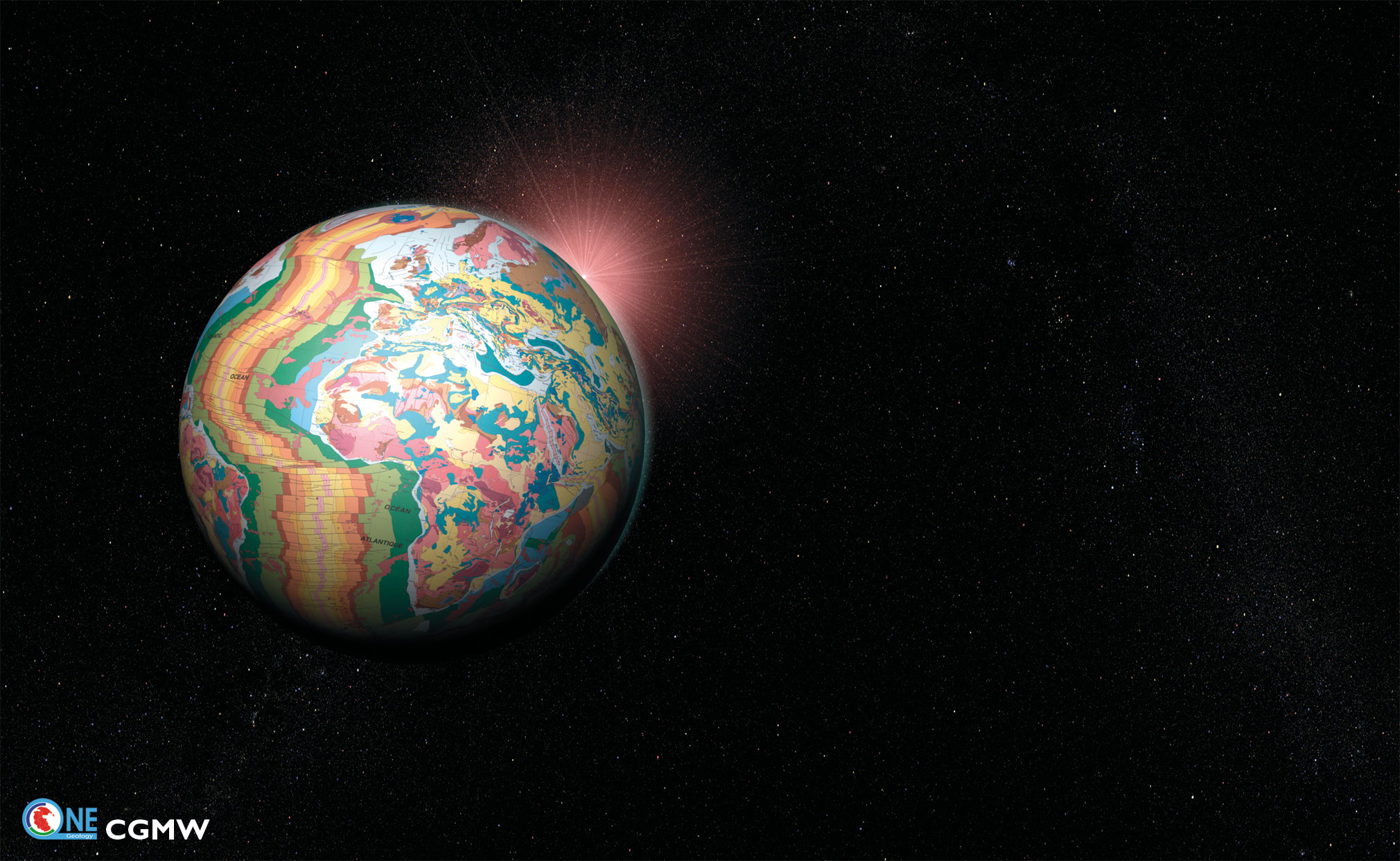
Have you ever wondered what our world would look like stripped bare of all plants, soils, water and man-made structures?

So have earth and computer scientists from 79 nations who are working together on a global project called OneGeology to produce the first digital geological map of the world.

Images of the Earth as never seen before have been unveiled in what is the world’s biggest geological mapping project ever.

Begun just over a year ago, the project is doing for the rocks beneath our feet what Google does for maps of the Earth’s surface. Pretty fast for a science that usually counts time in millions of years.

Brian May CBE, PhD, ARCS, FRAS, and a founding member of Queen, is a world-renowned guitarist, songwriter, producer and performer.

May abandoned his PhD studies at Imperial College London in 1974 when Queen’s popularity first exploded but always retained a keen interest in astronomy, and has been a regular contributor to “The Sky at Night,” BBC TV’s monthly astronomy program hosted by Sir Patrick Moore.

Returning to astrophysical research in 2006, he was awarded his PhD and is now Chancellor of John Moores University, and a patron to a number of charities, including the Mercury Phoenix Trust and the British Bone Marrow Donor Association.