Banner
Pilot Study: Fibromyalgia Fatigue Improved By TENS Therapy

Fibromyalgia is the term for a poorly-understood condition where people experience pain and fatigue...

High Meat Consumption Linked To Lower Dementia Risk

Older people who eat large amounts of meat have a lower risk of dementia and cognitive decline...

Long Before The Inca Colonized Peru, Natives Had A Thriving Trade Network

A new DNA analysis reveals that long before the Incan Empire took over Peru, animals were...

Mesolithic People Had Meals With More Tradition Than You Thought

The common imagery of prehistoric people is either rooting through dirt for grubs and picking berries...

User picture.
News StaffRSS Feed of this column.

News Releases From All Over The World, Right To You... Read More »

Blogroll

Scientists at the U.S. Department of Energy's Lawrence Berkeley National Laboratory (Berkeley Lab) and the University of California at Berkeley have performed the first scanning tunneling spectroscopy of graphene flakes equipped with a "gate" electrode. The result is the latest in a series of surprising insights into the electronic behavior of this unique, two-dimensional crystal form of carbon: an unexpected gap-like feature in the energy spectrum of electrons tunneling into graphene's single layer of atoms.

Scientists say they have found a workable way of reducing CO2 levels in the atmosphere by adding lime to seawater. And they think it has the potential to dramatically reverse CO2 accumulation in the atmosphere, reports Cath O’Driscoll in SCI’s Chemistry & Industry magazine published today.

Shell is so impressed with the new approach that it is funding an investigation into its economic feasibility. ‘We think it’s a promising idea,’ says Shell’s Gilles Bertherin, a coordinator on the project. ‘There are potentially huge environmental benefits from addressing climate change – and adding calcium hydroxide to seawater will also mitigate the effects of ocean acidification, so it should have a positive impact on the marine environment.’

Adding lime to seawater increases alkalinity, boosting seawater’s ability to absorb CO2 from air and reducing the tendency to release it back again.

A new technology that spots tooth decay almost as soon as it’s begun promises to reduce the need for drilling and filling, writes Patrick Walter in SCI’s Chemistry & Industry (C&I) magazine.

Drilling is one of the top dental phobias and puts thousands of people off visiting their dentist every year.

The new technology, which may be available in dental surgeries in five years from now, is based on Raman spectroscopy most commonly used to distinguish between different chemicals by identifying each molecule’s unique fingerprint. It detects decay simply and painlessly by pointing a tiny optical fibre at the tooth to check on its health.

The white horse has been an icon for dignity, purity and good guys across various human cultures all over the world but only now has an international team been able to identify the mutation that causes this fascinating trait.

Their analysis shows that white horses carry an identical mutation that can be traced back to a common ancestor that lived thousands of years ago. The study is interesting for medical research since this mutation also enhance the risk for melanoma.

The great majority of white horses carry the dominant mutation 'Greying with age.' A Grey horse is born colored (black, brown or chestnut) but the greying process starts already during its first year and they are normally completely white by six to eight years of age, though the skin remains pigmented. Thus, the process resembles greying in humans but the process is ultrafast in these horses. The research presented now demonstrates that all Grey horses carry exactly the same mutation which must have been inherited from a common ancestor that lived thousands of years ago.

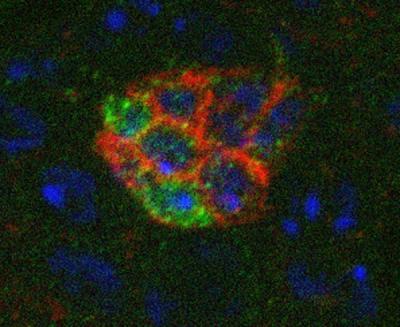
Logic says that just as air and water preceded life, so must the 'niche', the hospitable environment that shelters adult stem cells in tissue and provides factors necessary to keep them young and vital, must have emerged before its stem cell dependents.

A team of scientists at the Salk Institute for Biological Studies led by Leanne Jones, Ph.D., assistant professor in the Laboratory of Genetics, now suggests that this is not always the case. They report in the July 20 advance online edition of Nature that the cells that comprise a specialized niche in the testis of fruit flies actually emerge from adult stem cells, a finding with implications for regenerative medicine, aging research, and cancer therapeutics.

Long DNA sequences, or palindromes, change the shape of the molecule from double helix to hairpin-like formation, which causes replication to stall. Altered or stalled replication causes chromosomal breaking, resulting in cancers and diseases.

In the past 10 years, researchers in genome stability have observed that many kinds of cancers are associated with areas where human chromosomes break. More recently, scientists have discovered that slow or altered replication causes chromosomal breaking. But why does DNA replication stall?

In a Tufts University study published in the July 14 issue of Proceedings of the National Academy of Sciences of the United States of America, a team of biologists have found a relationship between peculiar DNA sequences named palindromes and replication delays.