Banner
Pilot Study: Fibromyalgia Fatigue Improved By TENS Therapy

Fibromyalgia is the term for a poorly-understood condition where people experience pain and fatigue...

High Meat Consumption Linked To Lower Dementia Risk

Older people who eat large amounts of meat have a lower risk of dementia and cognitive decline...

Long Before The Inca Colonized Peru, Natives Had A Thriving Trade Network

A new DNA analysis reveals that long before the Incan Empire took over Peru, animals were...

Mesolithic People Had Meals With More Tradition Than You Thought

The common imagery of prehistoric people is either rooting through dirt for grubs and picking berries...

User picture.
News StaffRSS Feed of this column.

News Releases From All Over The World, Right To You... Read More »

Blogroll

Tabebuia impetiginosa, commonly known as Pink Ipê, is a deciduous tree, native to Central and South America, and is related to magnolias.

With obesity levels rising (and people apparently unwilling to eat moderately) scientists have been searching for ways to mitigate obesity and the related conditions it brings, such as diabetes and heart disease.

Scientists from Germany have recently discovered that extracts of Tabebuia impetiginosa, a traditional herbal remedy, can act to delay the absorption of dietary fat in animal models. They believe that the extract could be incorporated into a food supplement which may not only reduce obesity, but also lessen the risk of development of type 2 diabetes and coronary heart disease.

The numbers of cycles of preimplantation genetic diagnosis or screening are rising steadily in Europe with over 2,700 reported in 2004 (the most recent year for which data are available). Fertility centres are able to screen for a growing number of genetically related conditions, but what should doctors do if no embryos without the targeted condition are available for transfer and the parents request that affected embryos should be transferred instead?

Ethicist Dr Wybo Dondorp told the 24th annual meeting of the European Society of Human Reproduction and Embryology in Barcelona today (Monday): "Parental requests for transferring affected embryos should not be dismissed beforehand as a sign of irresponsible capriciousness. As the couple's primary wish may be for a child, they may reason that if a non-affected, healthy child is not what they can get, they will also be happy with, and good parents for, a child with a condition they at first intended to avoid. Respect for autonomy at least requires taking such requests seriously, even if, in view of all other considerations, doctors decide not agree to the requests."

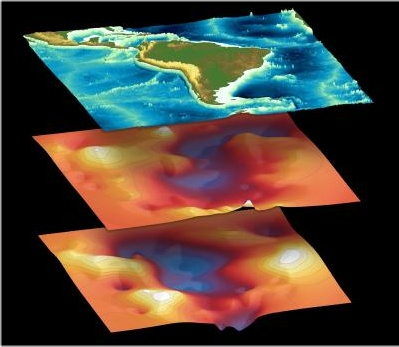
In a recent paper, geophysicist Mioara Mandea from the GFZ German Research Centre for Geosciences, Potsdam and her Danish colleague Nils OLSEN from the National Space Institute/DTU Copenhagen, have shown that motions in the fluid in the Earth’s core are changing surprisingly fast, and that this, in turn, effects the magnetic field of our planet.

The very precise measurements of the Earth’s magnetic field delivered by the geosatellite CHAMP combined with Ørsted satellite data and ground observations over the past nine years, have made it possible to reveal what is happening at 3,000 km under ground.

Nils Olsen and Mioara Mandea have computed a model for the flow at the top of the Earth’s core that fits with the recent rapid changes in the magnetic field, and is also in agreement with the changes in the Length-of-Day variation. This core flow is rather localized in space, and involves rapid variations, almost sudden, over only a few months – a remarkably short time interval compared with the respectable age of our Planet or even with the time of the last magnetic field reversal, some 780,000 years ago.

U.S. companies are helping spread fair hiring practices across the world as they set up shop in developing nations, according to a new study of gender and age discrimination co-written by a University of Illinois labor expert.

American-based firms tend to follow U.S. hiring laws, even when they do business in countries with no anti-discrimination standards on the books, based on findings that will appear in the Journal of International Business Studies.

"American companies are very much emulated these days by companies all over the world," said John Lawler, a professor in the U. of I. Institute of Labor and Industrial Relations. "So I think to the extent they do these sorts of things, they create a very positive model that's going to have an impact internationally."

The jury is still out on the actual benefits of recycling as far as environmental impact but new research suggests that a cellular version could be useful for battling cancer. Scientists at Stanford University have identified a molecule that uses this unexpected pathway to selectively kill cancer cells.

Renal cell carcinoma (RCC), the most common form of kidney cancer, is nearly always caused by mutation of the von Hippel-Lindau (VHL) tumor suppressor gene and often does not respond well to treatment.

The researchers discovered a compound, STF-62247, that was selectively toxic to RCCs deficient in VHL whereas cells with normal VHL were not affected. Treatment of RCC cells lacking functional VHL induced autophagy, a cellular recycling process that cells normally use to conserve resources during times of stress.

An aging population means that neurodegeneration, such as Alzheimer’s disease, is one of the major health problems in the developed world.

One of the causes of neurodegeneration is a modification to the protein ‘tau’, which helps to maintain the stability of neurones in the brain, causing them to form aggregates termed ‘tangles’.

These diseases, or ‘tauopathies’ are believed to be caused by a form of the protein tau which has been excessively modified with phosphate.