Banner
Pilot Study: Fibromyalgia Fatigue Improved By TENS Therapy

Fibromyalgia is the term for a poorly-understood condition where people experience pain and fatigue...

High Meat Consumption Linked To Lower Dementia Risk

Older people who eat large amounts of meat have a lower risk of dementia and cognitive decline...

Long Before The Inca Colonized Peru, Natives Had A Thriving Trade Network

A new DNA analysis reveals that long before the Incan Empire took over Peru, animals were...

Mesolithic People Had Meals With More Tradition Than You Thought

The common imagery of prehistoric people is either rooting through dirt for grubs and picking berries...

User picture.
News StaffRSS Feed of this column.

News Releases From All Over The World, Right To You... Read More »

Blogroll

Rates of sexually transmitted infections have doubled among the over 45 population in less than a decade, reveals research in the journal Sexually Transmitted Infections.

Sexual behavior studies tend to ignore older age groups and focus on young people, say the authors. The period of analysis spanned eight years between 1996 and 2003 inclusive. Researchers monitored the numbers of sexually transmitted infections (STI) diagnosed in 19 sexual health clinics and reported to the Health Protection Agency's Regional Surveillance Unit in the West Midlands.

In total, 4445 STI episodes were identified among people aged 45 and older during that time. Most of these were in straight men and women.

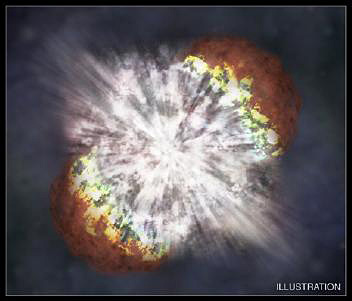
Astronomers recently announced that they have found a novel explanation for a rare type of super-luminous stellar explosion that may have produced a new type of object known as a quark star.

Three exceptionally luminous supernovae explosions have been observed in recent years. One of them was first observed using a robotic telescope at the California Institute of Technology's (Caltech) Palomar Observatory.

Data collected with Palomar's Samuel Oschin Telescope was transmitted from the remote mountain site in southern California to astronomers via the High-Performance Wireless Research and Education Network (HPWREN), funded by the National Science Foundation (NSF). The Nearby Supernova Factory research group at the Lawrence Berkeley Laboratory reported the co-discovery of the supernova, known as SN2005gj.

When tomatoes ripen in our gardens, we watch them turn gradually from hard, green globules to brightly colored, aromatic, and tasty fruits. This familiar and seemingly commonplace transformation masks a seething mass of components interacting in a well-regulated albeit highly complex manner.

For generations, agriculturalists and scientists have bred tomatoes for size, shape, texture, flavor, shelf-life, and nutrient composition, more or less, one trait at a time. With the advent of molecular biology, mutagenesis and genetic transformation could produce tomatoes that were more easily harvested or transported or turned into tomato paste. Frequently, however, optimizing for one trait led to deterioration in another. For example, improving flavor could have a negative effect on yield.

A Low Carbon Society (LCS) is defined by proponents as one that will make an equitable contribution to the global effort of reducing greenhouse gases to a safe level, combining both a high level of energy efficiency and security.

They say the results of modelling activities and workshops have demonstrated that reducing global carbon emissions by 50% is technologically and economically feasible. Energy efficiency, consumer responses and the choice of technologies for electricity generation play crucial roles in cutting CO2 levels.

Thus they say the LCS is not a utopian vision, but is both technically and economically achievable and they publish their findings from the Japan-UK Low Carbon Society project in a special edition of Climate Policy.

The cognitive strategies humans use to regulate emotions can determine both neurological and physiological responses to potential rewards, a team of New York University and Rutgers University neuroscientists has discovered. The findings in Nature Neuroscience shed light on how the regulation of emotions may influence decision making.

Previous research has demonstrated these strategies can alter responses to negative events. However, less understood is whether such strategies can also efficiently regulate expectations of a future reward or a desired outcome. Scientists have already determined that the expectation of a potential reward brings about positive feelings and aids recognizing environmental cues that predict future rewards. Central to this process is the role of the striatum, a multi-faceted structure in the brain that is involved in reward processing—and which is especially engaged when potential rewards are predicted or anticipated.

Researchers led by scientists at the Medical Genetics Institute at Cedars-Sinai Medical Center have identified a gene mutation and molecular mechanism causing an inherited form of scoliosis.

Mutations in the TRPV4 gene cause a type of brachyolmia, a skeletal dysplasia. Those inheriting the disorder have a shorter-than-average trunk, limbs and fingers and toes, and are affected by scoliosis, primarily in the lumbar vertebrae.

Mutations of the TRPV4 gene appear to cause increased calcium in the cells of the developing skeleton. This is the first study to identify this mechanism as a contributor to skeletal dysplasias. The findings suggest that calcium channel balance is important in normal spine development. Also, for skeletal abnormalities caused by TRPV4 gene mutations, the use of calcium channel inhibitors could represent a future approach to treatment.