Banner
Pilot Study: Fibromyalgia Fatigue Improved By TENS Therapy

Fibromyalgia is the term for a poorly-understood condition where people experience pain and fatigue...

High Meat Consumption Linked To Lower Dementia Risk

Older people who eat large amounts of meat have a lower risk of dementia and cognitive decline...

Long Before The Inca Colonized Peru, Natives Had A Thriving Trade Network

A new DNA analysis reveals that long before the Incan Empire took over Peru, animals were...

Mesolithic People Had Meals With More Tradition Than You Thought

The common imagery of prehistoric people is either rooting through dirt for grubs and picking berries...

User picture.
News StaffRSS Feed of this column.

News Releases From All Over The World, Right To You... Read More »

Blogroll

People who are bicultural and speak two languages may actually shift their personalities when they switch from one language to another, according to new research in the Journal of Consumer Research.

"Language can be a cue that activates different culture-specific frames," write David Luna (Baruch College), Torsten Ringberg, and Laura A. Peracchio (University of Wisconsin-Milwaukee).

The authors studied groups of Hispanic women, all of whom were bilingual, but with varying degrees of cultural identification. They found significant levels of "frame-shifting" (changes in self perception) in bicultural participants—those who participate in both Latino and Anglo culture. While frame-shifting has been studied before, the new research found that biculturals switched frames more quickly and easily than bilingual monoculturals.

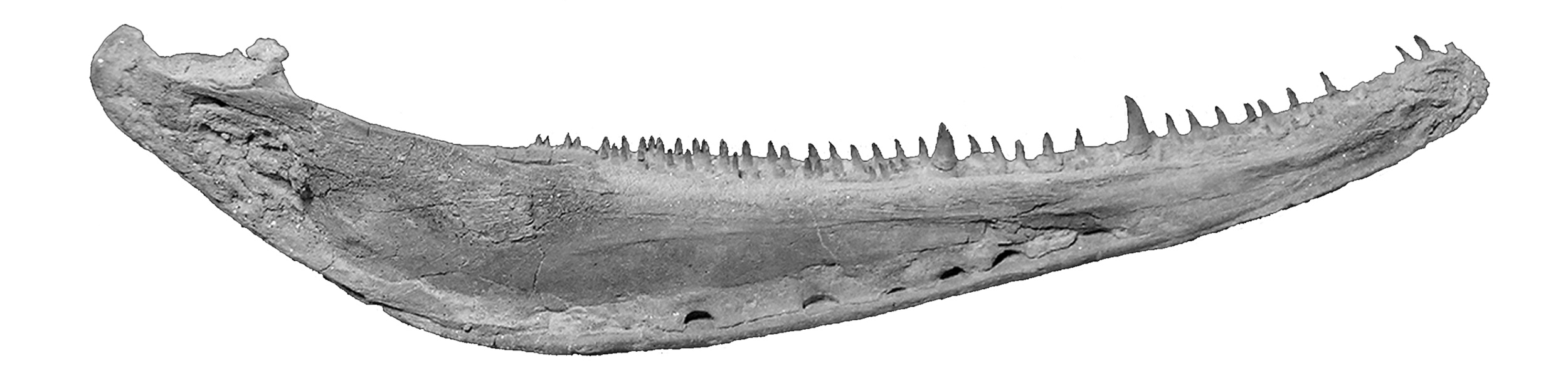
New exquisitely preserved fossils from Latvia cast light on a key event in our own evolutionary history, when our ancestors left the water and ventured onto land. Swedish researchers Per Ahlberg and Henning Blom from Uppsala University have reconstructed parts of the animal and explain the transformation in the new issue of Nature.

It has long been known that the first backboned land animals or "tetrapods" - the ancestors of amphibians, reptiles, birds and mammals, including ourselves - evolved from a group of fishes about 370 million years ago during the Devonian period. However, even though scientists had discovered fossils of tetrapod-like fishes and fish-like tetrapods from this period, these were still rather different from each other and did not give a complete picture of the intermediate steps in the transition.

A new analysis of Martian soil data led by University of California, Berkeley, geoscientists suggests that there was once enough water in the planet's atmosphere for a light drizzle or dew to hit the ground, leaving tell-tale signs of its interaction with the planet's surface.

The study's conclusion breaks from the more dominant view that the liquid water that once existed during the red planet's infancy came mainly in the form of upwelling groundwater rather than rain.

To come up with their conclusions, the UC Berkeley-led researchers used published measurements of soil from Mars that were taken by various NASA missions: Viking 1, Viking 2, Pathfinder, Spirit and Opportunity. These five missions provided information on soil from widely distant sites surveyed between 1976 and 2006.

A classified assessment by the National Intelligence Council (NIC) says climate change could threaten U.S. security in the next 20 years by causing political instability, mass movements of refugees, terrorism, or wars over water. The House Intelligence Committee will get a briefing today on the main findings and the full report will be released Monday, June 30th.

It's the perfect storm of buzzwords. This might be check and mate for environmental activists. Relating global warming to terrorism is a masterstroke of logical and cultural hand trickery but what can Big Oil do, deny there is terrorism? No one is more impacted by sea level rise than the Dutch so look for that military build-up in Holland over the next few years. The Belgians have it coming.

The assessment itself is confidential, because the other 6 billion of us won't be impacted by global warming or world wars over water, but thankfully some analyses used as raw material will be open, including a series of studies done by Columbia University's Center for International Earth Science Information Network (CIESIN). On commission from NIC, CIESIN ranked countries by looking at three climate risks: sea-level rise, increased water scarcity, and an aggregate measure of vulnerability based on projected temperature change, compared with nations' ability to adapt.

The sexual and feminist revolutions were supposed to free women to enjoy casual sex just as men always had but according to Professor Anne Campbell from Durham University in the UK (1), the negative feelings reported by women after one-night stands suggest that they are not well adapted to fleeting sexual encounters.

Men are more likely to reproduce and therefore to benefit from numerous short-term partners. For women, however, quality seems to be more important than quantity. Also for women, finding partners of high genetic quality is a stronger motivator than sheer number, and it is commonly believed that women are more willing to have casual sex when there is a chance of forming a long-term relationship.

This University of Copenhagen press release says that they would like to be first to create a quantum computer. They have made no more progress than anyone else, really, but want us all to know that they are thinking about it.

We liked it so much we are just printing it as is: