Banner
Pilot Study: Fibromyalgia Fatigue Improved By TENS Therapy

Fibromyalgia is the term for a poorly-understood condition where people experience pain and fatigue...

High Meat Consumption Linked To Lower Dementia Risk

Older people who eat large amounts of meat have a lower risk of dementia and cognitive decline...

Long Before The Inca Colonized Peru, Natives Had A Thriving Trade Network

A new DNA analysis reveals that long before the Incan Empire took over Peru, animals were...

Mesolithic People Had Meals With More Tradition Than You Thought

The common imagery of prehistoric people is either rooting through dirt for grubs and picking berries...

User picture.
News StaffRSS Feed of this column.

News Releases From All Over The World, Right To You... Read More »

Blogroll

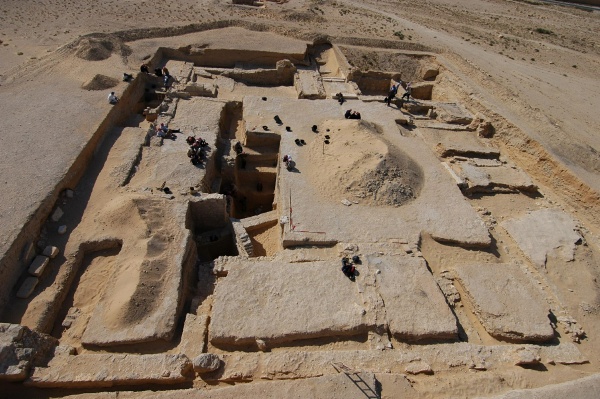
The discovery of an ancient city buried beneath the sands of modern-day Syria has provided evidence for a Hellenistic settlement that existed for more than six centuries extending into the time of the Roman Empire. The site provides a unique insight into the structures of a pre-Roman Hellenistic settlement. The project, funded by the Austrian Science Fund FWF, sheds new light on city life in the Hellenistic period.

The Syrian deserts have long kept an important secret hidden deep beneath their sands ­ the remains of the pre-Roman Hellenistic settlement of Palmyra. Until now, the only evidence for the existence of such a settlement was to be found in historical writing. As part of an FWF-funded joint project, the Institute of Classical Archaeology at the University of Vienna, the German Archaeological Institute and the Directorate General of Antiquities and Museums in Syria have been the first to track down the location of this early city.

Researchers have shown that the pre-hatching calls of baby Nile crocodiles actually mean something to their mothers - and even to their siblings.

To us, they sound like "umph! umph! umph!" but to the others in the nest it's a signal that it's time to hatch, according to the report in Current Biology. When the mother hears those cries, she also knows it's time to start digging up the nest.

The new findings, made from a series of "playback" experiments, confirm what had only been suspected on the basis of prior anecdotal observation, according to the researchers Amélie Vergne and Nicolas Mathevon of Université Jean Monnet in France. The researchers said that the calling behavior is probably critical to the early survival of the young crocodiles.

The hardiest plants and those most likely to survive the climatic shifts brought about by global warming are now easier to identify, thanks to new research findings by a team from Queen's University.

Populations of plants growing at the outer edges of their natural "geographic range" exist in a precarious balance between extinction of existing populations and founding of new populations, via seed dispersal into vacant but suitable habitat. "Policy makers concerned with preserving plant species should focus not only on conserving land where species are now, but also where they may be found in the future," says Queen's Biology professor Christopher Eckert.

LONDON, June 23 /PRNewswire/ --

- As Food Waste Awareness Week Starts, Ocado Reveals That Brits Throw Away Enough Food at Dinnertime to Feed 19 million.

The kitchen is the heart of the home but over-enthusiastic Brits are cooking up enough food at mealtimes to lay an extra place at the table in every one of the nation's homes(1). This waste food could feed the British Army 51 times over(2).

This material originates from volcanoes but in synthesized form it takes up around a third of the average packet of washing powder and it also helps refine 99 per cent of the world's petrol (*) - when it's not used to clean up nuclear waste.

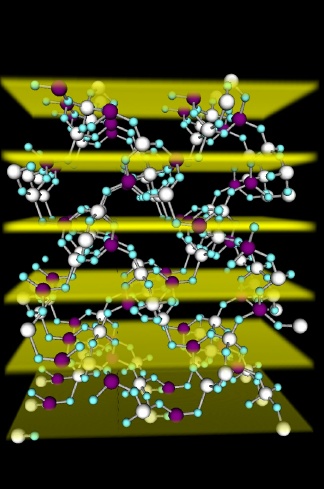
You've probably never heard of it but this extremely useful material is a zeolite. A European team of scientists has revealed, for the first time, its chemical structure using the European Synchrotron Radiation Facility (ESRF). This research opens door to more effective zeolites in the future.

Zeolites are crystalline white minerals, mostly made of aluminium, silicon and oxygen. Their structure is like molecular scaffolding, and thanks to this structure they are frequently used as a “molecular sieve.” This means that with their pores they can separate different molecules and cause different reactions, which are crucial in treating petrol and producing chemicals. Zeolites can also provoke ion exchange, which is useful in water softening or in the removal of nuclear waste (by filtering the radioactive components).

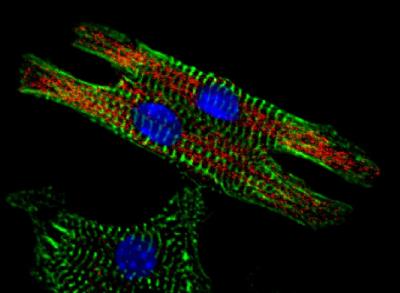
Researchers at Children's Hospital Boston say they have pinpointed a new, previously unrecognized group of stem cells that give rise to cardiomyocytes; heart muscle cells. These stem cells, located in the surface of the heart, or epicardium, advance the hope of being able to regenerate injured heart tissue.

Previously, the Children's team found that a specific stem cell or progenitor, marked by expression of a gene called Nkx2-5, forms many components of the heart: heart muscle cells, vascular smooth muscle cells, and the endothelial cells lining blood vessels in the heart's left-sided chambers. The team at MGH found a related progenitor, marked by expression of the Isl1 gene, that produces these same cell-types in the right-sided heart chambers.

Now, researchers have shown that heart muscle cells can also be derived from a third type of cardiac progenitor, located within the epicardium and identifiable through its expression of a gene called Wt1.