Banner
Pilot Study: Fibromyalgia Fatigue Improved By TENS Therapy

Fibromyalgia is the term for a poorly-understood condition where people experience pain and fatigue...

High Meat Consumption Linked To Lower Dementia Risk

Older people who eat large amounts of meat have a lower risk of dementia and cognitive decline...

Long Before The Inca Colonized Peru, Natives Had A Thriving Trade Network

A new DNA analysis reveals that long before the Incan Empire took over Peru, animals were...

Mesolithic People Had Meals With More Tradition Than You Thought

The common imagery of prehistoric people is either rooting through dirt for grubs and picking berries...

User picture.
News StaffRSS Feed of this column.

News Releases From All Over The World, Right To You... Read More »

Blogroll

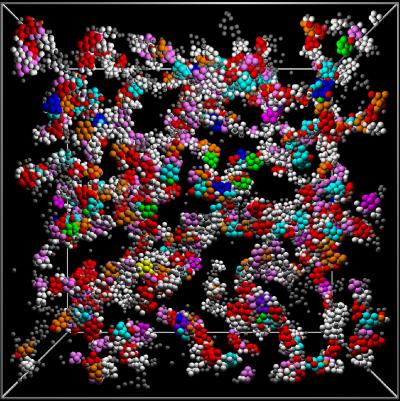
Glass has always been a chemical and physical puzzle. Unlike most solids, glass is actually more like a slow-moving liquid - a 'jammed' state of matter that moves very slowly. Like cars in traffic, atoms in a glass can't reach their destination because the route is blocked by their neighbors, so it never really becomes a solid.

For more than 50 years most scientists have tried to figure out the glass puzzle. Work so far has concentrated on trying to understand the traffic jam, but now Dr Paddy Royall from the University of Bristol, with colleagues in Canberra and Tokyo, has shown that the problem really lies with the destination, not with the traffic jam.

Publishing in Nature Materials, the team has revealed that glass 'fails' to be a solid due to the special atomic structures that form in a glass when it cools (ie, when the atoms arrive at their destination).

The movements in the liquid part of the Earth’s core are changing surprisingly quickly, and this affects the Earth’s magnetic field, according to new research from DTU Space.

The Ørsted satellite’s very precise measurements of the Earth’s magnetic field over the past nine years have made it possible for Nils Olsen, Senior Scientist with DTU Space, and several German scientists, to map surprisingly rapid changes in the movements in the Earth’s core. The results have just been published in the scientific journal Nature Geoscience.

“What is so surprising is that rapid, almost sudden, changes take place in the Earth’s magnetic field. This suggests that similar sudden changes take place in the movement of the liquid metal deep inside the Earth which is the reason for the Earth’s magnetic field,” Nils Olsen explains.

Rett syndrome is a genetic brain development disorder that primarily affects females. It is predominantly caused by a sporadic mutation in the MECP2 gene on the X chromosome.

The syndrome becomes apparent from around six months of age when development stagnates and acquired skills, such as coordination, speech, communication skills and cognitive function deteriorate. Other problems can include, breathing, cardiac function, chewing, swallowing, and digestion. Rett syndrome has often been misdiagnosed as cerebral palsy, and shares some similarities with autism. A blood test, as well as symptoms and clinical history, helps to diagnose the disorder.

The average life expectancy of a girl with Rett syndrome is less than 50 years and she will require maximum assistance with every aspect of daily living.

Researchers at the University of Cincinnati are looking for ways to reduce or prevent heart damage by starting where the problem often begins: in the genes.

Following a heart attack, cells die, causing lasting damage to the heart. Keith Jones, PhD, a researcher in the department of pharmacology and cell biophysics, and colleagues are trying to reduce post-heart attack damage by studying the way cells die in the heart—a process controlled by transcription factors.

Transcription factors are proteins that bind to specific parts of DNA and are part of a system that controls the transfer of genetic information from DNA to RNA and then to protein. Transfer of genetic information also plays a role in controlling the cycle of cells—from cell growth to cell death.

Measles, one of the most common contagious diseases, has been thought to enter the body through the surface of airways and lungs, like many other major viruses. Now, Mayo Clinic researchers and their collaborators say that's not the case, and some medical texts will have to be revised. The findings are reported in The Journal of Clinical Investigation.

The research team generated a measles virus that cannot enter the airway epithelium and showed that it spread in lymphocytes, cells of the immune system, and remained virulent. Researchers also showed, as they predicted in a new model of infection, that the virus could not cross the respiratory epithelium on its way out of the lungs and was not shed from infected monkeys.

Freshly released spermatozoids don't just achieve fertilization, they must undergo some changes for this to occur. Among those are changes due to receptors situated in the plasmatic membrane (the layer covering the cells) and opioid and cannabinoid receptors are two of these.

On coming into contact with these, physiological reactions are generated in the body which are similar to sedation, analgesia and low blood pressure. According to the research undertaken to date, both substances have an influence on the process of fertilization. It is known that the consumption of external opiates (heroin, methadone) reduces the mobility of spermatozoids and that external cannabinoids (hachis) causes changes in the reproductive process.

Ekaitz Agirregoitia Marcos, from the University of the Basque Country, has concluded that there are opioid and cannabinoid receptors in human sperm and that these influence the mobility of spermatozoid and that his new research on this opens the door to more effective treatment of fertility problems.