Banner
Pilot Study: Fibromyalgia Fatigue Improved By TENS Therapy

Fibromyalgia is the term for a poorly-understood condition where people experience pain and fatigue...

High Meat Consumption Linked To Lower Dementia Risk

Older people who eat large amounts of meat have a lower risk of dementia and cognitive decline...

Long Before The Inca Colonized Peru, Natives Had A Thriving Trade Network

A new DNA analysis reveals that long before the Incan Empire took over Peru, animals were...

Mesolithic People Had Meals With More Tradition Than You Thought

The common imagery of prehistoric people is either rooting through dirt for grubs and picking berries...

User picture.
News StaffRSS Feed of this column.

News Releases From All Over The World, Right To You... Read More »

Blogroll

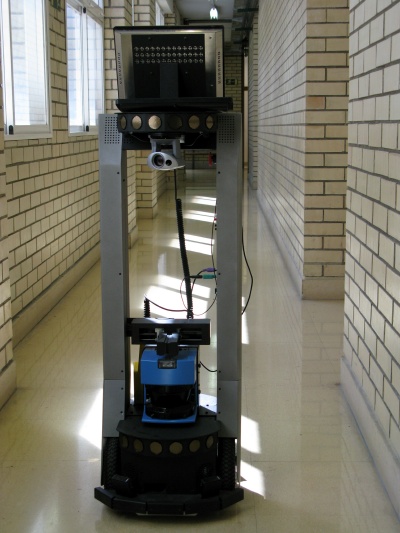
A research team from the University of the Basque Country, led by Basilio Sierra, is devising a robot that can identify different locations and will even ask permission before going through a doorway.

Let's face it, robots are boring. They never came close to cleaning our houses or delving into Asimovian angst about their existence.

A robot that can walk around without having every move programmed and can make decisions for itself is a start. The Autonomous Robotics and Systems Research Team at the University of the Basque Country (UPV/EHU) are involved in increasing the autonomy of robots so that they are evermore capable of carrying out more tasks on their own. They started with Marisorgin, the robot for distributing mail, and are making further advances with Tartalo.

Enactment of the Genetic Information Nondiscrimination Act (GINA) of 2008 is a boon to individual patients and for genetic research, write Kathy Hudson, M.K. Holohan, and Francis Collins in the June 19 issue of the New England Journal of Medicine. But the bill is not a panacea, they note: Employers, health insurers, patients, and doctors now must be educated about its provisions, gaps remain in genetic testing oversight, and there still may be opportunities to misuse genetic information.

Hudson, director of the Pew Charitable Trusts-funded Genetics and Public Policy Center, and co-authors Holohan and Collins of the National Human Genome Research Institute, reflect on GINA's slow path through the legislative process.

Nitrogen is essential to all life on Earth, and determines how much carbon dioxide ecosystems can absorb from the atmosphere, says UC Davis assistant professor Benjamin Houlton.

There are puzzling aspects of the nitrogen cycle in temperate and tropical forests. Defying laws of supply and demand, trees capable of extracting nitrogen directly from the atmosphere, nitrogen fixation, often thrive where it is readily available in the soil, but not where it is in short supply.

Houlton tackled the problem with colleagues including top international ecologist Peter Vitousek, the Clifford G. Morrison Professor in Population and Resource Studies at Stanford University.

The 2007 Intergovernmental Panel on Climate Change report was wrong, say a group of researchers, but not about whether there was global warming. Rather, the report underestimated its effects concerning ocean temperature and associated sea level increases between 1961 and 2003 - by 50 percent.

The report in the June 19 edition of Nature compared climate models with observations that show sea levels rose by 1.5 millimeters per year in the period from 1961-2003. That equates to an approximately 2 inch increase in ocean levels in a 42-year span.

Not exactly WaterWorld but not insignificant either.

Patients diagnosed with colon cancer who had abundant vitamin D in their blood were less likely to die during a follow-up period than those who were deficient in the vitamin, according to a new study by scientists at Dana-Farber Cancer Institute.

The findings of the study -- the first to examine the effect of vitamin D among colorectal cancer patients -- merit further research, but it is too early to recommend supplements as a part of treatment, say the investigators from Dana-Farber and the Harvard School of Public Health.

In a report in the June 20 issue of the Journal of Clinical Oncology, the authors note that previous research has shown that higher levels of vitamin D reduce the risk of developing colon and rectal cancer by about 50 percent, but the effect on outcomes wasn't kno

A new mass spectrometry test can help sports anti-drug doping officials to detect whether an athlete has used drugs that boost naturally occurring steroid levels. The test is more sensitive compared to previous alternatives, more capable of revealing specific suspicious chemical in the body, faster to perform, and could be run on standard drug-screening laboratory equipment.

The new test was announced in a special issue of the Journal of Mass Spectrometry that concentrates on detecting drugs in sports.

One of the roles of the masculinising hormone testosterone is to increase muscle size and strength. Taking extra testosterone, or taking a chemical that the body can use to create extra testosterone, could therefore enhance an athlete's performance. For this reason taking it is banned by the World Anti-Doping Agency (WADA).