Banner
Pilot Study: Fibromyalgia Fatigue Improved By TENS Therapy

Fibromyalgia is the term for a poorly-understood condition where people experience pain and fatigue...

High Meat Consumption Linked To Lower Dementia Risk

Older people who eat large amounts of meat have a lower risk of dementia and cognitive decline...

Long Before The Inca Colonized Peru, Natives Had A Thriving Trade Network

A new DNA analysis reveals that long before the Incan Empire took over Peru, animals were...

Mesolithic People Had Meals With More Tradition Than You Thought

The common imagery of prehistoric people is either rooting through dirt for grubs and picking berries...

User picture.
News StaffRSS Feed of this column.

News Releases From All Over The World, Right To You... Read More »

Blogroll

The last time you had a cappuccino, did you think 'I bet I can learn something about type-I superconductors here?' Well, a team of Ames Laboratory physicists did and have found that the bubble-like arrangement of magnetic domains in superconducting lead exhibits patterns that are very similar to everyday froths like soap foam or frothed milk on a fancy coffee.

The similarities between the polygonal-shaped patterns in conventional foams and "suprafroths," the patterns created by a magnetic field in a superconductor, establish suprafroths as a model system for the study of froths.

Ruslan Prozorov, Ames Laboratory physicist and primary investigator, discovered the suprafroth pattern last year, seeing an unexpected foam-like design when he applied a magnetic field to a lead sample in a magneto-optics system. Since the term "superfroth" was already in use for an unrelated product, Prozorov coined "suprafroths" in a nod to history: in the 1930s, superconductors were called "supraconductors."

If you're anything like us, you're wondering how shockingly bad films like Battle for the Planet of the Apes get made. The simple reason is that sequels, even bad ones, tend to make more money than original films, according to a new study in the July Journal of Business Research.
And timing is everything – the sooner the period between releases, the better.

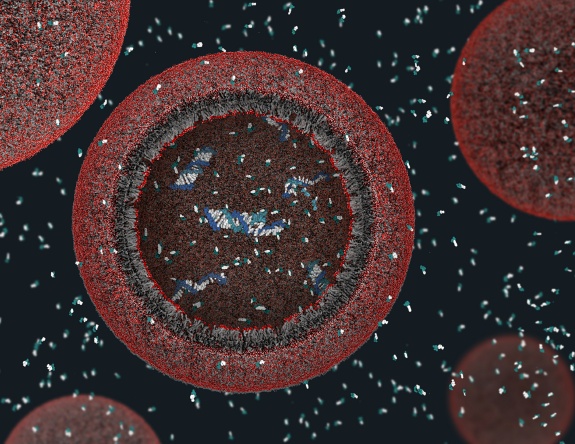
A team of researchers at Harvard University have modeled in the laboratory a primitive cell, or protocell, that is capable of building, copying and containing DNA.

Since there are no physical records of what the first primitive cells on Earth looked like, or how they grew and divided, the research team's protocell project offers a useful way to learn about how Earth's earliest cells may have interacted with their environment approximately 3.5 billion years ago.

The protocell's fatty acid membrane allows chemical compounds, including the building blocks of DNA, to enter into the cell without the assistance of the protein channels and pumps required by today's highly developed cell membranes. Also unlike modern cells, the protocell does not use enzymes for copying its DNA.

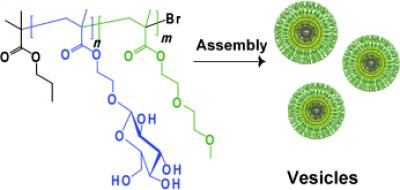
Cameron Alexander and George Pasparakis at the University of Nottingham have been able to facilitate a conversation between bacterial cells and artificial polymer vesicles by way of sugar groups on the vesicle surface.

For an organism to develop and function, the individual cells must exchange information, or communicate, with each other. Is it possible to learn their language and "talk to" the cells?

Apparently so. In the journal Angewandte Chemie Alexander and Pasparakis report that this first communication occurred by way of sugar groups on the vesicle surface. The vesicles subsequently transfer information to the cells—in the form of dye molecules.

Could macro-scale chemical engineering be used to stop a volcanic lava flow in its tracks and save potentially thousands of lives and homes when the next eruption occurs? R.D. Schuiling of Geochem Research BV, based in The Netherlands, thinks so.

During the 1960s, Schuiling pioneered the discipline of geochemical engineering, which involves the use of natural processes to solve environmental and civil engineering problems. He recently turned his attention to the ongoing problem of how to tame volcanic lava flows. Lava flows regularly threaten and sometimes destroy human settlements. In 1973, the Icelanders had some success slowing the advance of lava from Heimaey by dousing the flow with huge volumes of seawater. Meanwhile in Sicily, the town of Zafferana was saved from being ravaged by the 1991-1993 eruption cycle of Etna by huge earth walls built to divert the lava flow.

British scientists are developing a new type of glass that can dissolve and release calcium into the body. This will enable patients to regrow bones and could signal a move away from bone transplants.

The porous glass, originally developed at Imperial College is capable of acting as an active template for new bone growth, dissolving in the body without leaving any trace of itself or any toxic chemicals. As it dissolves it releases calcium and other elements such as silicon into the adjacent body fluids, stimulating bone growth.