Banner
Synchrotron Could Shed Light On Exotic Dark Photons

There are many hypothetical particles proposed to explain dark matter and one idea to explore how...

The Pain Scale Is Broken But This May Fix It

Chronic pain is reported by over 20 percent of the global population but there is no scientific...
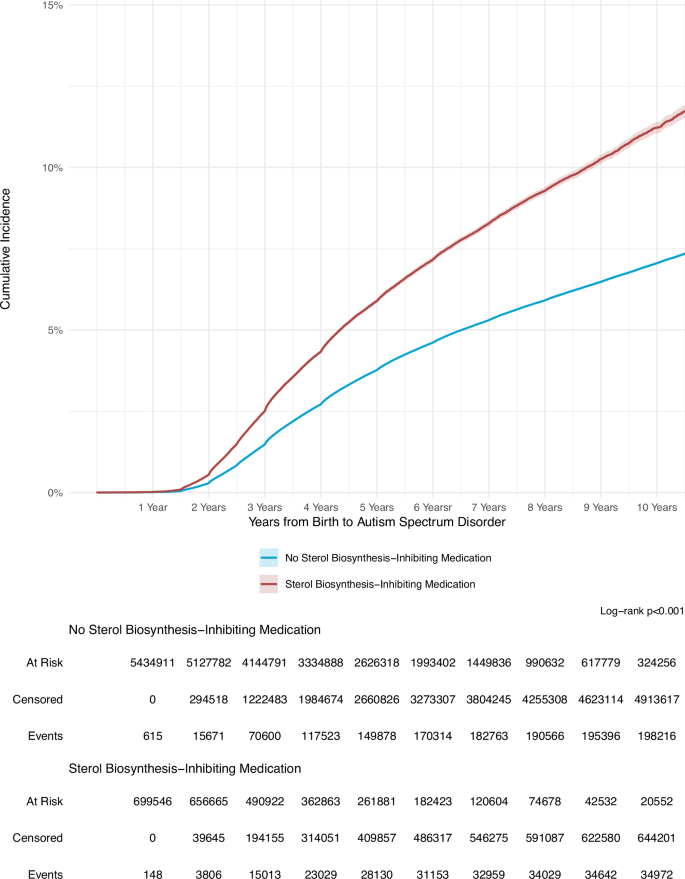
Study Links Antidepressants, Beta-blockers and Statins To Increased Autism Risk

An analysis of 6.14 million maternal-child health records  has linked prescription medications...

Pilot Study: Fibromyalgia Fatigue Improved By TENS Therapy

Fibromyalgia is the term for a poorly-understood condition where people experience pain and fatigue...

User picture.
News StaffRSS Feed of this column.

News Releases From All Over The World, Right To You... Read More »

Blogroll

Chagas disease, the third most common parasitic infection in the world, affects approximately 7.5 million people, mostly in Latin America. To help reduce outbreaks of this disease in their countries, the United States and Mexican governments should implement a range of programs as well as fund research for the development of Chagas vaccines and treatments, according to a new policy brief.

In what might be a new breakthrough for the spider-control field, researchers have found that oil-based pesticides are more effective than water-based pesticides at killing the contents of brown widow spider egg sacs.

This finding is important because trying to control adult spiders without controlling their eggs is like plucking dandelions without taking out their roots.

pic

This image shows a brown widow spider. Credit: Rick Vetter

The body's circadian clocks coordinate behaviors like eating and sleeping, as well as physiological activity like metabolism, with the Earth's 24-hour light-dark cycle. There's a master clock in the brain, as well as peripheral clocks located in individual organs. When genetics, environment or behavior disrupt the synchrony of these clocks, metabolic disorders can develop.

The DNA in our cells is folded into millions of small packets, like beads on a string, allowing two-meter linear DNA genomes to fit into a nucleus of only about 0.01 mm in diameter.

However, these molecular beads, called nucleosomes, render DNA 'unreadable'. They thus need to be temporarily displaced to allow genes to be copied ('transcribed') into the messages that are used to make proteins. How cells ensure appropriate access to 'promoter' DNA, the regions where gene transcription begins, is still poorly understood.

Nothing is more frustrating that watching that hourglass in the center of your screen while you wait for your computer to load a program or access the data you need.  

Well, maybe status bars are worse. Those used to be a culture war in the political science community.

A team from the Universities of Sheffield and Leeds may have found a way to speed things up: sound.  The paper in Applied Physics Letters finds that certain types of sound waves can move data quickly, using minimal power.

The hepatitis A virus can trigger acute liver inflammation which generally has a mild course in small children but which can become dangerous in adults. The virus, which is found worldwide, has previously been considered to be a purely human pathogen which at most is found in isolated cases in non-human primates.

Now an international team of researchers under the direction of the University of Bonn has now discovered in a large-scale study with nearly 16,000 specimens from small mammals from various continents that the hepatitis A virus - like HIV or Ebola as well - is of likely animal origin.