
Banner
Convergent Evolution Cheat Sheet Now 120 Million Years Old

One tenet of natural selection is a random walk of genes but nature may be more predictable than...

Synchrotron Could Shed Light On Exotic Dark Photons

There are many hypothetical particles proposed to explain dark matter and one idea to explore how...

The Pain Scale Is Broken But This May Fix It

Chronic pain is reported by over 20 percent of the global population but there is no scientific...
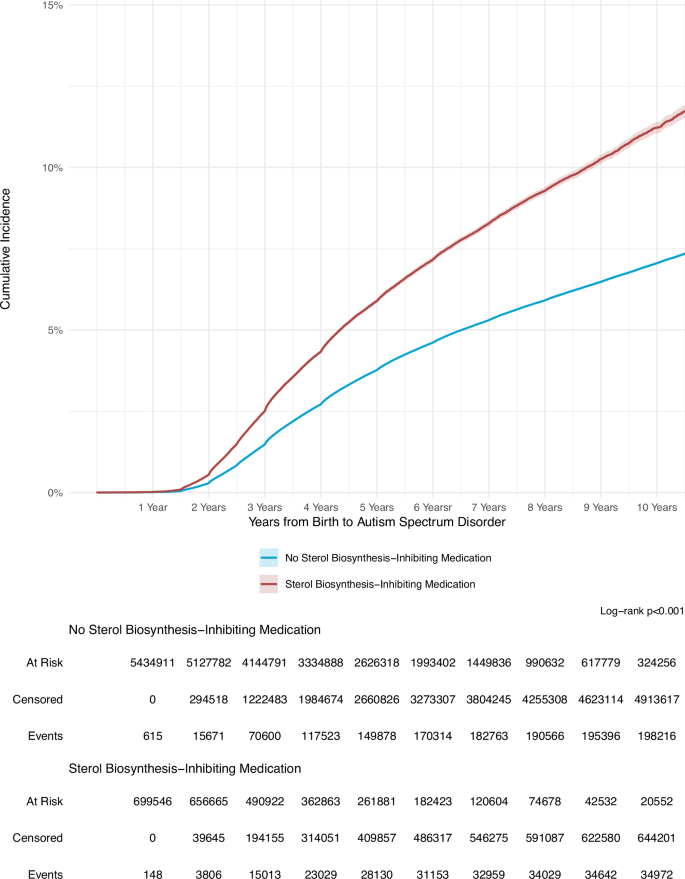
Study Links Antidepressants, Beta-blockers and Statins To Increased Autism Risk

An analysis of 6.14 million maternal-child health records  has linked prescription medications...

User picture.
News StaffRSS Feed of this column.

News Releases From All Over The World, Right To You... Read More »

Blogroll

What has previously been known as good cholesterol--high density lipoprotein (HDL)--has now been shown to be not so good in protecting women against atherosclerosis while they are transitioning through menopause, according to a new study from the University of Pittsburgh Graduate School of Public Health that was presented last week at the annual meeting of The North American Menopause Society (NAMS) in Las Vegas.

What's the best time to tweet, to ensure maximum audience engagement? Researchers at the University of Maryland have demonstrated that an algorithm that takes into account the past activity of each of your followers -- and makes predictions about future tweeting -- can lead to more "retweets" than other commonly used methods, such as posting at peak traffic times.

The internet is full of advice about when to tweet to gain maximum exposure, but the new study subjects marketing folk wisdom to scientific scrutiny.

A pioneering surgical technique has restored some hand and arm movement to patients immobilized by spinal cord injuries in the neck, reports a new study.

Like railroad switchmen, the focus is on rerouting passageways; however, instead of trains on a track, the surgeons redirect peripheral nerves in a quadriplegic's arms and hands by connecting healthy nerves to the injured nerves. Essentially, the new nerve network reintroduces conversation between the brain and the muscles that allows patients, once again, to accomplish tasks that foster independence, such as feeding themselves or writing with a pen.

Working with gut stem cells from humans and mice, scientists from have successfully grown healthy intestine atop a 3-D scaffold made of a substance used in surgical sutures. 

In a further step that takes their work well beyond proof of concept, researchers report their laboratory-created intestine successfully regenerated gut tissue in the colons of dogs with missing gut lining.

An international research team has shown that epidemics of dengue, which is caused by a mosquito-borne virus across southeast Asia, appear to be linked to the abnormally high temperatures brought by the El Niño weather phenomenon. 

Now, as the most intense El Niño in nearly two decades is emerging in the Pacific, the finding - reported in today's issue of the Proceedings of the National Academy of Sciences (PNAS) - may be a harbinger of a spike in cases of the dangerous hemorrhagic fever throughout southeast Asian countries early next year.

"Large dengue epidemics occur unexpectedly, which can overburden the health care systems," said lead author Willem G. van Panhuis, M.D., Ph.D., assistant professor of epidemiology at Pitt Public Health.

Astronomers have long turned their telescopes, be they on satellites in space or observatories on Earth, to the wide swaths of interstellar medium to get a look at the formation and birth of stars. However, the images produced over the last 50 years look more like weather maps showing storm systems instead of glittering bursts of light that the untrained observer might expect of a "star map."

Until now.

Led by University of Florida astronomer Peter Barnes and Erik Muller at the National Astronomy Observatory of Japan, a team of international researchers has just released the most comprehensive images anyone has ever seen of the Milky Way's cold interstellar gas clouds where new stars and solar systems are being born.







