Banner
Synchrotron Could Shed Light On Exotic Dark Photons

There are many hypothetical particles proposed to explain dark matter and one idea to explore how...

The Pain Scale Is Broken But This May Fix It

Chronic pain is reported by over 20 percent of the global population but there is no scientific...
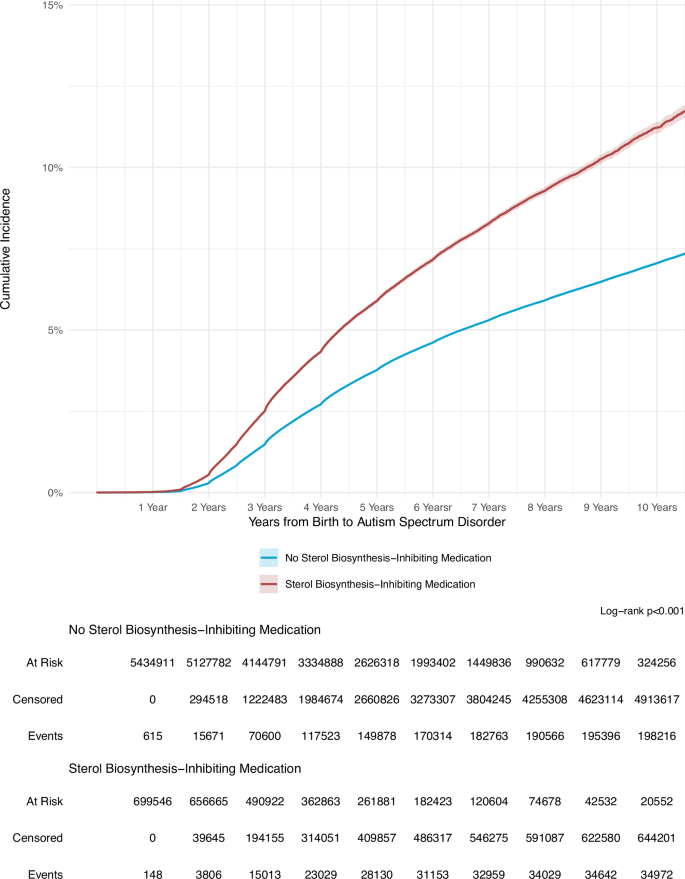
Study Links Antidepressants, Beta-blockers and Statins To Increased Autism Risk

An analysis of 6.14 million maternal-child health records  has linked prescription medications...

Pilot Study: Fibromyalgia Fatigue Improved By TENS Therapy

Fibromyalgia is the term for a poorly-understood condition where people experience pain and fatigue...

User picture.
News StaffRSS Feed of this column.

News Releases From All Over The World, Right To You... Read More »

Blogroll

Climate-related changes in flower diversity have resulted in a decrease in the length of alpine bumble bees' tongues, a new paper in Science says, leaving these insects poorly suited to feed from and pollinate the deep flowers they were adapted to previously.

The results highlight how certain mutually beneficial ecological partnerships can be lost due to shifts in climate. Many co-evolved species have precisely matched traits; for example, long-tongued bumble bees are well adapted for obtaining nectar from deep flowers with long corolla tubes. Recent studies suggest long-tongued bumble bees are declining in number.

Teeth and seashells are among the stronger, more durable things in nature. The secret of these materials lies in their unique fine structure: they are composed of different layers in which numerous micro-platelets are joined together, aligned in identical orientation in each layer.

A proof-of-concept study finds that it is possible to identify an individual's ancestral background based on his or her fingerprint characteristics - a discovery with significant applications for law enforcement and anthropological research.

"This is the first study to look at this issue at this level of detail, and the findings are extremely promising," says Ann Ross, a professor of anthropology at North Carolina State University and senior author of a paper describing the work. "But more work needs to be done. We need to look at a much larger sample size and evaluate individuals from more diverse ancestral backgrounds."

Researchers from the University of Exeter believe they have solved one of the biggest puzzles in climate science. The new study, published in Nature Geoscience, explains the synchrony observed during glacial periods when low temperatures in the Southern Ocean correspond with low levels of atmospheric carbon dioxide (CO2).

The interdisciplinary study, carried out in collaboration with the University of Tasmania, demonstrates how a reconfiguration of ocean circulation can result in more carbon being stored in the deep ocean that previously thought.

Why do babies smile when they interact with their parents? Could their smiles have a purpose? A team of computer scientists, roboticists and psychologists say they can confirm what most parents already suspect: when babies smile, they do so with a purpose--to make the person they interact with smile in return. 

In addition, babies reach that goal by using sophisticated timing, much like comedians who time their jokes to maximize audience response. But there is a twist: babies seem to be doing this while smiling as little as possible.

Scientists successfully defeated a dangerous intestinal pathogen, Clostridium difficile, with a drug targeting its toxins rather than its life.

C. difficile is responsible for more than 250,000 hospitalizations and 15,000 deaths per year in the United States, costing the country more than $4 billion in health-care expenses, said the study's senior author, Matthew Bogyo, PhD, professor of pathology and of microbiology and immunology at Stanford University School of Medicine. Lead authorship of the study is shared by Kristina Bender, PhD, a former postdoctoral scholar in Bogyo's lab, and Megan Garland, a student in the Medical Scientist Training Program.