Banner
Here's Where Your Backyard Was 300 Million Years Ago

We may use terms like "grounded" and terra firma to mean stability and consistency but geology...

Convergent Evolution Cheat Sheet Now 120 Million Years Old

One tenet of natural selection is a random walk of genes but nature may be more predictable than...

Synchrotron Could Shed Light On Exotic Dark Photons

There are many hypothetical particles proposed to explain dark matter and one idea to explore how...

The Pain Scale Is Broken But This May Fix It

Chronic pain is reported by over 20 percent of the global population but there is no scientific...

User picture.
News StaffRSS Feed of this column.

News Releases From All Over The World, Right To You... Read More »

Blogroll

Hundreds of millions of times every year many of us turn to online symptom checkers to try to self-diagnose our symptoms and to get advice on whether we should seek further medical care or just rest at home until we feel better.

But how good is the information we receive?

The first wide-scale study of the accuracy of general-purpose symptom checkers found that while the online programs are often wrong, they are roughly equivalent to telephone triage lines commonly used at primary care practices--and they are better than general Internet-search self-diagnosis and triage. The study, led by researchers at Harvard Medical School, is published in the BMJ.

Outcomes following the arthroscopic repair of rotator cuff tears in older athletes appears to be successful a majority of the time, according to research presented today at the American Orthopaedic Society for Sports Medicine's (AOSSM) Annual Meeting in Orlando, Florida.

"Seventy-seven percent of our patients who had an arthroscopic repair of a full thickness rotator cuff tear, were able to return to their sport at a similar level of intensity," said lead author, Peter Millett, MD, MSc, from the Steadman Philippon Research Institute in Vail, Colorado.

Snacking is the new American pastime, acccording to the recent survey by Mintel which found that nearly all Americans (94 percent) report snacking at least once a day and 50 percent of adults snack two to three times per day.

Random-access memory, or RAM, is where computers like to store the data they're working on because a processor can retrieve data from RAM tens of thousands of times faster than from the computer's disk drive.

The Community Preventive Services Task Force (Task Force) recommends the use of combined diet and physical activity promotion programs to provide counsel and support to patients at increased risk for type 2 diabetes. A systematic review of 53 studies describing 66 programs found strong evidence that such programs are effective for reducing new onset diabetes. A separate review of economic evidence (28 studies) found these interventions to be cost-effective. The recommendation statement and evidence reviews are published in Annals of Internal Medicine.

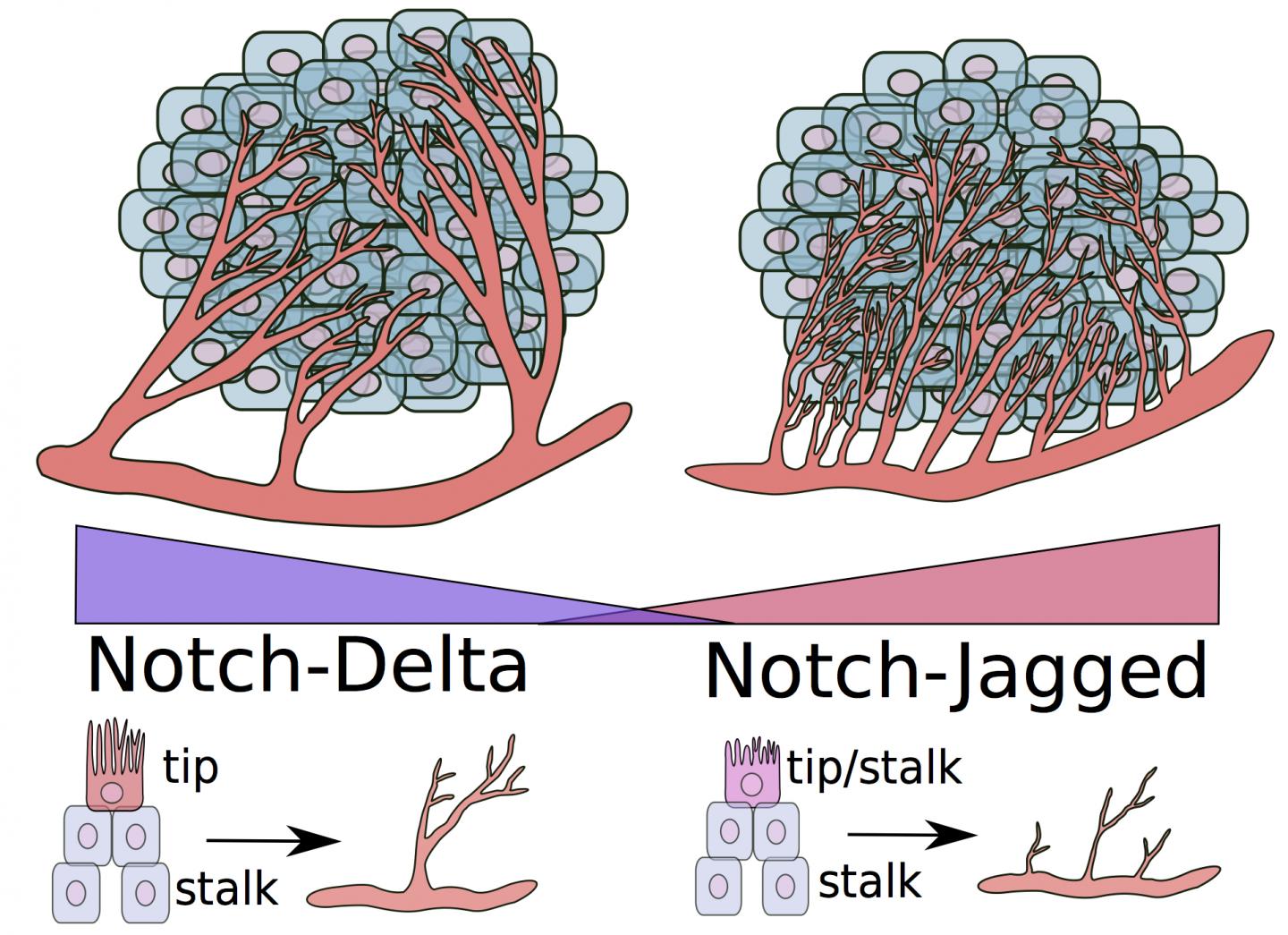
Researchers have built a simulation to show how cancerous tumors manipulate blood-vessel growth for their own benefit.

Like all cells, those in tumors need access to the body's fine network of blood vessels to bring them oxygen and carry away waste. Tumors have learned to game the process called angiogenesis in which new vessels sprout from existing ones, like branches from a tree.

But some details have been hidden until now.

New research at Rice University shows how tumors create chaos in the development of neighboring blood vessels, causing them to grow too quickly and not form properly. Credit: Marcelo Boareto/Rice University