Banner
Here's Where Your Backyard Was 300 Million Years Ago

We may use terms like "grounded" and terra firma to mean stability and consistency but geology...

Convergent Evolution Cheat Sheet Now 120 Million Years Old

One tenet of natural selection is a random walk of genes but nature may be more predictable than...

Synchrotron Could Shed Light On Exotic Dark Photons

There are many hypothetical particles proposed to explain dark matter and one idea to explore how...

The Pain Scale Is Broken But This May Fix It

Chronic pain is reported by over 20 percent of the global population but there is no scientific...

User picture.
News StaffRSS Feed of this column.

News Releases From All Over The World, Right To You... Read More »

Blogroll

The room is loud with chatter. Glasses clink. Soft music, perhaps light jazz or strings, fills the air. Amidst all of these background sounds, it can be difficult to understand what an adjacent person is saying. A depressed individual, brought to this cocktail party by a well-meaning friend, can slide further into himself, his inability to hear and communicate compounding his sense of isolation.

"A lot of research has suggested that these people with elevated depression symptoms have a bias towards negative perception of information in this kind of environment," said Zilong Xie, a graduate student in the SoundBrain Lab in the Department of Communication Sciences and Disorders at the University of Texas at Austin.

Tropical rainforests have long been considered the Earth's lungs, sequestering large amounts of carbon dioxide from the atmosphere and thereby slowing down the increasing greenhouse effect and associated human-made climate change. Scientists in a global research project now show that the vast extensions of semi-arid landscapes occupying the transition zone between rainforest and desert dominate the ongoing increase in carbon sequestration by ecosystems globally, as well as large fluctuations between wet and dry years. This is a major rearrangement of planetary functions.

A new study shows that semi-arid ecosystems, savannahs and shrublands, play an extremely important role in controlling carbon sinks and the climate-mitigating ecosystem service they represent.

A new study found that esophageal cancer patients treated with proton therapy experienced significantly less toxic side effects than patients treated with older radiation therapies. 

The researchers looked at nearly 600 patients and compared two kinds of X-ray radiation with proton therapy, which targets tumors while minimizing harm to surrounding tissues.  found that proton therapy resulted in a significantly lower number of side effects, including nausea, blood abnormalities and loss of appetite. 

Hallucinations and delusions in the general population are more common than previously thought, according to a study which found that hearing voices and seeing things others cannot impacts about five percent of the general population at some point in their lives.

Queensland Brain Institute researcher Professor John McGrath said the study, involving more than 31,000 people from 19 countries, was the most comprehensive ever completed.

Several genes have been lost from the Y chromosome in humans and other mammals but essential Y genes are rescued by relocating to other chromosomes, according to a new study.

The Y chromosome is dramatically smaller than the X chromosome and has already lost nearly all of the 640 genes it once shared with the X chromosome.

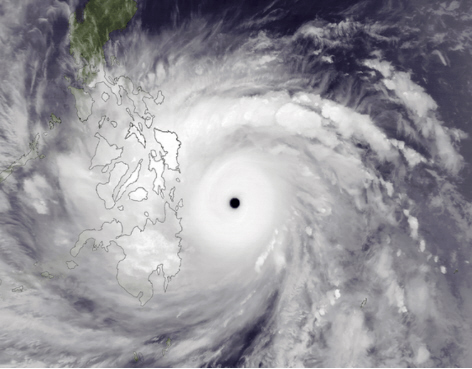
Typhoon Haiyan, which devastated large portions of the Philippines in November 2013, killed at least 6,300 people. It set records for the strongest storm ever at landfall and for the highest sustained wind speed over one minute ever, hitting 194 miles per hour when it reached the province of Eastern Samar.

It could become more common, according to a new model which factored in what controls the peak intensity of typhoons. The model finds that under climate change this century, storms like Haiyan could get even stronger and more common - as much as 14 percent, nearly equivalent to an increase of one category.