Banner
Here's Where Your Backyard Was 300 Million Years Ago

We may use terms like "grounded" and terra firma to mean stability and consistency but geology...

Convergent Evolution Cheat Sheet Now 120 Million Years Old

One tenet of natural selection is a random walk of genes but nature may be more predictable than...

Synchrotron Could Shed Light On Exotic Dark Photons

There are many hypothetical particles proposed to explain dark matter and one idea to explore how...

The Pain Scale Is Broken But This May Fix It

Chronic pain is reported by over 20 percent of the global population but there is no scientific...

User picture.
News StaffRSS Feed of this column.

News Releases From All Over The World, Right To You... Read More »

Blogroll
Before 2009, nearly 4 in 10 cattle ranchers and slaughterhouse in Brazil reported recent deforestation but by 2013, this number dropped to 4 in 100, a 10-fold decrease.

What changed? Policies that were not simply advocated by first world elites that told people in Brazil they couldn't have an economy. Brazil is home to the world’s largest commercial herd of cattle, and its cattle ranchers were once linked to the destruction of huge swaths of rainforest. “Zero-deforestation agreements” put into place in 2009 use market-based strategies to reduce the impact of the beef industry on the environment, a much different methodology than in the past where some would follow guidelines and be penalized economically.

If you got a recent promotion, or a new car on Facebook, that's good news, and in the idealized vision of social media it should be shared.

That is just social media marketing talking. In reality, you have probably become convinced that your hard work and success elicits positive emotions and you are probably wrong. 

Irene Scopelliti, George Loewenstein and Joachim Vosgerau wanted to find out why so many try to increase the favorability of the opinion others have of them by engaging in more positive self-promotion, which has the opposite of the intended effect. 

For the last decade, engineers have deployed increasingly capable underwater robots to map and monitor pockets of the ocean to track the health of fisheries, and survey marine habitats and species. When deploying such autonomous underwater vehicles (AUVs), much of an engineer's time is spent writing scripts, or low-level commands, in order to direct a robot to carry out a mission plan but new programming approach developed by MIT engineers gives robots more "cognitive" capabilities, enabling humans to specify high-level goals, while the robot performs high-level decision-making to figure out how to achieve these goals. 

Photosynthesis, the process by which plants utilize the sun's energy to create their own, leaves behind a unique calling card in the form of a chemical signature that is spelled out with stable oxygen isotopes.

Photosynthesis by microscopic plants forms the base of the oceanic food chain, but it is difficult to measure how productive these plants are in natural settings. This research will make it easier to do so.

Most oxygen atoms contain eight protons and eight neutrons and are represented by the symbol O-16. More than 99.9 percent of Earth's oxygen is O-16, but two heavier oxygen isotopes exist in trace amounts: O-17, with one extra neutron, and O-18, with two.

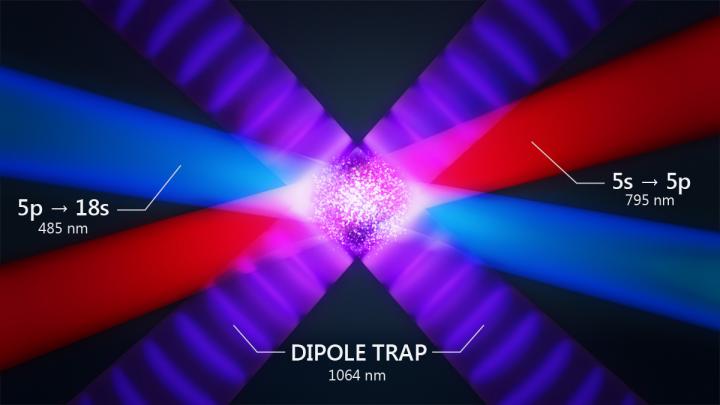
Rydberg atoms, atoms whose outermost electrons are highly excited but not ionized, might be just the thing for processing quantum information. These outsized atoms can be sustained for a long time in a quantum superposition condition (a good thing for creating qubits) and they can interact strongly with other such atoms, making them useful for devising the kind of logic gates needed to process information. 

A new study shows that the microbial communities we carry in and on our bodies, the human microbiome, contain the potential to uniquely identify individuals, much like fingerprints.

Researchers and demonstrated that personal microbiomes contain enough distinguishing features to identify an individual over time from among a research study population of hundreds of people. The study, the first to rigorously show that identifying people from microbiome data is feasible, suggests that we have surprisingly unique microbial inhabitants, but could raise potential privacy concerns for subjects enrolled in human microbiome research projects.