Banner
Pilot Study: Fibromyalgia Fatigue Improved By TENS Therapy

Fibromyalgia is the term for a poorly-understood condition where people experience pain and fatigue...

High Meat Consumption Linked To Lower Dementia Risk

Older people who eat large amounts of meat have a lower risk of dementia and cognitive decline...

Long Before The Inca Colonized Peru, Natives Had A Thriving Trade Network

A new DNA analysis reveals that long before the Incan Empire took over Peru, animals were...

Mesolithic People Had Meals With More Tradition Than You Thought

The common imagery of prehistoric people is either rooting through dirt for grubs and picking berries...

User picture.
News StaffRSS Feed of this column.

News Releases From All Over The World, Right To You... Read More »

Blogroll
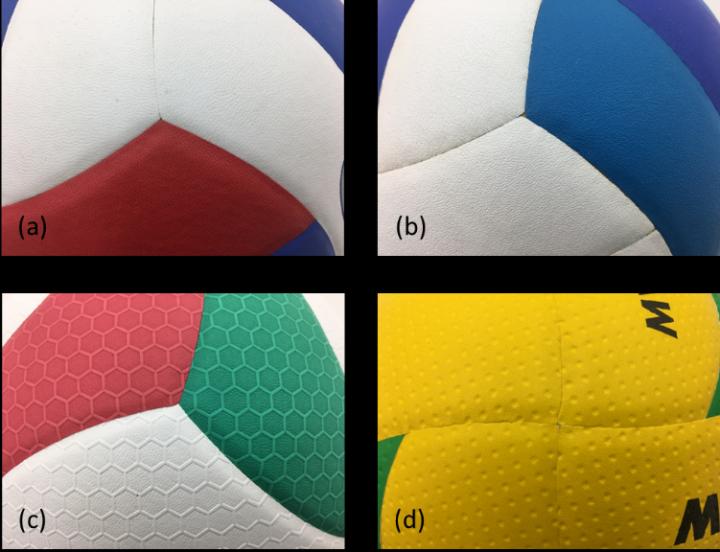
Wind tunnel experiments to determine the role of asymmetry caused by the orientation of a volleyball on its aerodynamic characteristics found that it would be easy to make a volleyball more predictable; with a hexagonal or dimpled pattern instead of six panels, each made with three parallel rectangular strips - but that would eliminate some of the fun.

Aerodynamics, the behavior of air as it flows around objects, plays a huge role in volleyball, golf, baseball, tennis, and soccer.  

Aerodynamics is why soccer players like David Beckham could "bend" kicks into the goal, and why baseball pitchers throw knuckleballs that can dance around an opposing player's bat. 
Self-driving cars are the future. Some day our grandchildren will look back on today and be baffled that we ever debated about whether or not to save hundreds of thousands of lives per year.

Yet crashes will still happen, and there is a debate about how those will be handled. Right now, automobile deaths that don't start off as heavily risky (drunk, high) involve a great deal of bad luck and perhaps a modicum of skill. Artificial intelligence tasked with deciding what to do as an accident occurs will have to get socialist about it, according to a new paper; choosing the course of action that will help the many at the expense of the few.
The belief that scientists should be dispassionate observers and neutral resources for the public good is dangerously misguided, argue marine biologists in a Science letter

Environmentalists feel pain when they see destruction of nature and should be allowed to cry, write Gordon, Radford, and Simpson, because that grief and post-traumatic recovery can strengthen resolve and inspire scientific creativity. 
Polystyrene, one of the world's most common plastics (one popular product is Styrofoam), degrades in decades when exposed to sunlight, rather than thousands of years as previously claimed. 

Polystyrene has been routinely detected in the world's oceans since the 1970s., though at nowhere near levels it should be. In fact, only 1 percent of the plastic that should be found is detectable. Chemistry may be why.
"Le Roman de la Rose" (The Romance of the Rose) was started in 1230 and completed around 1280. It is a medieval French poem styled as an allegorical dream vision and some parts that were later removed are quite steamy.

Its 22,000 lines describe the attempts of a courtier to woo his beloved. It was a medieval blockbuster, at least among the wealthy who could afford books, and a century later Geoffrey Chaucer, author of The Canterbury Tales, adopted and translated it for a new audience.

Now the oldest surviving pages, used as a folder or binding for other documents, have been revealed. Parchment was durable but expensive so it was common for it to be reused. 

Global warming did once kill off a once-common species, but it was the transition from the last Ice Age to the current warming period, starting 15,000 years ago.

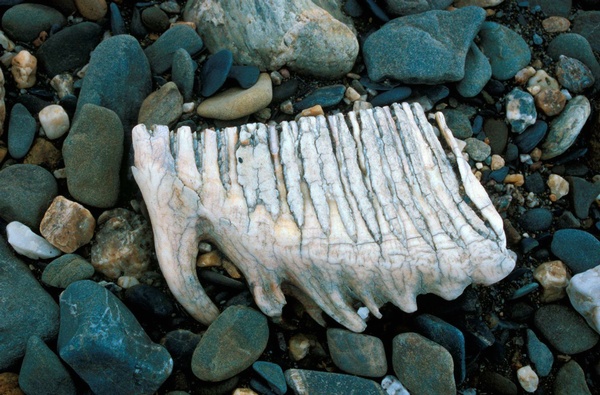
That well-known species was the woolly mammoth but it managed to hang on until 2,000 B.C. Its last known habitat was Wrangel Island in the Arctic Ocean. Ice ages happen in cycles, in recent geological history about 90,000 of every 100,000 years the planet has seen the planet covered in far more ice, and during the last one, mammoths were widespread, from Spain to Alaska.