Banner
Synchrotron Could Shed Light On Exotic Dark Photons

There are many hypothetical particles proposed to explain dark matter and one idea to explore how...

The Pain Scale Is Broken But This May Fix It

Chronic pain is reported by over 20 percent of the global population but there is no scientific...
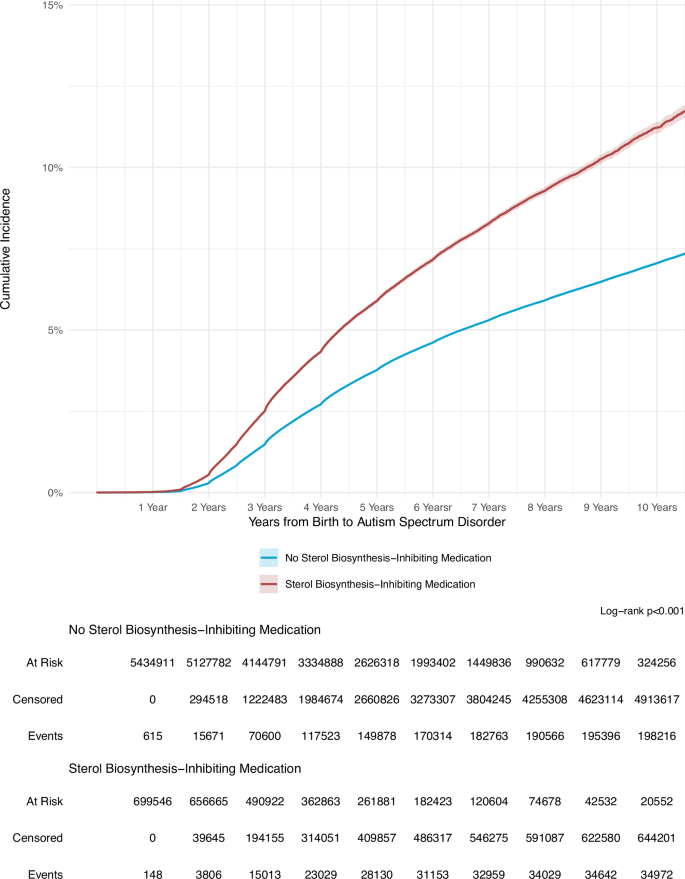
Study Links Antidepressants, Beta-blockers and Statins To Increased Autism Risk

An analysis of 6.14 million maternal-child health records  has linked prescription medications...

Pilot Study: Fibromyalgia Fatigue Improved By TENS Therapy

Fibromyalgia is the term for a poorly-understood condition where people experience pain and fatigue...

User picture.
News StaffRSS Feed of this column.

News Releases From All Over The World, Right To You... Read More »

Blogroll
Earlier this month, the Epic Electric American Road Trip, a 24-day, 12,183-mile battery-powered journey sponsored by electric vehicle (EV) software and information services company Recargo Inc., was completed.

They expect to be awarded Guinness World Record verification for the longest vehicle journey ever taken using 100% electric power. The goal was to emphasize the possibilities of the nation's current electric vehicle charging infrastructure.
North Carolina farmers and landowners are participating in program to grow giant miscanthus grass for renewable products using underutilized and marginal land.

Giant miscanthus grass is a rapidly renewable biomass crop that provides a viable economic alternative for many farmers and landowners with underutilized and marginal land that might otherwise lay dormant or fail to provide annual profits.

Perennial giant miscanthus grows well under a range of soil and environmental conditions. It requires little to grow and maintain. It's a simple, convenient and profitable crop to raise.

Planting biomass at commercial scale includes solving the significant challenge of establishing rhizome-propagated crops. 

Astronomers have taken unprecedented images of the intergalactic medium (IGM) — the diffuse gas that connects galaxies throughout the universe — with the Cosmic Web Imager, which was designed and built at the California Institute of Technology.

Until now, the structure of the IGM has mostly been a matterof speculation, but with observations from the Cosmic Web Imager, deployed on the Hale 200-inch telescope at Palomar Observatory, astronomers are obtaining our first three-dimensional pictures of the IGM.

The Cosmic Web Imager will make possible a new understanding of galactic and intergalactic dynamics, and it has already detected one possible spiral-galaxy-in-the-making that is three times the size of our Milky Way.

Take a muscle cell, modify it over millions of years, and you can end up with a shocking evolutionary result: the electric fish.

Electric fish have evolved several times in varying levels of complexity. Two groups of electric fish, one in Africa (Mormyroids) and one in South America (Gymnotiforms), have independently evolved sophisticated communication systems using these cells. By emitting and sensing weak electrical signals, the fish have bypassed the usual means of communication, such as with sounds and visual signals, and go directly to electrical signals.

Do you find yourself finishing the sentences of a speaker you are watching? You are not alone.

Our brain activity is similar to speakers we are listening to when we can predict what they are going to say, according to a team of neuroscientists writing in the Journal of Neuroscience

Traditionally, it was thought that our brains always process the world around us from the "bottom up"—when we hear someone speak, our auditory cortex first processes the sounds, and then other areas in the brain put those sounds together into words and then sentences and larger discourse units. From here, we derive meaning and an understanding of the content of what is said to us.

It's official - females prefer courtship over competitiveness. And she may talk with her friends about the size of your mandibles, but it really doesn't matter.   

Female mate choice and male-male competition are typical mechanisms of sexual selection. However, these two mechanisms do not always favor the same males.  Researchers have investigated the complicated sexual conflict over mating in Gnatocerus cornutus, the horned flour-beetle.

Male horned beetles have enlarged lower jaws – or mandibles – used to fight rivals, and those with larger mandibles do have a mating advantage when there is direct male-male competition. But until now, it has not been clear whether the females actually prefer these highly competitive males.