Banner
Synchrotron Could Shed Light On Exotic Dark Photons

There are many hypothetical particles proposed to explain dark matter and one idea to explore how...

The Pain Scale Is Broken But This May Fix It

Chronic pain is reported by over 20 percent of the global population but there is no scientific...
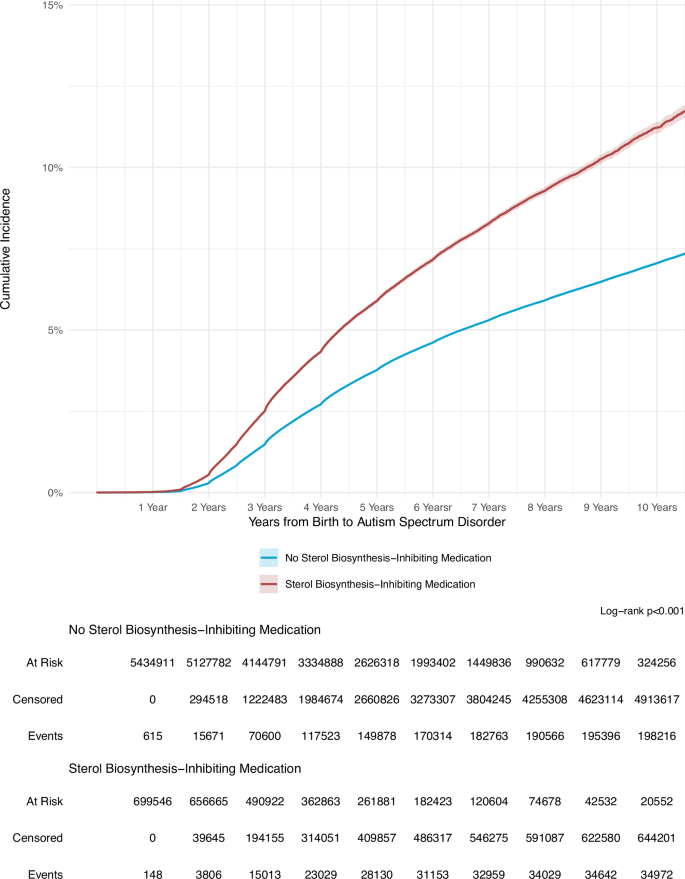
Study Links Antidepressants, Beta-blockers and Statins To Increased Autism Risk

An analysis of 6.14 million maternal-child health records  has linked prescription medications...

Pilot Study: Fibromyalgia Fatigue Improved By TENS Therapy

Fibromyalgia is the term for a poorly-understood condition where people experience pain and fatigue...

User picture.
News StaffRSS Feed of this column.

News Releases From All Over The World, Right To You... Read More »

Blogroll

Scientists at Yale University have devised a dramatically faster way of identifying and characterizing complex alloys known as bulk metallic glasses (BMGs), a versatile type of pliable glass that's stronger than steel.

Using traditional methods, it usually takes a full day to identify a single metal alloy appropriate for making BMGs. The new method allows researchers to screen about 3,000 alloys per day and simultaneously ascertain certain properties, such as melting temperature and malleability.

"Instead of fishing with a single hook, we're throwing a big net," said Jan Schroers, senior author of the research, which was published online April 13 in the journal Nature Materials. "This should dramatically hasten the discovery of BMGs and new uses for them."

The complexity of biology can befuddle even the most sophisticated light microscopes because biological samples bend light in unpredictable ways, returning difficult-to-interpret information to the microscope and distorting the resulting image.

New imaging technology developed at the Howard Hughes Medical Institute's Janelia Farm Research Campus rapidly corrects for these distortions and sharpens high-resolution images over large volumes of tissue. 

In a new study, researchers from North Carolina State University, UNC-Chapel Hill and other institutions have taken the first steps toward creating a roadmap that may help scientists narrow down the genetic cause of numerous diseases. Their work also sheds new light on how heredity and environment can affect gene expression.

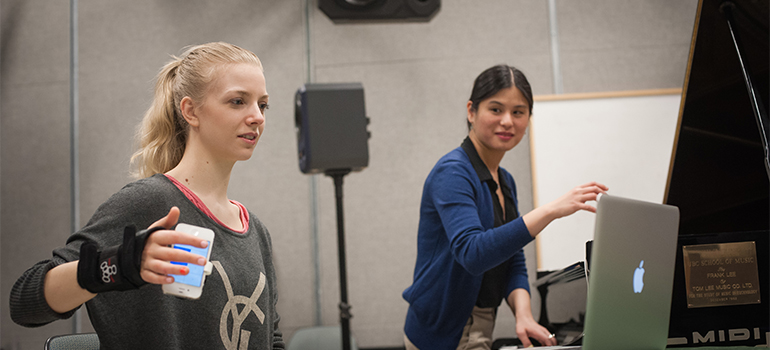
Live electronic music is an oxymoron. Clearly if you have hired Paris Hilton as a deejay, you are not hiring her because she is any sort of keen ear. If she never showed up, the music would go on.

University of British Columbia music professor Bob Pritchard has seen enough uninspiring laptop music sets to know what is wrong with the genre - backing tracks can only take you so far - and has an idea how to fix it.

Pritchard and UBC’s Laptop Orchestra believe digital cameras and other gadgets might just save live electronic music from itself - so they did a concert without actually touching their laptops. 

“That’s one of our rules,” says Pritchard, “Avoid touching the laptop!”

Self-healing materials can repair themselves by restoring their initial molecular structure after the damage and scientists from Evonik Industries
and the Karlsruhe Institute of Technology have developed a chemical crosslinking reaction that ensures good short-term healing properties of the material under mild heating.   

Researchers recently used an array of high-speed video cameras operating at 7,500 frames a second to capture the wing and body motion of Drosophila hydei
after they encountered an image of an approaching predator. 

The fruit flies are about the size of a sesame seed and rely on a fast visual system to detect approaching predators. And scientists found out that even Top Gun pilots might be envious of the screaming-fast banked turns and slick moves the flies employed. In the midst of a banked turn, the flies can roll on their sides 90 degrees or more, almost flying upside down at times.