Banner
Synchrotron Could Shed Light On Exotic Dark Photons

There are many hypothetical particles proposed to explain dark matter and one idea to explore how...

The Pain Scale Is Broken But This May Fix It

Chronic pain is reported by over 20 percent of the global population but there is no scientific...
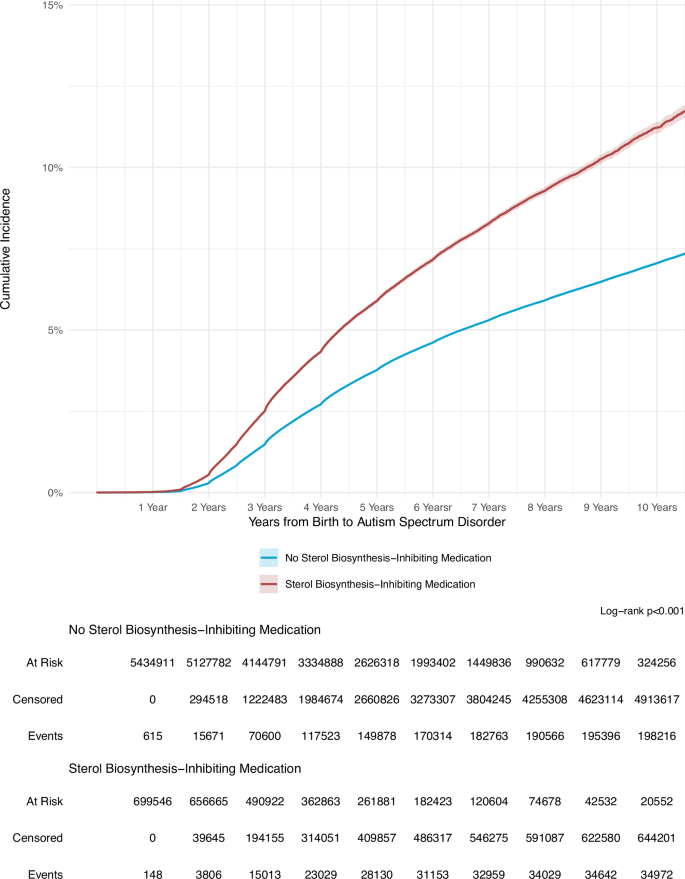
Study Links Antidepressants, Beta-blockers and Statins To Increased Autism Risk

An analysis of 6.14 million maternal-child health records  has linked prescription medications...

Pilot Study: Fibromyalgia Fatigue Improved By TENS Therapy

Fibromyalgia is the term for a poorly-understood condition where people experience pain and fatigue...

User picture.
News StaffRSS Feed of this column.

News Releases From All Over The World, Right To You... Read More »

Blogroll

In 2005, NASA's Cassini spacecraft sent pictures back to Earth depicting an icy Saturnian moon spewing water vapor and ice from fractures, known as "tiger stripes," in its frozen surface. It was big news that tiny Enceladus—a mere 500 kilometers in diameter—was such an active place. Since then, scientists have hypothesized that a large reservoir of water lies beneath that icy surface, possibly fueling the plumes. Now, using gravity measurements collected by Cassini, scientists have confirmed that Enceladus does in fact harbor a large subsurface ocean near its south pole, beneath those tiger stripes.

Enceladus—one of Saturn's smaller satellites—has joined the ranks of Titan and Europa as a moon that appears to have liquid water splashing around inside of it, researchers say. New gravity data from the Cassini spacecraft, which has been exploring the planet's moons for 10 years, reveal that Enceladus harbors an ocean of water beneath 18 to 24 miles (30 to 40 kilometers) of ice at its surface.

A team of Italian and American scientists led by Luciano Iess at Sapienza Università di Roma in Rome, Italy investigated the moon's gravity field and the notable asymmetry it exhibits between northern and southern hemispheres to reach these conclusions. Their results appear in the 4 April issue of Science.

Cigarette smoking among obese women appears to interfere with their ability to taste fats and sweets, a new study shows. Despite craving high-fat, sugary foods, these women were less likely than others to perceive these tastes, which may drive them to consume more calories.

Spit-powered, micro-sized microbial fuel cells produce enough energy to run on-chip applications, according to a paper in
Asia Materials.

Microbial fuel cells create energy when bacteria break down organic material producing a charge that is transferred to the anode. Bruce Logan, Professor Environmental Engineering at Penn State, has studied microbial fuel cells for more than ten years and usually looks to wastewater as a source for both the organic material and the bacteria to create either electricity or hydrogen, but says these tiny machines are a bit different.

MADISON – For Simon Gilroy, sometimes seeing is believing. In this case, it was seeing the wave of calcium sweep root-to-shoot in the plants the University of Wisconsin-Madison professor of botany is studying that made him a believer.

Gilroy and colleagues, in a March 24, 2014 paper in the Proceedings of the National Academy of Sciences, showed what long had been suspected but long had eluded scientists: that calcium is involved in rapid plant cell communication.

It's a finding that has implications for those interested in how plants adapt to and thrive in changing environments. For instance, it may help agricultural scientists understand how to make more salt- or drought-tolerant plants.

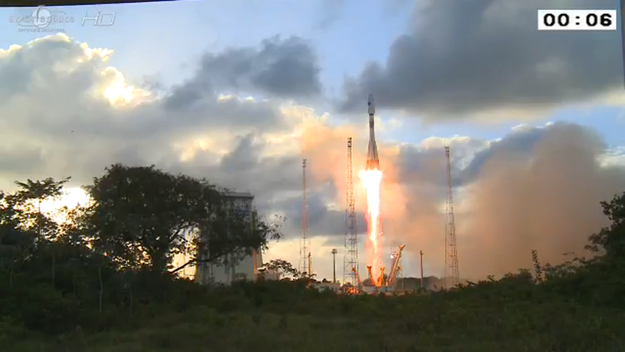
Sentinel-1A lifted off on a Soyuz launcher from Europe’s Spaceport in French Guyana at 9:02 PM GMT today.

Sentinel-1A has been at the launch site since the end of February and has been through numerous tests to make sure that everything is in perfect condition to provide essential radar imagery for Europe’s Copernicus program, which focuses on providing data to improve the way the environment is managed.

Weather satellites have been providing operational data for years, of course, but the family of Sentinel missions is designed for environmental monitoring.