Banner
Here's Where Your Backyard Was 300 Million Years Ago

We may use terms like "grounded" and terra firma to mean stability and consistency but geology...

Convergent Evolution Cheat Sheet Now 120 Million Years Old

One tenet of natural selection is a random walk of genes but nature may be more predictable than...

Synchrotron Could Shed Light On Exotic Dark Photons

There are many hypothetical particles proposed to explain dark matter and one idea to explore how...

The Pain Scale Is Broken But This May Fix It

Chronic pain is reported by over 20 percent of the global population but there is no scientific...

User picture.
News StaffRSS Feed of this column.

News Releases From All Over The World, Right To You... Read More »

Blogroll

There is a possible new explanation for a mysterious type of crater on the surface on Mars.  Double-layered ejecta craters (DLEs) are surrounded by debris excavated by an impactor  just like other craters. What makes DLEs different is that the debris forms two distinct layers — a large outer layer with a smaller inner layer sitting on top. These distinctive craters were first documented in data returned from the Viking missions to Mars in the 1970s, and scientists have been trying ever since to figure out how the double-layer pattern forms.

A new study suggests that DLEs are the result of impacts onto a surface that was covered by a layer of glacial ice tens of meters thick.

If you ask conservationists in developed nations why East Africa's Maasai pastoralists hunt lions you get Anthropology 101: to retaliate against lions that kill livestock or to engage in a cultural rite of passage.

Aside from mistranslations of Maasai terms in that conclusion, it is also an oversimplification of their cultural traditions and their relationship with wildlife. What is happening as a result is that not only are outside conservation efforts failing to work on basic grounds, they may even be inciting Maasai to hunt more lions as a form of political protest against outsiders and being patronized.

There is a "thrifty phenotype" hypothesis which suggests that economic conditions present during fetal development that then improve dramatically during a person's childhood lead to poorer health in adulthood. 

In other words, if people are poor, it might be healthier if they stay poor. The evidence: the strikingly high prevalence of Type 2 diabetes in the American South, which the author of a new paper suggests can be partially traced to rapid economic growth between 1950 and 1980.

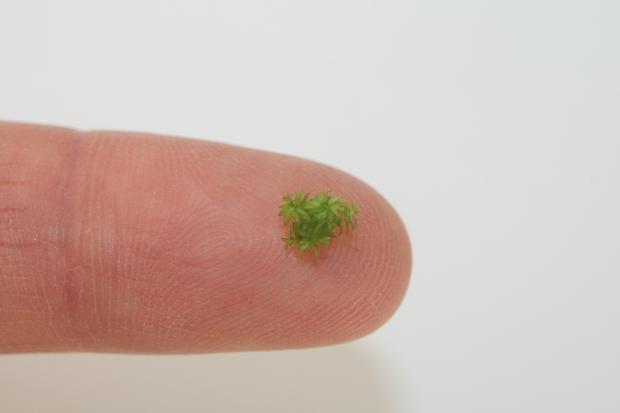
 Mosses are tiny plants with a simple body plan - they have no roots, no flowers and do not produce seeds. It was reasonable to assume they were also simple organisms also at the genetic level.

Not so, a new study describes 32,275 protein-encoding genes from the moss Physcomitrella patens, about 10,000 genes more than the human genome contains. 
For quantum physicists working on future systems, entangling quantum systems is a key resource for upcoming quantum computers and simulators.

Physicists have crafted a new, reliable method to verify entanglement in the laboratory using a minimal number of assumptions about the system and measuring devices - it witnesses the presence of useful entanglement, a ‘verification without knowledge’.

Quantum computation, quantum communication and quantum cryptography often require entanglement. For many of these upcoming quantum technologies, entanglement – this hard to grasp, counter-intuitive aspect in the quantum world – is a key ingredient. Therefore, experimental physicists often need to verify entanglement in their systems.

Antioxidants have been hyped by marketing and mainstream media claims as cure-alls for almost anything, but a systematic review has likely eliminated one - there is no quality evidence that antioxidant supplements help to increase a woman's chances of having a baby and information is still too limited to know if it has potential harms.

The paper says around 25% of couples planning a baby may have 'difficulty' conceiving. Women undergoing fertility treatment often take dietary supplements, including antioxidants, to try to increase their chances of becoming pregnant. Antioxidant supplements taken to improve fertility are unregulated and there is limited evidence on their safety and effects.