Banner
Here's Where Your Backyard Was 300 Million Years Ago

We may use terms like "grounded" and terra firma to mean stability and consistency but geology...

Convergent Evolution Cheat Sheet Now 120 Million Years Old

One tenet of natural selection is a random walk of genes but nature may be more predictable than...

Synchrotron Could Shed Light On Exotic Dark Photons

There are many hypothetical particles proposed to explain dark matter and one idea to explore how...

The Pain Scale Is Broken But This May Fix It

Chronic pain is reported by over 20 percent of the global population but there is no scientific...

User picture.
News StaffRSS Feed of this column.

News Releases From All Over The World, Right To You... Read More »

Blogroll

There's still no free lunch. Finite budgets based on taxes that give equal treatment to everyone aren't really resulting in equal quality. Instead, most ward nurses in NHS hospitals say they are forced to ration care, or not complete certain aspects of it — including adequate monitoring of patients — because they don't have enough time, indicates a new paper.

New biological insecticides, which make use of “entomopathogenic” viruses that are harmful to insects, have emerged in recent years. The big advantage versus regular pesticides is that they are innocuous to man, vertebrae and plants, and environmental activists have not heard of them yet. Each viral strain attacks a very limited number of insect species.

The baculovirus is frequently studied and to identify the virus in this family that will most effectively control the Guatemalan potato moth, a French-Ecuadorian research team from Institut de Recherche pour le Développement (IRD) has analyzed the pathogens among moths from all over the world.  
2 000 years ago, Roman fishermen knew that some species of fish liked to gather under floating objects.

No one knew why and it didn't matter, that behavioral mechanism was just used to catch more fish in the Mediterranean. Today, artisanal and industrial tuna fisheries exploit this “aggregating phenomenon” in much the same way. Over the last thirty years, seine fishing in particular has developed rapidly through the use of massive floating objects, natural at first, then more recently fish aggregation devices (FADs) remotely monitored using electronic beacons. 

These floating objects help enable 40 % of worldwide tropical tuna catches today.
In J.R.R. Tolkeins's fantasy epic "The Lord of the Rings", a hobbit discovers a giant in the caves under Mt. Doom.

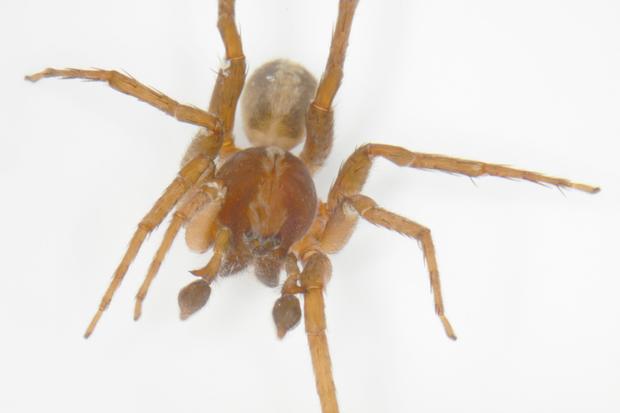
More recently, another famous hobbit helped discover a much smaller kind of spider. And the researchers who get credit for it named Ctenus monaghani after him.

Actor Dominic Monaghan, who played  Hobbit Meriadoc “Merry” Brandybock in the recent motion picture trilogy, has a new nature documentary called “Wild Things” and Dr. Peter Jäger, expert consultant to the “Wild Things” team in the forests and caves of Laos, discovered the new, eight-legged critter and named it after the actor in recognition of Monaghan's natural world enthusiasm, which even extends to inconspicuous and unpopular animals such as spiders.

A year-round ice-free Arctic Ocean surface could explain why the Earth of the Pliocene Epoch had the levels of carbon dioxide in the atmosphere that we have today, but we remain 3 to 9 degrees cooler than the Earth was then.

At a young age, kids learn that the cookies are still there, even though they have been placed in a jar. And they learn that a car driven into a tunnel will reappear on the other side. 

The ability to represent and to track the trajectory of objects which are temporally out of sight is important in many aspects - and also cognitively demanding. In non-human primates, only the great apes have shown convincing abilities there.

Alice Auersperg and her team from the University of Vienna and Oxford have shown that "object permanence" abilities in the Goffin Cockatoo (Cacatua goffini) equals apes and four year old human toddlers.