Banner
Pilot Study: Fibromyalgia Fatigue Improved By TENS Therapy

Fibromyalgia is the term for a poorly-understood condition where people experience pain and fatigue...

High Meat Consumption Linked To Lower Dementia Risk

Older people who eat large amounts of meat have a lower risk of dementia and cognitive decline...

Long Before The Inca Colonized Peru, Natives Had A Thriving Trade Network

A new DNA analysis reveals that long before the Incan Empire took over Peru, animals were...

Mesolithic People Had Meals With More Tradition Than You Thought

The common imagery of prehistoric people is either rooting through dirt for grubs and picking berries...

User picture.
News StaffRSS Feed of this column.

News Releases From All Over The World, Right To You... Read More »

Blogroll
Tomato plants emit a volatile compound named hexenyl butyrate  which can be used for closing the stomata, key in protecting plants from bacterial attacks.

But Center for Science in the Public Interest and Environmental Working Group don't need to mobilize the trial lawyers, this volatile compound is all natural. That means is could be a new strategy for protecting crops from biotic and abiotic stress and improving yields, all without sound like scary science to their attorneys.

It's also easy to yes because it is a volatile compound. It can be applied by spraying onto plants and also by using diffuser devices, it has zero toxicity and its use is already approved in food.
Space weather and its changes to earth's magnetic fields has an outsized impact in Arctic regions through effects on electricity networks, mining operations and shipping.

A new technique called Fractional Derivative Rate (FDR) published in Space Weather has been used for analyzing fluctuations in the Earth’s magnetic field and found dramatic differences at different latitudes and different times of day.

The northernmost stations were more geomagnetically active at midday, while the activeness at the southernmost stations was highest at midnight. The largest differences between different times of day was observed in the northernmost measurement zone, in the Arctic Circle. 
Death rates from cancer have been falling for 25 years, but the next generation may cause a tick back up.

Cancer is the second leading cause of death, behind heart disease. Both have age as risk factors but also behavioral components. For cancer, smoking has been the second greatest risk factor overall (and number one for lung cancer) but heart disease is also greatly impacted by fitness. And many cancers can be directly linked to metabolic problems. The current levels of obesity among young people mean that cancer deaths could be at a plateau and set to rise again in 20 years.
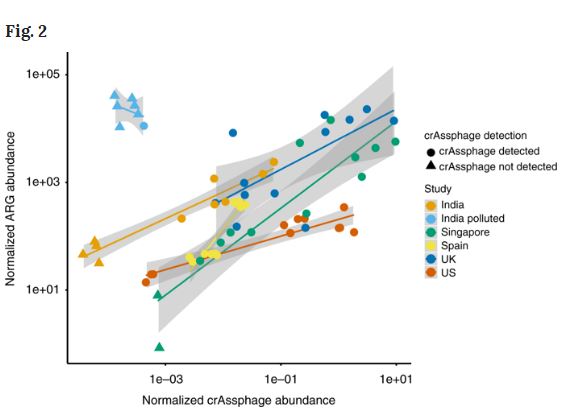
Fecal pollution can explain a lot of the increase in resistant bacteria where humans live, but not all of it. In some cases resistance genes were common without the presence of “crAssphage”, a bacteriophage common in human feces  - environments polluted with high levels of antibiotics from manufacturing, according to a new paper.

As European science-related institutions, such as the European Research Council, have shown their growing preference for Open Access, e.g., via the Plan S, the primary rationale for this is the positive effect on the discovery of new knowledge that various models of Open Access can be expected to have.

An ancient genetic mechanism needed for plant fertility is helping to solve a science mystery 700 million years in the making.

The researchers discovered how a gene called DUO1 known to control sperm production inside pollen grains of flowering plants, is also used by primitive land plants to produce free-swimming sperm. They found that the gene originated in the stoneworts, an ancient group of aquatic algae that diverged from land plants over 700 million years ago.

The paper suggests that it was a simple change in the DUO1 gene sequence that allowed the algal ancestors of land plants to produce small swimming sperm to increase the chances of fertilization in an aquatic environment.