Banner
Here's Where Your Backyard Was 300 Million Years Ago

We may use terms like "grounded" and terra firma to mean stability and consistency but geology...

Convergent Evolution Cheat Sheet Now 120 Million Years Old

One tenet of natural selection is a random walk of genes but nature may be more predictable than...

Synchrotron Could Shed Light On Exotic Dark Photons

There are many hypothetical particles proposed to explain dark matter and one idea to explore how...

The Pain Scale Is Broken But This May Fix It

Chronic pain is reported by over 20 percent of the global population but there is no scientific...

User picture.
News StaffRSS Feed of this column.

News Releases From All Over The World, Right To You... Read More »

Blogroll

Researchers have found a way to turn bone marrow stem cells directly into brain cells, bypassing current cumbersome techniques and bringing about the possibility of simpler and safer methods. Stem cell therapies derived from patients' own cells are widely hoped to one day treat spinal cord injuries, strokes and other conditions throughout the body, with no immune rejection.

"These results highlight the potential of antibodies as versatile manipulators of cellular functions," said Richard A. Lerner of The Scripps Research Institute (TSRI, principal investigator for the new study. "This is a far cry from the way antibodies used to be thought of—as molecules that were selected simply for binding and not function."

Blanket stereotypes are bad but they often come into existence for a reason; the problem becomes when everyone is labeled with the same brush. There is a common belief that some schools, high school and college, are giving athletes an easier time because they have physical skills but not academic ones, for example, and so all athletes become considered "dumb jocks".

Are college athletes victims of stereotype threat the way sociologists contend women and minorities in science classes are?

Thermoelectric power plants interact with climate, hydrology, and aquatic ecosystems while rivers serve as "horizontal cooling towers"  — but at a cost to the environment, says a new analysis.  

A coronal mass ejection (CME) is when our sun sends billions of tons of solar particles into space. A CME can affect electronic systems in satellites and NASA recently saw three.

Humans navigate complex social situations in deciding who to befriend or to abandon - a "frenemy" is someone who is both friend and enemy while the old military saying is that 'the enemy of my enemy is my friend'.

Animal social networks also use sophistication in judging social configurations and a new paper in Animal Behaviour applied a long-standing theory in social psychology called "structural balance."  

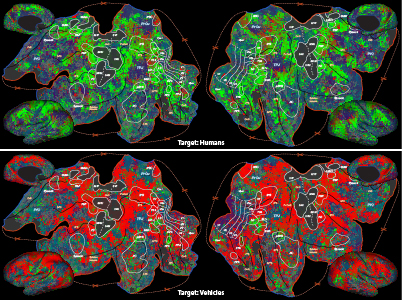
How do we often find something tiny in a large area? 

When our brains begin a targeted search, various visual and non-visual regions of the brain mobilize to track down that person, animal or thing. That means that if we're looking for a youngster lost in a crowd, the brain areas usually dedicated to recognizing other objects, or even the areas attuned to abstract thought, shift their focus and join the search party. The brain rapidly becomes highly focused child-finder, and redirects resources it uses for other mental tasks.